• Twitter
  • Facebook
  • Instagram
  • Linkedin
  • YouTube
  • RSS
  • Sign In
  • My Account
High-Profile MonthlyThe Source for AEC Industry News
  • All News
      • Up Front
      • Groundbreaking
      • Topping Off
      • Ribbon Cutting
      • View All Up Front Stories
      • StMarysBank_NorthBranch_ToppingOffNorth Branch Construction Celebrates Topping Off for new St. Mary’s Bank Branch
      • Special Features
      • Contributor
      • Green
      • J.E.D.I.
      • Mechanical / Electrical / Plumbing (MEP)
      • Vision
      • Women In Construction
      • Regions
      • Connecticut
      • Northern New England
      • Popular Sectors
      • Cannabis
      • Corporate
      • Education
      • Healthcare
      • Interiors
      • Landscape/Civil
      • Life Science
      • Multi Residential
      • Restoration/Renovation
      • Retail/Hospitality
      • Senior/Assisted Living
      • Technology & Innovation
      • Other News
      • Awards
      • Community
      • COVID-19
      • Mixed-use
      • Municipal
      • National/International
      • Organizations and Events
      • People
      • Philanthropy
      • Products and Services
      • Real Estate
      • Training and Recruitment
  • Subscribe
  • Next Issue
  • Archive
  • Advertise
  • Podcast
  • A/E/C Associations
  • Calendar
High-Profile Monthly
  • All News
      • Up Front
      • Groundbreaking
      • Topping Off
      • Ribbon Cutting
      • View All Up Front Stories
      • StMarysBank_NorthBranch_ToppingOffNorth Branch Construction Celebrates Topping Off for new St. Mary’s Bank Branch
      • Special Features
      • Contributor
      • Green
      • J.E.D.I.
      • Mechanical / Electrical / Plumbing (MEP)
      • Vision
      • Women In Construction
      • Regions
      • Connecticut
      • Northern New England
      • Popular Sectors
      • Cannabis
      • Corporate
      • Education
      • Healthcare
      • Interiors
      • Landscape/Civil
      • Life Science
      • Multi Residential
      • Restoration/Renovation
      • Retail/Hospitality
      • Senior/Assisted Living
      • Technology & Innovation
      • Other News
      • Awards
      • Community
      • COVID-19
      • Mixed-use
      • Municipal
      • National/International
      • Organizations and Events
      • People
      • Philanthropy
      • Products and Services
      • Real Estate
      • Training and Recruitment
  • Subscribe
  • Next Issue
  • Archive
  • Advertise
  • Podcast
  • A/E/C Associations
  • Calendar
Contributor • MEP

Sprinkler Design Challenges for Electric Vehicles in Parking Garages

March 22, 2023
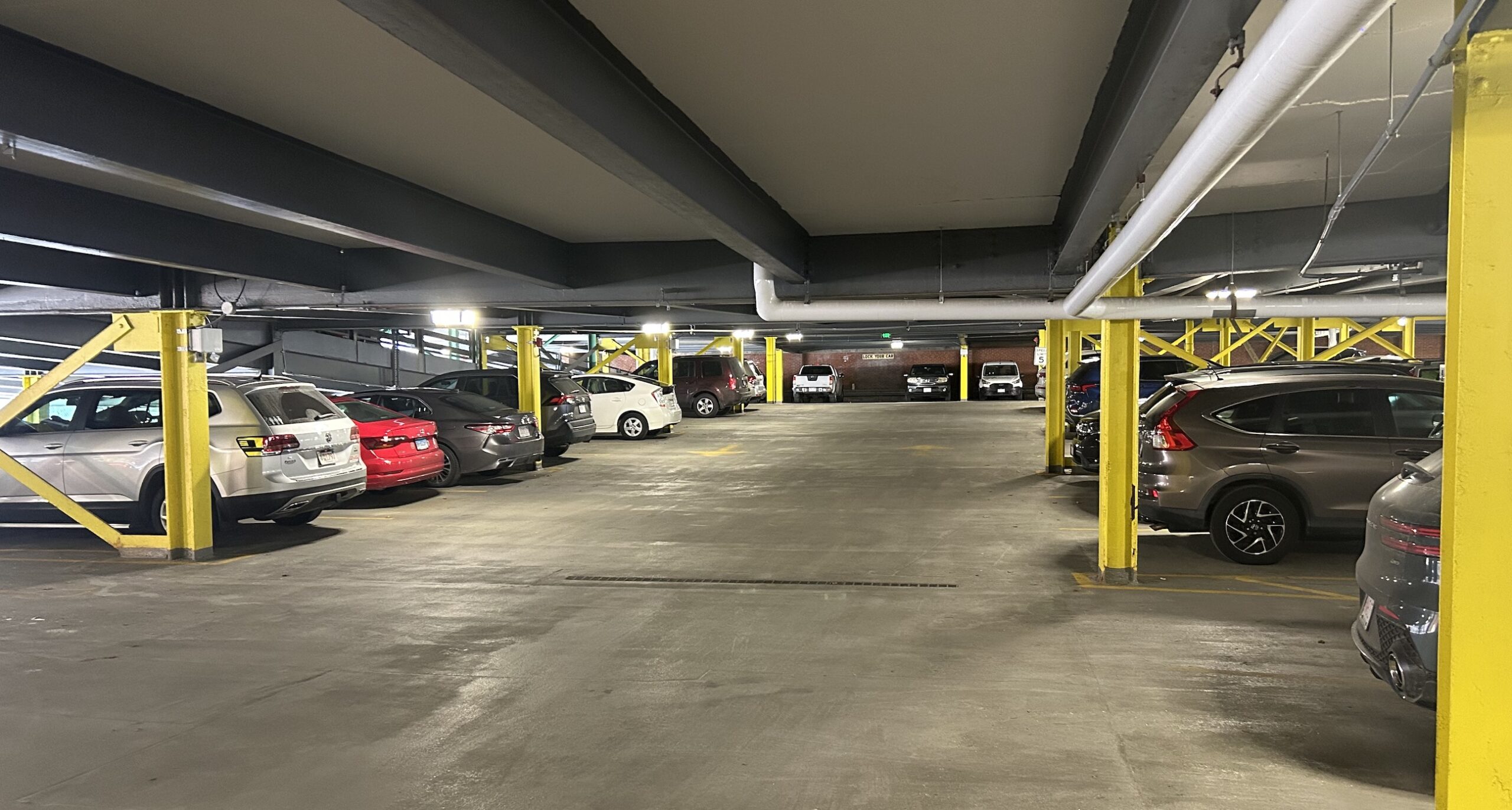
A thermal runaway due to short circuits in electric vehicle batteries increases the fire risk significantly, especially with the multiplication of the fire load in parking garages.

by Ahmed Ibrahim

With the market for electric vehicles projected to grow from 2.5 million units in 2020 to 31.1 million units in 2030, concerns about public safety related to their lithium-ion batteries have also increased. The problem arises when a short circuit occurs in these batteries. The heat from the short circuit makes the battery’s internal temperature rise to the point where a chemical reaction can start and spread to the adjacent cells, known as a “thermal runaway,” which is difficult to stop.

Battery fires also release toxic gases that can threaten first responders and building occupants. These fires are difficult to extinguish and even frequently reignite. Tesla itself warns that a battery fire can require up to 3,000 gallons of water for full suppression, which can take up to 24 hours. It has even been proposed to let the battery burn while protecting adjacent areas from further exposure. When multiple vehicles are housed in enclosed spaces like parking garages, the likelihood of this risk increases significantly due to the multiplication of the fire load.

Throughout the past century, sprinkler systems have been a reliable and effective fire protection feature. While many states mandate sprinkler installation, the National Fire Protection Association’s (NFPA) code, known as NFPA-13, is the U.S. standard that has been continually updated and provides the design criteria for the required sprinkler flow to extinguish or control fires. However, until the most recent edition of NFPA-13, published in 2022, there had been no design criteria for sprinkler flow that would be required to extinguish fires caused by electrical vehicles inside of facilities like public garages, where many of these vehicles are stored. The NFPA is now conducting research to investigate the storage of electric vehicles inside parking structures to determine the required sprinkler flow that would help lower the risk for first responders and others.

As a result of this design challenge, transitional approaches have been developed to apply existing fire suppression concepts and approved design flow rates to structures housing electric vehicles. The most common approach has been to consider the fire risk to be similar to a warehouse used for storing plastic. The reason is that high water flow density is necessary in the design of the sprinkler systems in such warehouses, which is similar to the need for high water flow on electric battery fires.

This analogy with plastic warehouses also stems from the fact that today’s vehicles are made of more plastic than ever before and that sprinklers have proven effective in controlling fires in plastic warehouses. NFPA-13 has design criteria that provide water protection for warehouses that store plastic, listing three different types of sprinkler heads that are to be used. The design criteria for those sprinkler heads can be used to develop an appropriate engineering design that can fit with the needs of sprinkler systems in garage structures that store electric vehicles.

It is difficult to know the adequate water density for the sprinkler system before a NFPA standard for such sprinkler systems is published. The answer to this design challenge will be based on actual large-scale fire tests. In the meantime, as large a water flow as possible should be considered necessary to help extinguish electric battery fires and prevent further spreading.

Ahmed Ibrahim

Ahmed Ibrahim, PE is a senior fire protection engineer with Weston & Sampson in Foxborough, Mass.

electricvehicles HPNews
    FacebookXLinkedInEmail

You may also like

Contributor

Ask the Electrician: What are the...

January 8, 2025
Contributor

What’s Next for Construction in...

December 30, 2024
Contributor

Strengthening the AEC Community: A...

December 27, 2024
Contributor

Boston’s Commercial Real...

December 26, 2024
Contributor

Choosing a B2B PR Agency: Why it...

December 19, 2024
Contributor

A/Z’s 2025 Strategic Growth...

December 18, 2024
Contributor • Green

BERDO: From Boston to your Backyard

December 2, 2024
Contributor • Green

Decarbonizing Healthcare:...

November 27, 2024
  • Gray.png
  • Pedigree.png
  • PWC.png
  • INterstate.png

HIGH-PROFILE MONTHLY
615 School St.
Pembroke, MA  02359
Phone: 781 294 4530
Fax:  781 293 5821
info@high-profile.com

Quick Links

  • About Us
  • Contact Us
  • Subscribe
  • Advertise
  • My Account

Stay Informed

Sign up for Fast Facts Friday, our weekly e-newsletter, and stay up-to-date with the latest industry news!

Sign up
Subscribe to High-Profile Monthly to receive an email notice of each new article!
Loading

Copyright © 2026 High-Profile Monthly.

  • Twitter
  • Facebook
  • Instagram
  • Linkedin
  • YouTube
  • RSS
  • Sign In
  • My Account