
by Phillip Barbe, Khaja Hussain Syed, and Duane Waite
Hospitals are inherently energy-intensive due to their 24/7 operations, resource-heavy processes, and the need for uninterrupted power. This makes decarbonization a daunting challenge. However, the rewards include significant energy savings, enhanced operational efficiency, and progress toward sustainability goals.
Understanding the Scale of the Problem
North America leads global healthcare emissions, with the U.S. topping the list at 546 million metric tons of CO2e annually. Hospitals are a significant contributor due to their extensive energy demands.
Key sources of carbon emissions include:
1. Heating, ventilation, and air conditioning (HVAC)
Hospitals require extensive heating, ventilation, and air conditioning (HVAC) systems to maintain the controlled environments essential for patient safety and infection control. The constant need for climate control – especially in areas like operating rooms, intensive care units, and laboratories – leads to high levels of energy consumption, and much of that energy is still generated from fossil fuels. HVAC typically accounts for the largest share of energy use in a hospital.
2. Lighting and medical equipment
From hallways and patient rooms to operating theaters and diagnostic suites, lighting is essential in every part of a hospital. However, many older facilities still rely on inefficient lighting systems, which contribute to unnecessary energy use. Beyond lighting, medical equipment creates a substantial electrical load. Devices such as diagnostic imaging machines, life support systems, and sterilization equipment require large amounts of electricity and often run continuously. Even less frequently considered equipment, such as commercial kitchen appliances and laundry machines, operate under the same 24/7 demand. The lifespan, efficiency, and energy sources powering this high-demand equipment play a significant role in shaping a hospital’s overall carbon footprint.
3. Medical gases
Medical gases such as nitrous oxide and desflurane that are commonly used in anesthesia contribute significantly to a hospital’s overall emissions. These gases, especially when released into the atmosphere, act as potent greenhouse gases, with global warming potentials (GWP) far higher than carbon dioxide. Nitrous oxide, for instance, has a GWP nearly 300 times that of CO2.
4. Energy used to heat water
Given the need for sterilization, sanitation, and general patient care, the water demand in hospitals is immense, and the energy required to pump, heat, and treat water is significant. Hospitals often rely on large-scale water heating systems, which consume substantial quantities of energy and contribute to their carbon footprint.
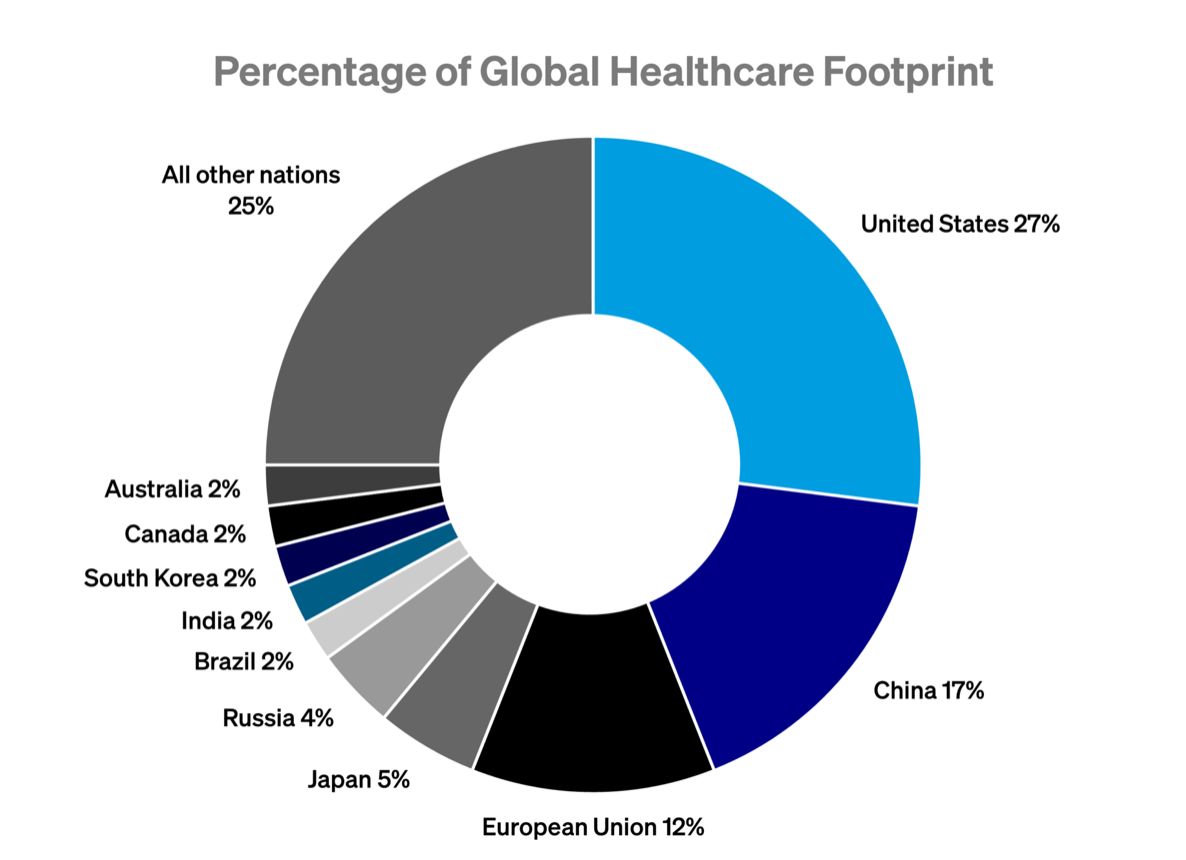
Source: Health Care Without Harm Climate-Smart Healthcare Series Green Paper Number One, September 2019
A Strategic Approach to Decarbonization
While wins can be achieved with newer, more efficient equipment to mitigate the key emissions sources, upgrading systems alone won’t suffice. Hospitals need a comprehensive decarbonization strategy that aligns with operational goals and capital budgets. This may include:
- Data-Driven Energy Management: Real-time monitoring systems can identify inefficiencies and optimize energy use, guiding hospitals in transitioning to renewable energy in phases.
- Retro-Commissioning (RCx): Fine-tuning existing systems restores operational efficiency, correcting performance issues that arise over time.
- Purchasing Green Energy: Sourcing electricity from renewable providers is a scalable, cost-effective way to achieve immediate reductions in carbon emissions.
- Early Planning for New Construction: Integrating sustainability into the design of mechanical, electrical, and plumbing (MEP) systems ensures new facilities meet decarbonization goals from inception.
- Staff Education and Engagement: An often-overlooked strategy is building a culture of sustainability, empowering staff to adopt and maintain green practices. Engaging all stakeholders – from leadership to on-the-ground staff – ensures that sustainability becomes a shared priority across the organization.
Phillip Barbe, PE is a second-generation engineer and principal at Salas O’Brien. He can be reached at phillip.barbe@salasobrien.com. Khaja Hussain Syed, P.Eng, MSc is a vice president at Salas O’Brien. He can be reached at khaja.syed@salasobrien.com. Duane Waite is a principal and electrical department head at Salas O’Brien. He can be reached at duane.waite@salasobrien.com.