by Stephen Lahti
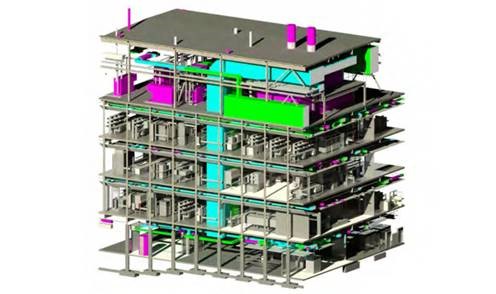
BIM sample model
Whether a company is moving into its first space out of an incubator, or is an established operation with dedicated a facilities group, one thing holds true: For a project to be successful the design must be balanced with the end goal. In a perfect world, the client has established goals on day one and fully understands their space program…but it’s not a perfect world, and understanding the client’s needs evolves during the design process.
With the pace of projects today, it’s common to see engineers and designers lose sight of the end goal; aggressive deadlines, high pressure to reduce first costs, and many stakeholders with little to no facilities experience, let alone engineering or architectural expertise. When these pressures arise, it can result (and it often does) result in compromised designs – but there’s good news: we can avoid these by participating actively to guide the project:
Lead the Client
Establish clear goals up front for the entire design team to work toward. Be ready to adjust but ensure the team understands and strives for the same end goal. The team should understand what they’re designing to (what the scope is), what the deliverables are, any owner standards, and the schedule. Too often schedules are thrown together without recognizing the design process.
Manage the Process
Take an active role in conversations, delegating work, and requesting information. Conversations and decisions should not be one-sided or directed by the client. The design team can (and should) bring a significant amount of value to the project – don’t lose control. Manage and lead the process. Contribute.
Understand Second and Third Order Effects
Every decision made during design or construction has potential effects (financial, loss of use, etc.) that are not necessarily immediate. Understand that first costs are important, but operational costs and sustainability are crucial to project success. Over 80% of project costs can be operational/maintenance costs over the life cycle of a project. A decision made in the field can compromise the future performance (energy), operational intent, or desired flexibility/adaptability. As the project moves into construction, the effects of change are typically greater the later they are made. Something simple like raising a cast-in-place assembly by a few inches can result in reduced access, impeded clearances, or elimination of future installation. Future equipment, clearances, electromagnetic interactions, and vibration sources all matter, and the design team is in the best position to identify these potential issues.
Slow Down
This doesn’t mean “extend the schedule.” It means, sequence the work properly and think through processes before executing. Do not rush the details. The beginning of a project, the up-front master planning, is critical in ensuring a properly coordinated and optimized project. Taking the time at the beginning of the project not only saves design and construction time, it can also help construction efficiency and present opportunities that could otherwise be overlooked.
Use Tools Properly
Using the right expertise at the right time is critical to setting up a project for success. Leverage senior engineers and senior designers upfront to educate the design (space allocations, equipment sizing, etc.); don’t jump right into laying out rooms. Check out Chad Wisler’s article regarding BIM “https://www.staging.high-profile.com/bim-is-not-the-solution/” for his thoughts on the application of BIM in a way that improves upon the process and overall project experience.
The points above are particularly true with life science companies, many of which are start-up companies or growing at a pace that internal staff can’t reasonably support. Slowing down, leading the client, and understanding the project (and project goals) are a key to success! The good news is if we recognize that, we can change and guide the project process more effectively.

Stephen Lahti
Stephen Lahti, PE, LEED AP BD+C is project manager at Vanderweil Engineers.