• Twitter
  • Facebook
  • Instagram
  • Linkedin
  • YouTube
  • RSS
  • Sign In
  • My Account
High-Profile MonthlyThe Source for AEC Industry News
  • All News
      • Up Front
      • Groundbreaking
      • Topping Off
      • Ribbon Cutting
      • View All Up Front Stories
      • StMarysBank_NorthBranch_ToppingOffNorth Branch Construction Celebrates Topping Off for new St. Mary’s Bank Branch
      • Special Features
      • Contributor
      • Green
      • J.E.D.I.
      • Mechanical / Electrical / Plumbing (MEP)
      • Vision
      • Women In Construction
      • Regions
      • Connecticut
      • Northern New England
      • Popular Sectors
      • Cannabis
      • Corporate
      • Education
      • Healthcare
      • Interiors
      • Landscape/Civil
      • Life Science
      • Multi Residential
      • Restoration/Renovation
      • Retail/Hospitality
      • Senior/Assisted Living
      • Technology & Innovation
      • Other News
      • Awards
      • Community
      • COVID-19
      • Mixed-use
      • Municipal
      • National/International
      • Organizations and Events
      • People
      • Philanthropy
      • Products and Services
      • Real Estate
      • Training and Recruitment
  • Subscribe
  • Next Issue
  • Archive
  • Advertise
  • Podcast
  • A/E/C Associations
  • Calendar
High-Profile Monthly
  • All News
      • Up Front
      • Groundbreaking
      • Topping Off
      • Ribbon Cutting
      • View All Up Front Stories
      • StMarysBank_NorthBranch_ToppingOffNorth Branch Construction Celebrates Topping Off for new St. Mary’s Bank Branch
      • Special Features
      • Contributor
      • Green
      • J.E.D.I.
      • Mechanical / Electrical / Plumbing (MEP)
      • Vision
      • Women In Construction
      • Regions
      • Connecticut
      • Northern New England
      • Popular Sectors
      • Cannabis
      • Corporate
      • Education
      • Healthcare
      • Interiors
      • Landscape/Civil
      • Life Science
      • Multi Residential
      • Restoration/Renovation
      • Retail/Hospitality
      • Senior/Assisted Living
      • Technology & Innovation
      • Other News
      • Awards
      • Community
      • COVID-19
      • Mixed-use
      • Municipal
      • National/International
      • Organizations and Events
      • People
      • Philanthropy
      • Products and Services
      • Real Estate
      • Training and Recruitment
  • Subscribe
  • Next Issue
  • Archive
  • Advertise
  • Podcast
  • A/E/C Associations
  • Calendar
Contributor • Education

Inclusive Learning and Culture: How They Inform Classroom Design

August 26, 2020

by Christine Verbitzki
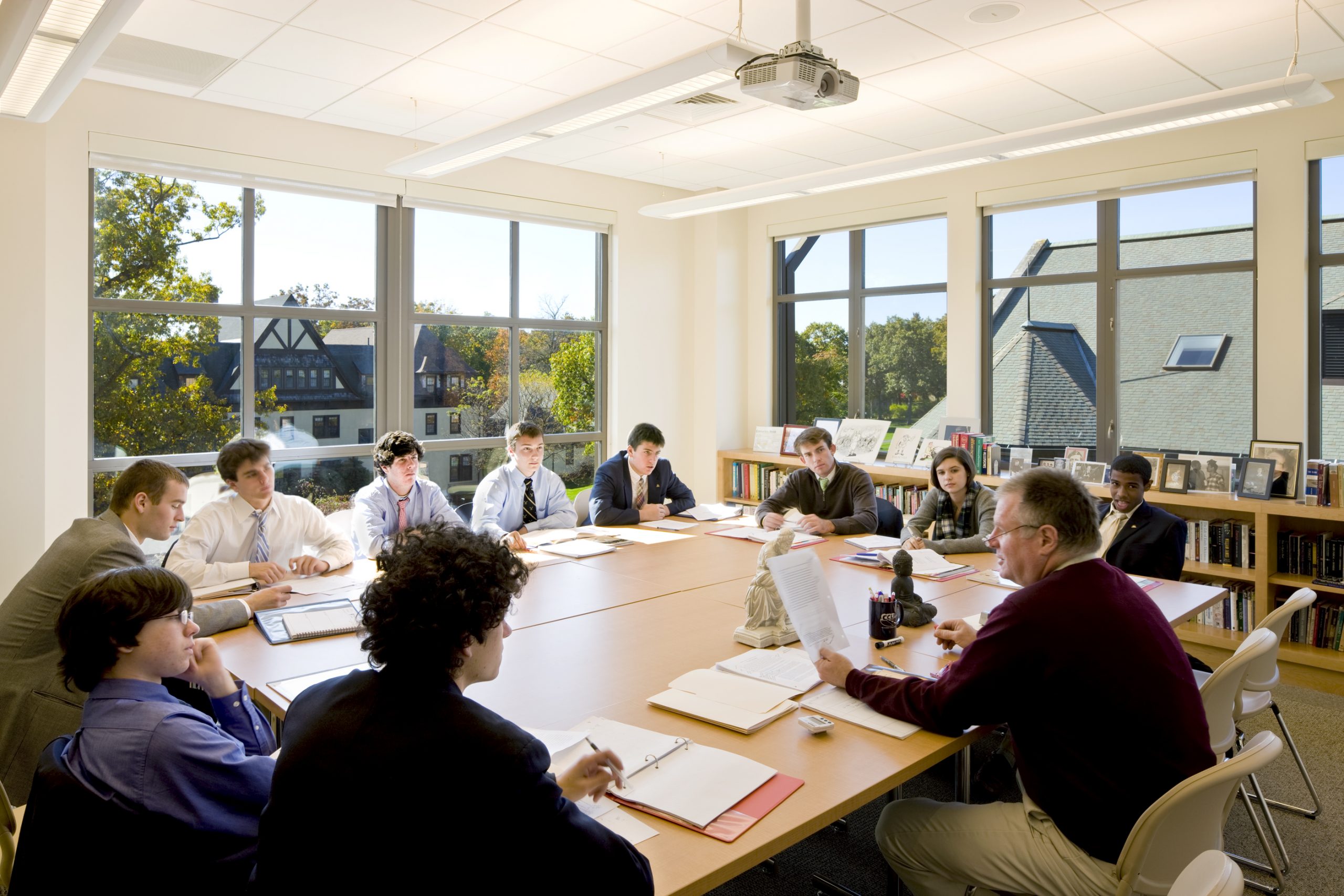
Traditional Harkness classroom / Photo by Robert Benson Photography

Entering through the stone arch of a campus gateway or walking through the wood paneled halls steeped in history are not easily replicated experiences. Especially in New England, the historic buildings on independent school campuses define their aesthetic and help differentiate them.

Educators want forward-thinking classroom spaces that encourage collaborative learning with groups of students working together to solve a problem and teachers serving as their guide. Principles of progressive education mean teachers are no longer tethered to the front of the classroom and students are no longer seated at desks in neat, evenly spaced rows. Often, modern school design expresses flexible classroom design as minimalist box classrooms filled with moveable furniture. They lack the contextual design elements that hint to the rich history of that school, an important factor in inspiring a sense of community among students.
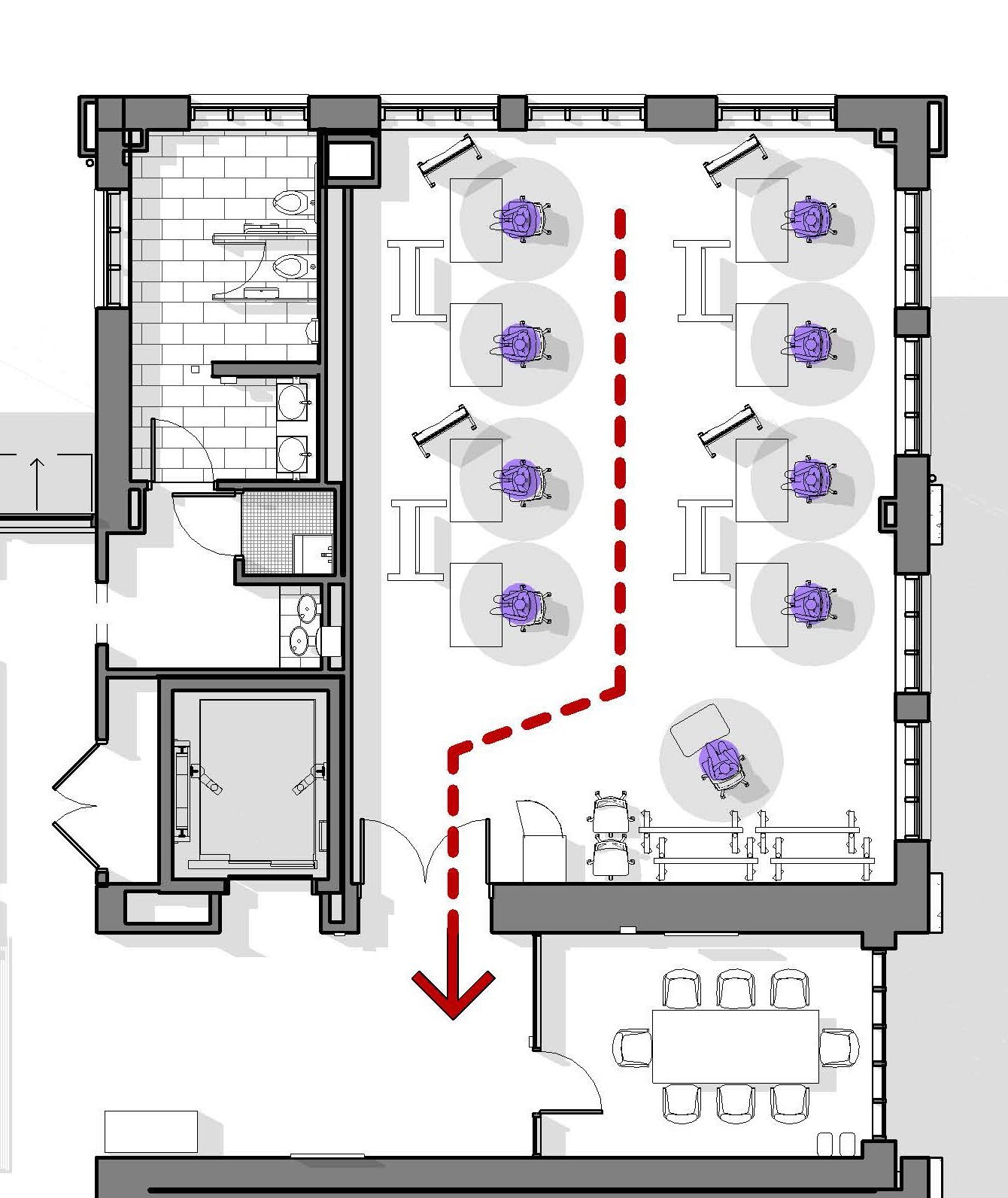
Social distancing classroom arrangement / Rendering courtesy of GUND Partnership

GUND has been alongside our clients researching and testing new classroom designs that support collaborative learning while emphasizing the cultural elements of an institution. Independent schools have a rich tradition of creating a culture where all voices are valued. The Harkness Method is an early example of collaborative inclusive learning. It originated in 1930 and was envisioned as more engaging than the traditional lecture. It’s dynamic because all participants are active in discovering class content together through facilitated discussions.

The Harkness Method is a defining aspect of the independent school experience for many and works especially well for humanities and social sciences. In other disciplines, many educators find the Harkness Table limiting when smaller breakout groups are needed. Because of this, a more flexible learning space design is needed. The principals of learning through dialogue remain the same, while a modified classroom design increases the number of students that can participate and extends the use of the classroom space. In the recent health crisis, we have learned that the flexible classrooms we have implemented across the U.S. have been the ones to serve as best practice models for creating socially-distanced classroom arrangements in alignment with CDC guidelines. The use of single-student desks and the elimination of fixed furniture are two contributing factors to this. The other is the approach to integrating technology into the classroom. All students learning in-person and via synchronous on-line learning can see each other and all can participate in group conversations.

GUND helped one independent school to assess how they could renovate an academic building to include and adapt The Harkness Method. After prototyping classroom concepts, the client and design team arrived at a three-tiered approach that embodies the collaborative learning principles of the Harkness Method while allowing greater flexibility:

  • Traditional Harkness Method Classroom with Harkness Table
  • Modern Harkness Method Classroom with moveable tables that can be easily rearranged into smaller breakout groups
  • The Classroom without a Front which eliminates the hierarchy of a traditional classroom

In today’s competitive academic marketplace, it’s important to make sure classrooms are designed to support a school’s approach to learning and designed to support a school’s culture.

Christine Verbitzki

Christine Verbitzki AIA, LEED AP BD+C is a principal at GUND Partnership where she has been at the forefront of helping institutions deal with the imperatives of changing pedagogies, varied learning styles and technological advancement.


 

architecture creatingculture education FlexibleDesign HarknessMethod highereducation HPNews Sept'20 socialdistancing
    FacebookXLinkedInEmail

You may also like

Education

Rowse Architects Completes Boyle...

January 21, 2025
People

Dietz & Company Architects...

January 9, 2025
Contributor

Ask the Electrician: What are the...

January 8, 2025
People

Turner Named President of...

January 7, 2025
People

Architecture Firm Promotes Two

January 3, 2025
Contributor

What’s Next for Construction in...

December 30, 2024
Contributor

Strengthening the AEC Community: A...

December 27, 2024
Contributor

Boston’s Commercial Real...

December 26, 2024
  • Gray.png
  • Pedigree.png
  • PWC.png
  • INterstate.png

HIGH-PROFILE MONTHLY
615 School St.
Pembroke, MA  02359
Phone: 781 294 4530
Fax:  781 293 5821
info@high-profile.com

Quick Links

  • About Us
  • Contact Us
  • Subscribe
  • Advertise
  • My Account

Stay Informed

Sign up for Fast Facts Friday, our weekly e-newsletter, and stay up-to-date with the latest industry news!

Sign up
Subscribe to High-Profile Monthly to receive an email notice of each new article!
Loading

Copyright © 2026 High-Profile Monthly.

  • Twitter
  • Facebook
  • Instagram
  • Linkedin
  • YouTube
  • RSS
  • Sign In
  • My Account