

by Emily Scarfe
Climate change and resiliency is a hot topic right now and with good reason. 2023 was hot, dry, rainy, or unpredictable depending on where you live and 2024 is looking to be much the same. Landscape architects and civil engineers can substantially impact the ecosystems, landscape spaces, and urban environments around us. They can reduce the effect of severe rain events by designing places that will better tolerate future changes in our environment. This results in landscapes that require fewer resources to maintain and will support stormwater maintenance and re-use. These are the strategies that most often come to mind when discussing (environmental) resiliency. However, there is another layer of resiliency that is as important and perhaps more impactful to more people, more often: emotional resiliency.
At Klopfer Martin Design Group (KMDG), we frame emotional resiliency in our work as being the design strategies that foster community, create a foundation for improving community and interpersonal relationships, and support individual health and well-being through access to nature, as well as a platform for promoting real life connections. In an increasingly digital world, we see parks and open spaces as opportunities to create rewarding analog experiences.
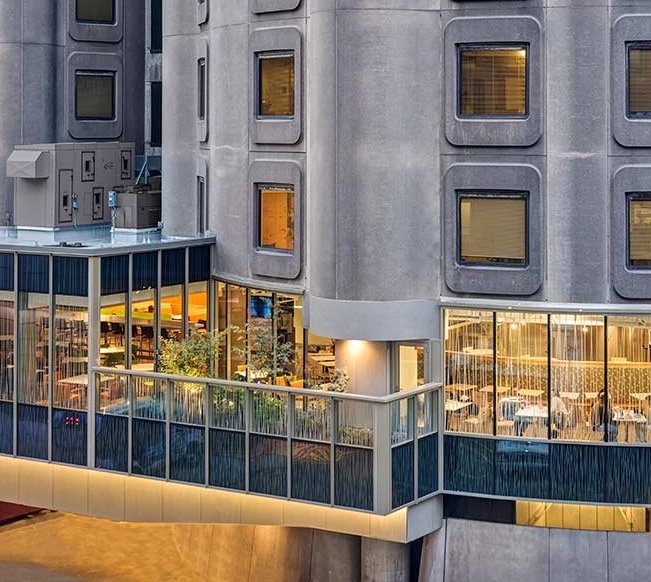
Brigham and Women’s Hospital – garden cafe
Measuring a site’s environmental impact has become easier over time thanks to the introduction of certification programs like LEED and SITES. However, measuring a landscape’s impact on individual and collective well-being is less obvious. As a graduate student at the University of Texas at Austin, I was part of the original research group that developed the guidelines for the Sustainable Sites Initiative (SITES). Reflecting on that work, as well as my experience as a practicing landscape architect, I think we are missing a metric. Certification systems rely primarily on quantifiable information, based on concrete data that makes it possible to measure a project’s success relative to how it meets environmental goals. The qualitative aspects of a site are part of LEED or the SITES Human Health and Well-Being Credits, but they are difficult to define as a metric. Now that the initial SITES framework has been established and adopted, is it possible to expand a site’s qualitative and less material aspects into another measure of success? How do we measure the qualitative aspects of a project’s success and make that an equally important indicator of resiliency?
Different site programs or users require different approaches to designing the built environment. There are substantial differences between our work for the Brigham and Women’s Hospital Landscape Vision Plan that was focused on patient, visitor, and staff experiences and our work developing urban design guidelines; designing public parks, plazas, or streetscapes; and higher education campus landscapes.
As professionals, we value that a landscape can be quantified as successful in terms of its environmental resiliency. And yet, the same landscape may not be successful in attracting and sustaining site users because it does not provide the ephemeral qualities of discovery and delight which may be the difference between building a “site,” and making a “place.” Developing frameworks for how we measure the social and emotional resiliency of a project should be a priority for all of us who work to create our built environment.
Emily Scarfe
Emily Scarfe is associate at Klopfer Martin Design Group.


