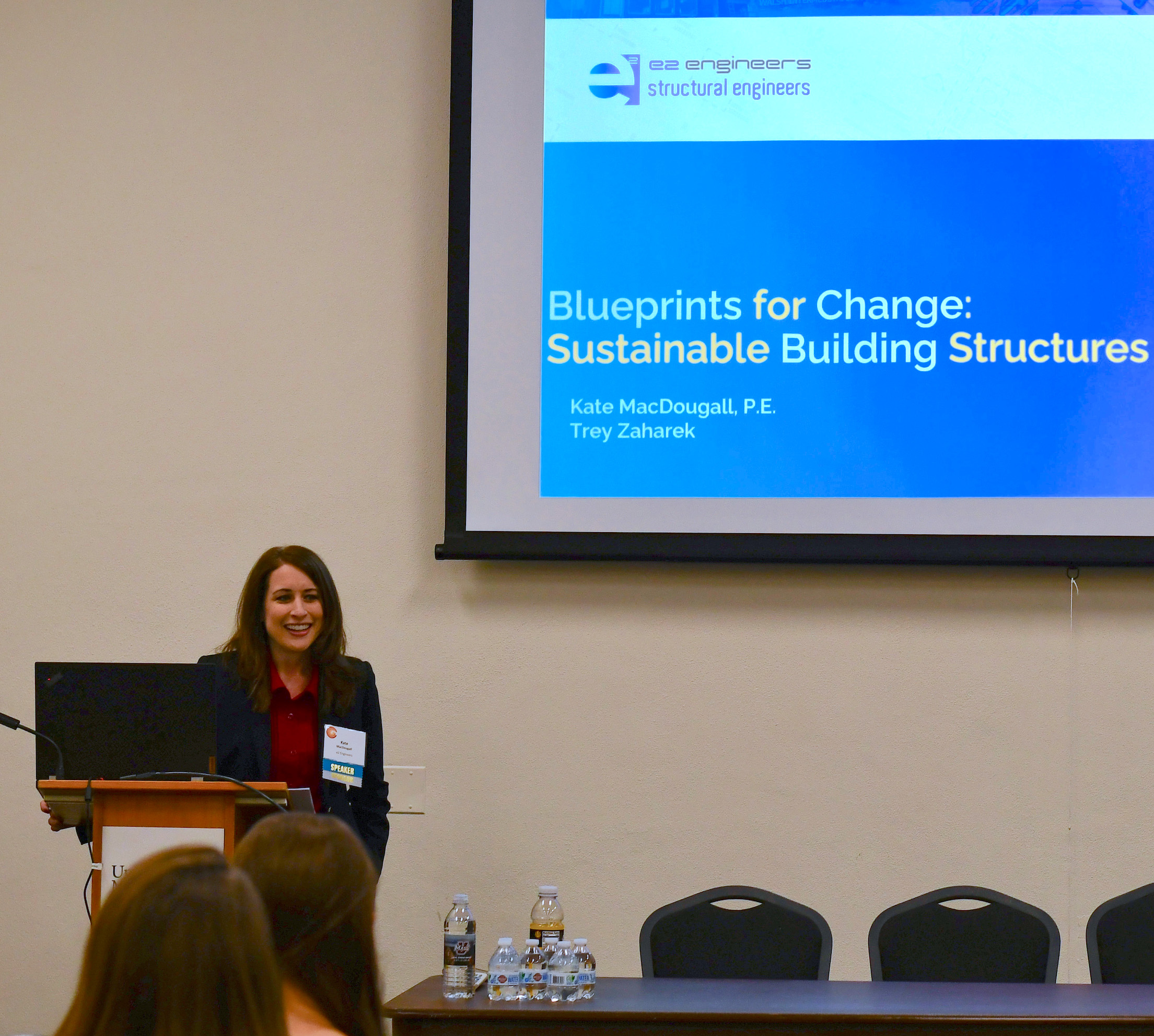
by Kate MacDougall and Trey Zaharek
In construction, sustainability isn’t just a trend, it’s a necessity driven by the need to mitigate climate change and preserve our planet’s finite resources. From architects envisioning eco-friendly designs to engineers optimizing structural or energy efficiency and contractors implementing sustainable practices, every stakeholder plays a role in shaping a greener future.
Understanding Sustainability
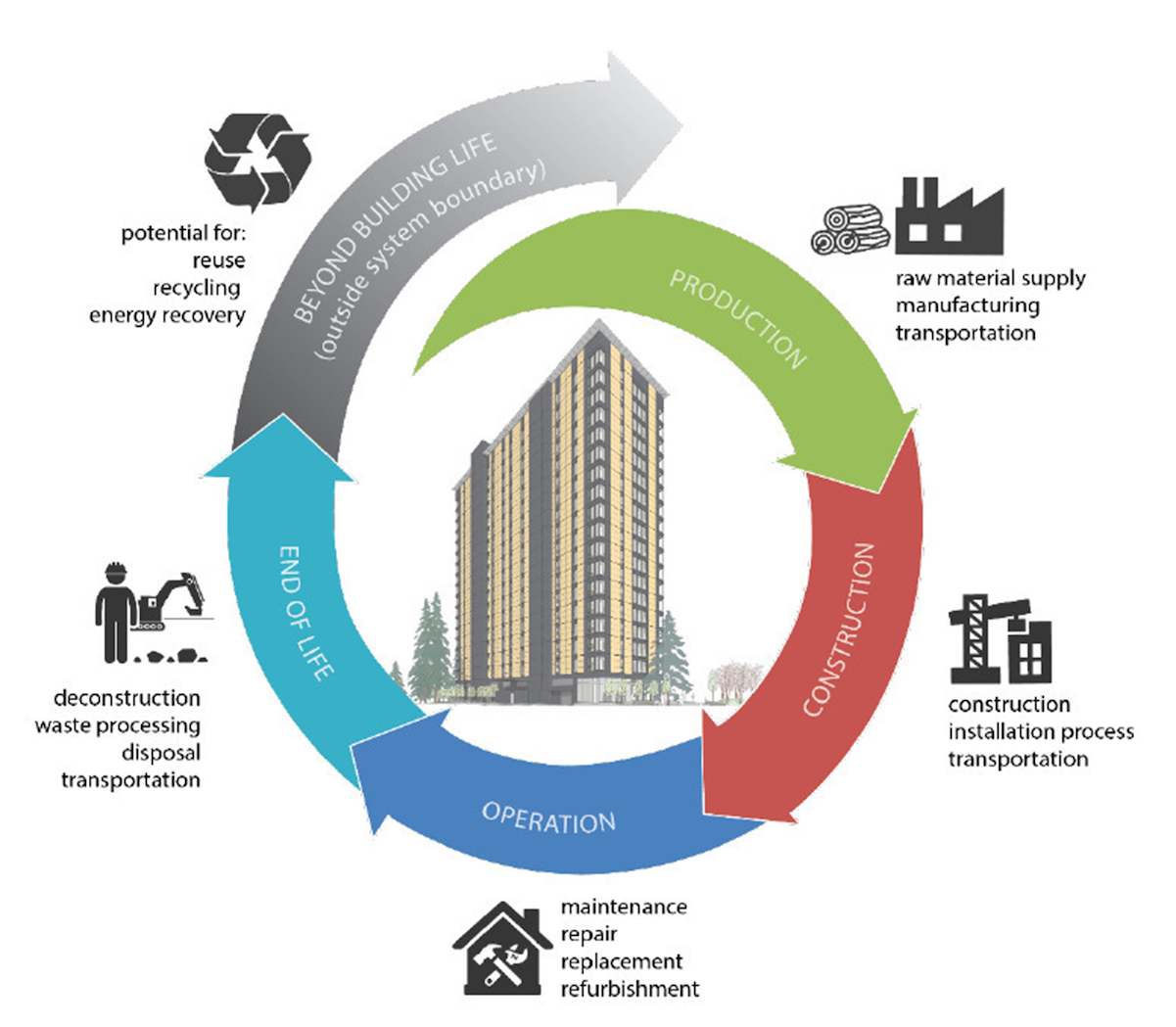
At its core, sustainability in construction involves the use of recyclable and renewable materials, alongside minimizing energy consumption and waste production. It’s a commitment to creating buildings with a minimal environmental footprint throughout their lifecycle, from conception through construction and ultimately its final use.
The Urgency of Action
Climate change is a stark reality, and the construction industry significantly contributes to global greenhouse gas emissions. Studies have shown that the construction industry alone accounts for nearly 39% of these emissions, while the second leading source, the transportation industry, accounts for 23%. This underscores the critical need for sustainable practices in construction and highlights the urgency to act. For instance, Massachusetts aims to be net zero by 2050.
Embodied Carbon: A Critical Concern
Embodied carbon, the sum of greenhouse gas emissions released during all phases of a structure’s lifecycle, is a key metric in assessing sustainability. Unlike operational emissions, which can be mitigated over time, embodied carbon is locked in place once a building is constructed. Structural systems, particularly in concrete, steel, and wood, constitute significant sources of embodied carbon.
Innovative Solutions: Concrete
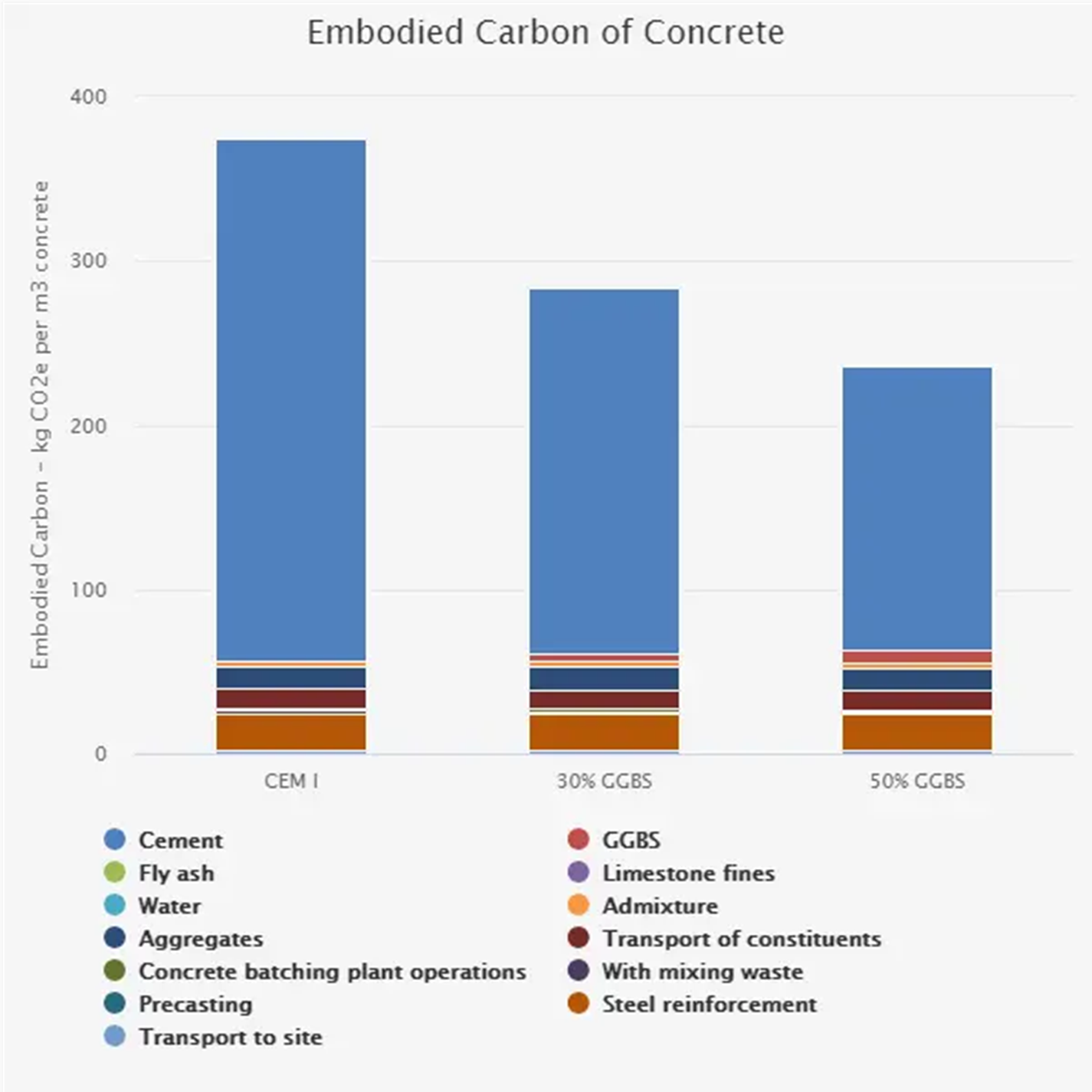
Concrete, a common building material, presents both challenges and opportunities for sustainability. Cement, a key component to concrete, is the largest contributor to embodied carbon due to heating of limestone at high temperatures. Pozzolans and fly ash are eco-friendly partial replacement alternatives to traditional Portland cement, and significantly reduce embodied carbon in concrete. Studies show that Portland cement production contributes to 5% of all global carbon emissions. Insulated concrete forms (ICFs) also provide a way to help mitigate energy loss, where the forms for the concrete walls remain in place and provide insulation for thermal resistance.
Evolving Practices: Steel and Wood
The steel industry has increased sustainability through Electric Arc Furnace (EAF) steelmaking production, which utilizes recycled materials and can be run by renewable energy sources. By optimizing structural designs, prioritizing domestic steel, and using higher strength steel, engineers can further reduce the embodied carbon in steel structures. Additionally, energy loss at balconies and parapets can be reduced using thermal break connections.
Wood, often perceived as the most sustainable material choice, requires responsible forest practices to ensure its ecological integrity. Newer developments in engineered wood products and the rapidly growing interest in mass timber provide opportunities to increase the sustainability of buildings.
Collaborative Approach
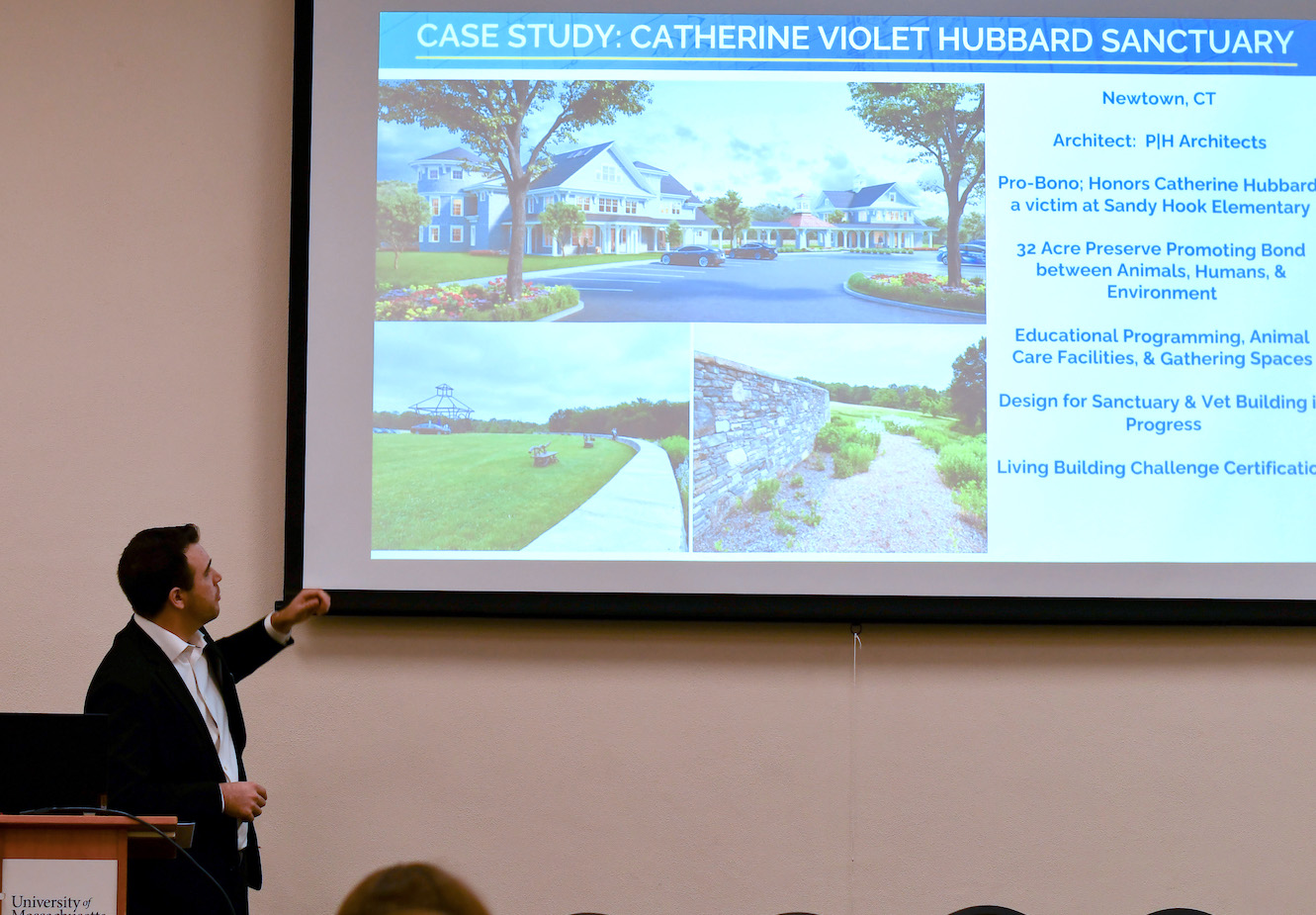
Kate MacDougall and Trey Zaharek led a presentation entitled “Blueprints for Change: Sustainable Building Structures” at the Construction Institute’s 2024 Women Who Build Summit at UMass Amherst.
Sustainability in construction requires collaboration across disciplines and early engagement of stakeholders. By setting clear sustainability goals, engaging design teams early, and fostering innovation, projects can achieve better environmental performance. Tools like Life Cycle Assessments (LCA) and Environmental Product Declarations (EPDs) provide information for decision-making, guiding the selection of materials and systems with lower environmental impacts.
Looking Ahead
As we navigate the complexities of sustainable building, it’s essential to remain proactive and adaptive in our approach. By embracing innovation, fostering collaboration, and setting ambitious sustainability targets, we can pave the way for a future where construction not only meets human needs but also preserves the planet for generations to come.
In the pursuit of sustainable building, every decision matters. The future of construction can lead us to a greener, more resilient built environment – one that harmonizes with nature and serves as a testament to human ingenuity.
Let’s create the blueprints for change.
Kate MacDougall is associate principal and MA studio leader, and Trey Zaharek is a structural engineer, at e2 Engineers.