by Bradley Cardoso
Conference centers of the past included little more than functional meeting room furniture and basic presentation equipment. Today’s high-tech business world commands high-performance and amenity-rich spaces for offsite company conferences, training workshops, and corporate meetings. Even highly acclaimed conference centers are being revitalized with physical and technological improvements to stay competitive.
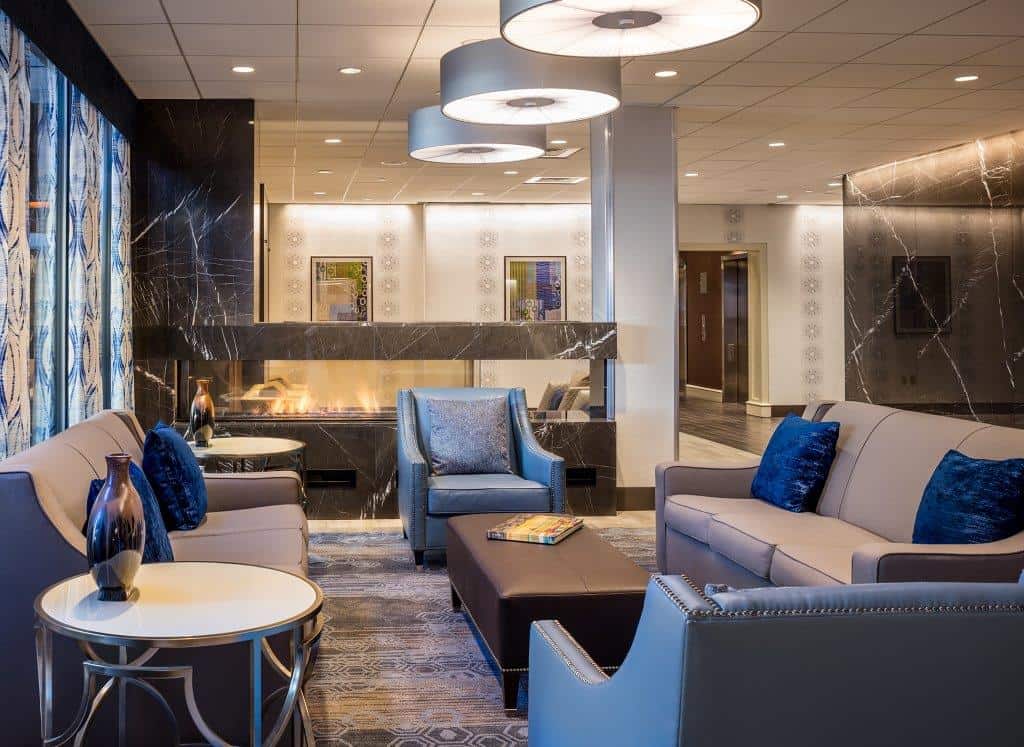
Hobbs Brook lobby / photos by Warren Jagger Photography, Inc
Technology. Updated audiovisual equipment is essential, and future-proofing provides adaption to upcoming technologies. Bluetooth communication systems allow wireless connection to user devices. Installing power and data ports in raised floors provides easy access while preventing falls from dangling cords. Onsite technical support to assist before and during the presentation, plus a full-service business center offering amenities such as concierge and secretarial services, reduces stress for both speakers and attendees.
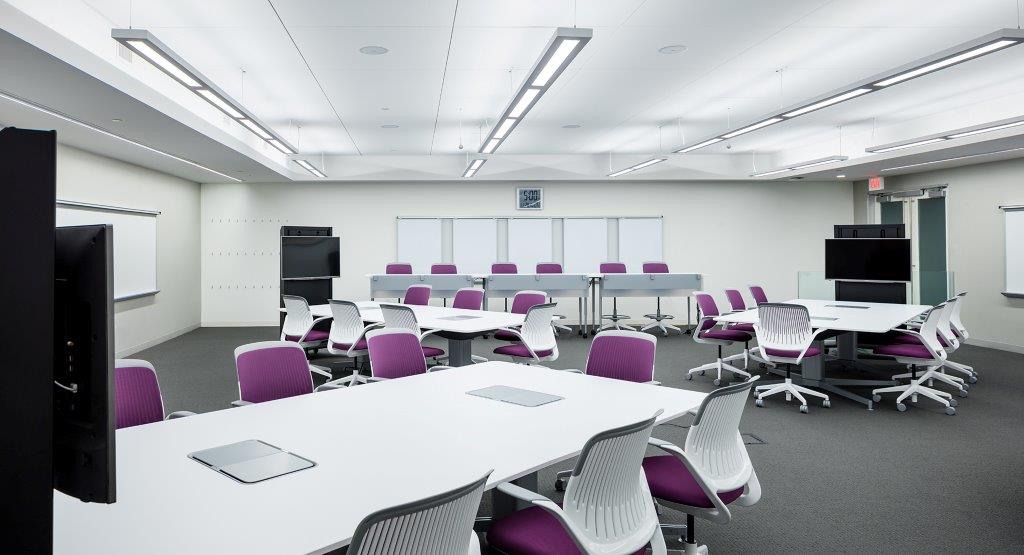
High-tech meeting room
Flexibility. Flexibility is crucial to accommodate a variety of events. Designs should allow multiple configurations with customizable options to meet any organization’s needs, from intimate settings for one-on-one interviews, to moderate-sized breakout sessions, to large conferences. Repositionable furniture can quickly transition a space, such as going from 96 guests in a classroom formation to 200 theater-style.
Sustainability. Sustainable materials, including LED lighting and low-VOC paint, carpet, and furniture, maintain energy efficiency and promote good air quality. Reusable china and soda machines minimize waste. Setting lounge areas around the perimeter filters natural light deep into the building, reducing the need for artificial lighting.
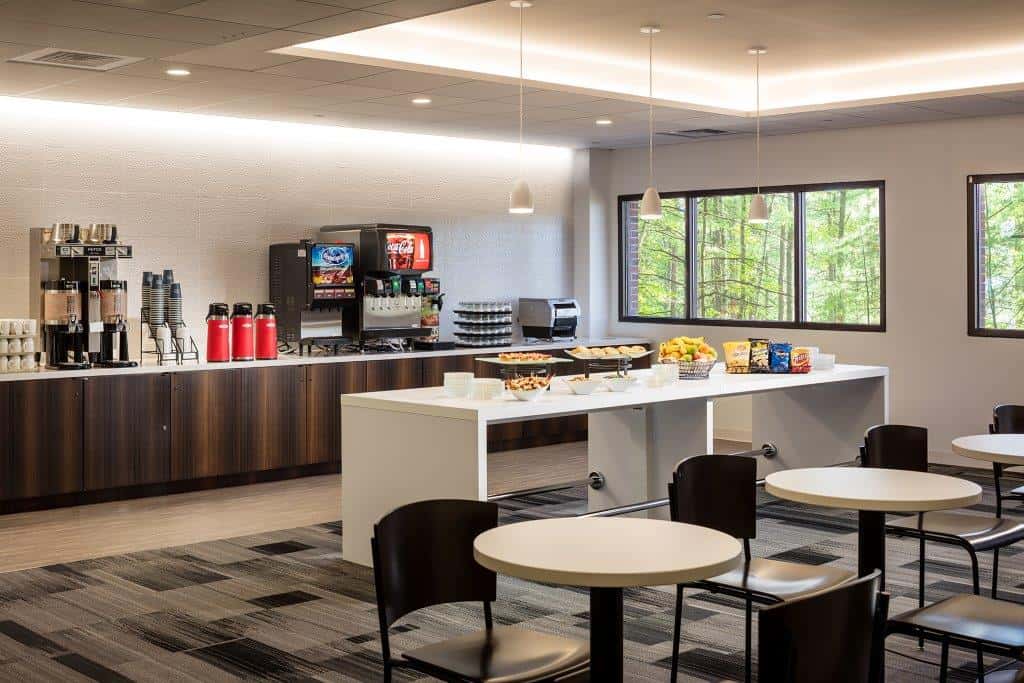
Break room
Modern touches. A modern, visually clean décor scheme allows uninterrupted focus on learning materials. Softer LED lighting, high reflectance materials, and smart sensors to control lighting schemes prevent eye fatigue. Acoustical benefits are achieved by moving mechanical systems into hallways and installing magnetic-locking doors to eliminate noise interruptions.
A founding member of the International Association of Conference Centers (IACC), the only professional association representing small- to medium-sized venues focused on meetings, training courses, and conferences, the Four Points Conference Center in Norwood, Mass. is undergoing a full renovation. The redesigned conference center boasts a flexible floor plan of 40 rooms that can be reconfigured to host from two to 500 attendees, and features all new furnishings including ergonomic chairs and tables with built-in power sources. ADA accessibility upgrades include widened doorways throughout the center and enlarged bathrooms. The bright and simple décor is welcoming and distraction free, with state-of-the-art audiovisual equipment and an expert culinary team providing fresh, premium-quality offerings.
Incorporating smart design elements keeps conference centers functional and efficient while meeting the changing needs of planners and meetings.
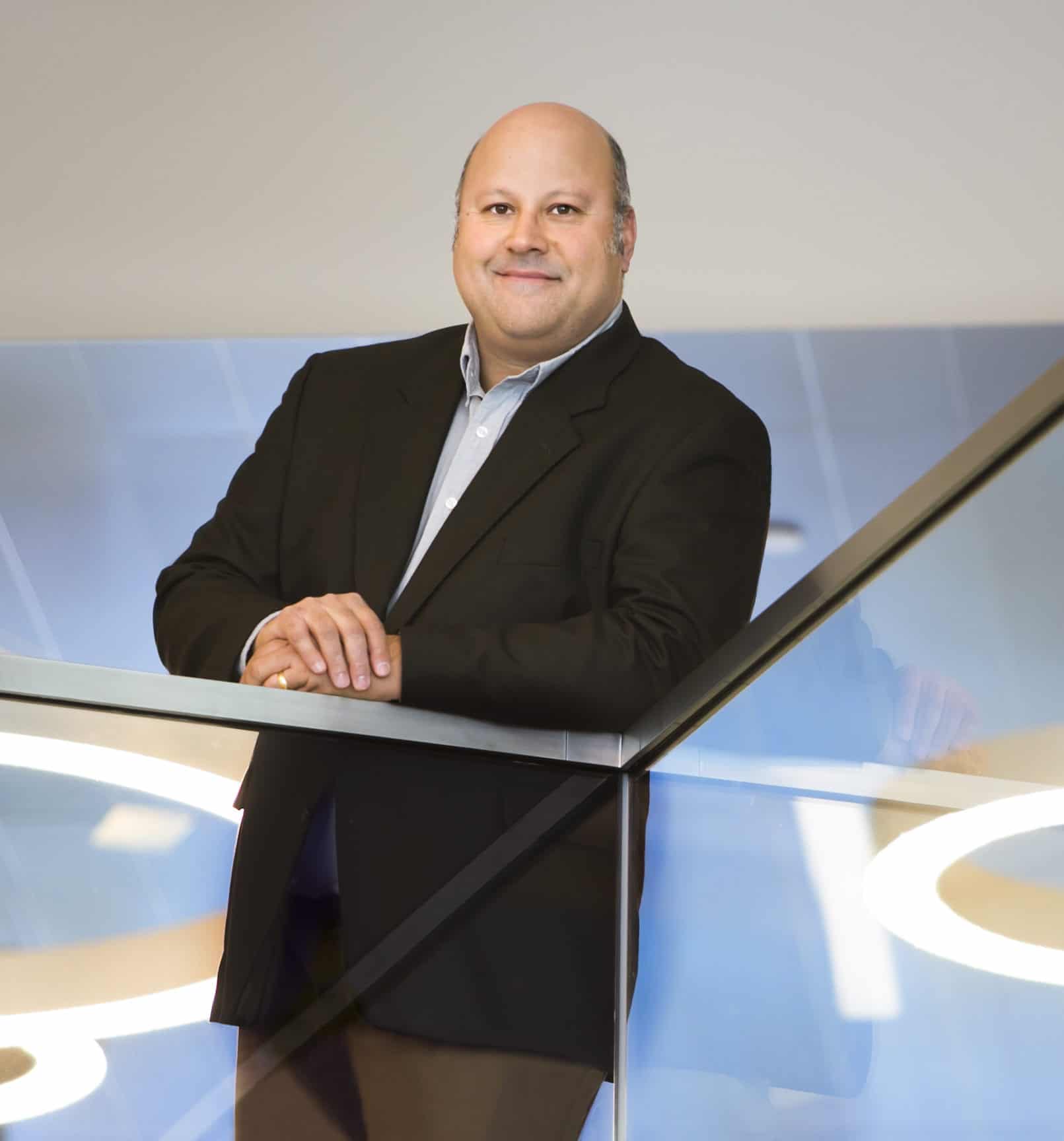
Bradley Cardoso / Shannon Power Photography
Bradley Cardoso, AIA, is a principal architect at Hobbs Brook Management.