
• Twitter
  • Facebook
  • Instagram
  • Linkedin
  • YouTube
  • RSS
  • Sign In
  • My Account
High-Profile MonthlyThe Source for AEC Industry News
  • All News
      • Up Front
      • Groundbreaking
      • Topping Off
      • Ribbon Cutting
      • View All Up Front Stories
      • StMarysBank_NorthBranch_ToppingOffNorth Branch Construction Celebrates Topping Off for new St. Mary’s Bank Branch
      • Special Features
      • Contributor
      • Green
      • J.E.D.I.
      • Mechanical / Electrical / Plumbing (MEP)
      • Vision
      • Women In Construction
      • Regions
      • Connecticut
      • Northern New England
      • Popular Sectors
      • Cannabis
      • Corporate
      • Education
      • Healthcare
      • Interiors
      • Landscape/Civil
      • Life Science
      • Multi Residential
      • Restoration/Renovation
      • Retail/Hospitality
      • Senior/Assisted Living
      • Technology & Innovation
      • Other News
      • Awards
      • Community
      • COVID-19
      • Mixed-use
      • Municipal
      • National/International
      • Organizations and Events
      • People
      • Philanthropy
      • Products and Services
      • Real Estate
      • Training and Recruitment
  • Subscribe
  • Next Issue
  • Archive
  • Advertise
  • Podcast
  • A/E/C Associations
  • Calendar
High-Profile Monthly
  • All News
      • Up Front
      • Groundbreaking
      • Topping Off
      • Ribbon Cutting
      • View All Up Front Stories
      • StMarysBank_NorthBranch_ToppingOffNorth Branch Construction Celebrates Topping Off for new St. Mary’s Bank Branch
      • Special Features
      • Contributor
      • Green
      • J.E.D.I.
      • Mechanical / Electrical / Plumbing (MEP)
      • Vision
      • Women In Construction
      • Regions
      • Connecticut
      • Northern New England
      • Popular Sectors
      • Cannabis
      • Corporate
      • Education
      • Healthcare
      • Interiors
      • Landscape/Civil
      • Life Science
      • Multi Residential
      • Restoration/Renovation
      • Retail/Hospitality
      • Senior/Assisted Living
      • Technology & Innovation
      • Other News
      • Awards
      • Community
      • COVID-19
      • Mixed-use
      • Municipal
      • National/International
      • Organizations and Events
      • People
      • Philanthropy
      • Products and Services
      • Real Estate
      • Training and Recruitment
  • Subscribe
  • Next Issue
  • Archive
  • Advertise
  • Podcast
  • A/E/C Associations
  • Calendar
Contributor • Healthcare • Trends and Hot Topics

Successful Hospice House Design

May 18, 2015
Richard Borrelli

Richard Borrelli

Doug Whitney

Doug Whitney

by Richard B. Borrelli and Douglas W. Whitney

Designing a hospice facility is a sacred assignment. It is not only a place to keep a terminal patient comfortable, it is also a place where patients and their families will visit, reminisce, comfort each other, and ultimately, say goodbye.

Today, there is less focus on the clinical aspects of hospice care and greater understanding of the need to create a peaceful, nurturing environment for patients and families. This trend is encouraging small, well-appointed centers that focus on living, not the ending of life. Here are some key best practices in hospice house design:

Comforts of Home. In designing hospice rooms, we take as many cues from the hospitality industry as we do from acute care. Furniture should be plentiful and scalable; colors both cheerful and soothing. Acoustics need to accommodate privacy, so that resting patients won’t be disturbed by family visits in the next room. At the same time, a hospice room must also be able to accommodate the realities of palliative care. A lot can be accomplished by the use of movable furniture and equipment, well-designed storage options, and surfaces that are easy to keep clean, all within a well-considered layout. Patient rooms often include regional materials to create a sense of home, of the familiar, and hopefully to evoke positive memories.
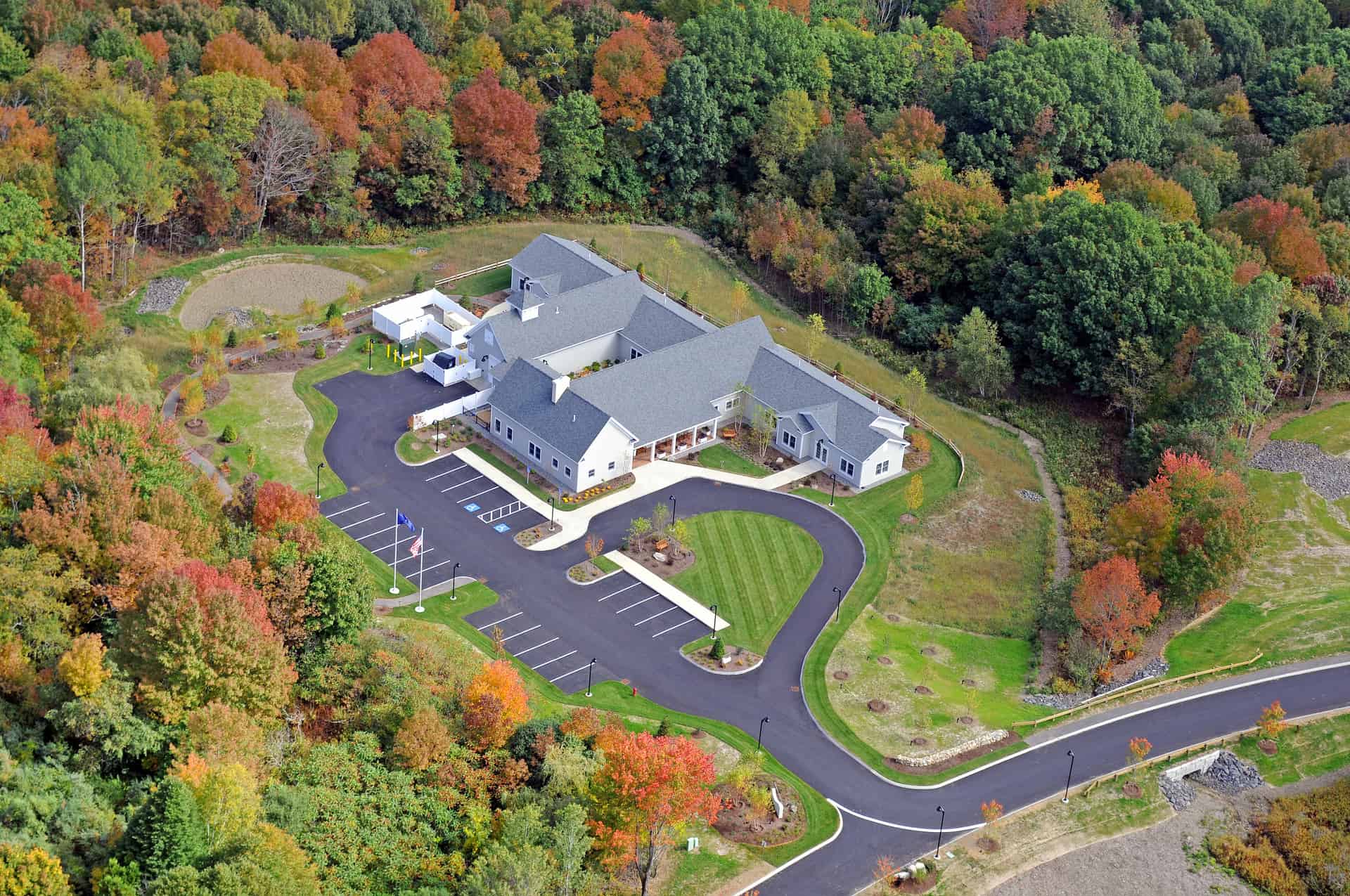
Aerial view of the Sussman

Aerial view of the Sussman House / photo by Butch Moor

Links to Nature. Connection to the outdoors is something that has become important. This goes beyond designing rooms with access to daylight and natural views. At WBRC’s recent hospice project, Sussman House, Rockport, Maine, the design includes physical access to private outdoor patios, as well as multiple gardens and walking trails. Common sense and clinical research both tell us that nature is a healer. So views of nature, access to the outdoors, and controlled natural light are all must-haves in today’s design schemes.

Focus on Today’s Family. American culture has made great strides in bringing the dying process back to what it once was — a family-centered journey. Multiple generations will likely be at the bedside of hospice patients, and each has different needs. Everything a multi-generation family would need at their home — a kitchen, living room, bathrooms, TV, Internet access, even things like a high chair — should be in a hospice home. At Sussman House, a glassed-in den allows children to play, read, or watch TV safely, with acoustical separation from the main gathering room.

Discretion and Sensitivity. Given the higher-than-normal percentage of deaths in a hospice setting, it is imperative to provide discreet methods for the removal of these patients postmortem. Strategies that keep this removal quiet and private must be part of the facility’s master plan. For example, a separate, screened rear access door is part of Sussman House’s successful design.

Caring for Caregivers. In order for a hospice house to be successful, staff needs be given as much consideration as the families visiting their loved ones. Staff members often become attached to their patients and families and can take quite an emotional hit from the continued losses of their charges. Space for them to escape from the stress and have a private conversation is critical to maintain emotional equilibrium. At the same time, as with any residential care facility, staff should have a visible line of sight to patients whenever possible.

Ask the Experts. One of the simplest and most overlooked ways to come up with creative solutions to the particular challenges of hospice design is to visit other hospice facilities and ask what works and what doesn’t.

Richard B. Borrelli, AIA, NCARB, is a firm principal and healthcare director at WBRC Architects · Engineers.
Douglas W. Whitney, AIA, NCARB, LEED AP, is the firm’s president/CEO.
Sussman House, part of Pen Bay Healthcare, was constructed by Wright-Ryan.


Douglas W. Whitney Hospice House Design p615 Richard Borrelli Sussman House WBRC Architects
    FacebookXLinkedInEmail

You may also like

Healthcare

Erland Construction Completes...

January 14, 2025
Trends and Hot Topics

Report Highlights Design-Build’s...

January 9, 2025
Contributor

Ask the Electrician: What are the...

January 8, 2025
Contributor

What’s Next for Construction in...

December 30, 2024
Contributor

Strengthening the AEC Community: A...

December 27, 2024
Contributor

Boston’s Commercial Real...

December 26, 2024
Contributor

Choosing a B2B PR Agency: Why it...

December 19, 2024
Contributor

A/Z’s 2025 Strategic Growth...

December 18, 2024
  • Gray.png
  • Pedigree.png
  • PWC.png
  • INterstate.png

HIGH-PROFILE MONTHLY
615 School St.
Pembroke, MA  02359
Phone: 781 294 4530
Fax:  781 293 5821
info@high-profile.com

Quick Links

  • About Us
  • Contact Us
  • Subscribe
  • Advertise
  • My Account

Stay Informed

Sign up for Fast Facts Friday, our weekly e-newsletter, and stay up-to-date with the latest industry news!

Sign up
Subscribe to High-Profile Monthly to receive an email notice of each new article!
Loading

Copyright © 2026 High-Profile Monthly.

  • Twitter
  • Facebook
  • Instagram
  • Linkedin
  • YouTube
  • RSS
  • Sign In
  • My Account