by John Fowler
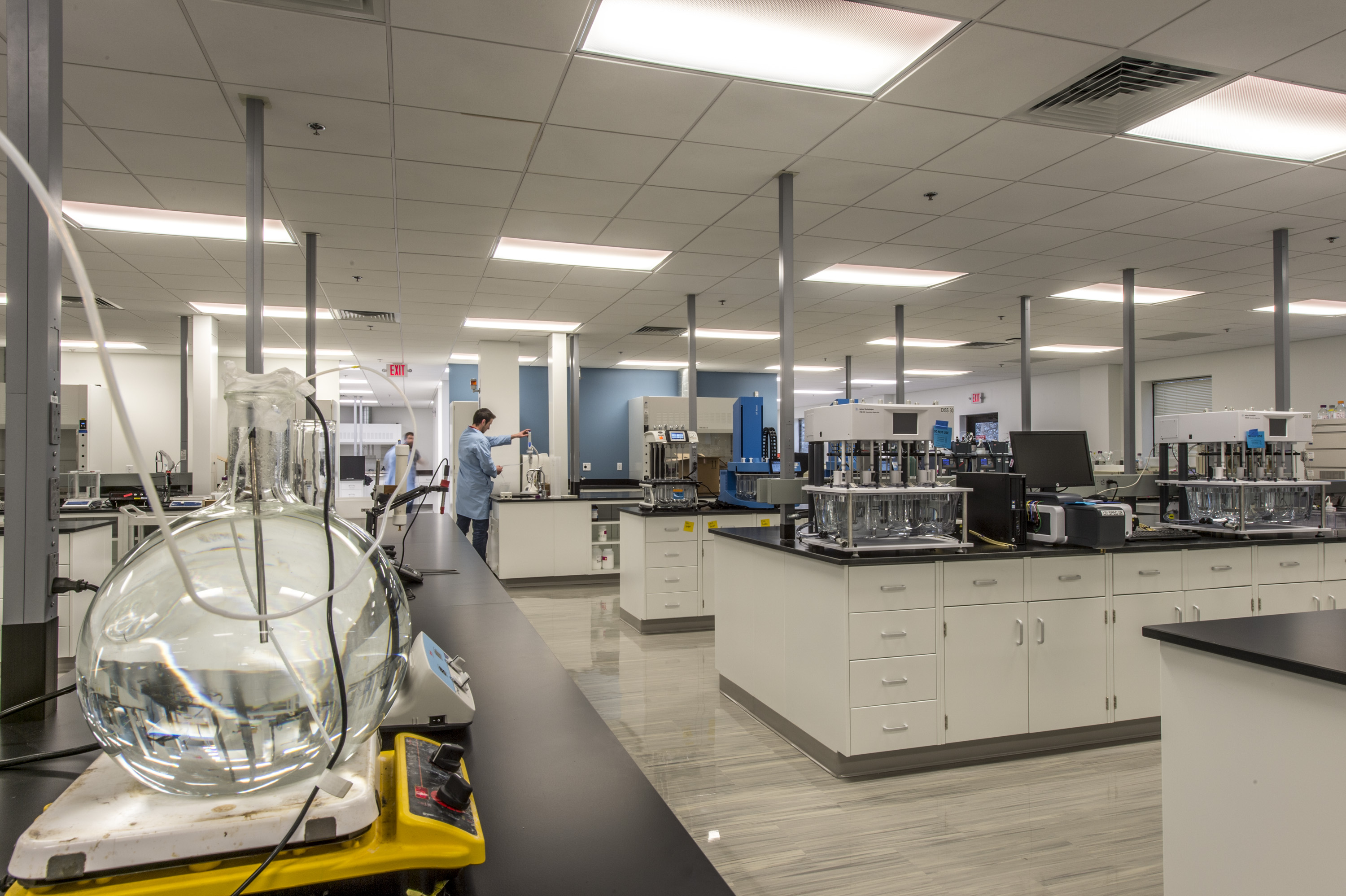
Transparency and privacy considerations are inherent to most workplace environments, especially those with an open office layout. Healthcare and science projects pose further challenges, as such spaces often have stricter requirements regarding confidentiality and proprietary information. While research and development teams rely on a high degree of collaboration, there is also the need for security and privacy, even internally between departments. Thoughtful design can strike the right balance for transparency and privacy in busy healthcare and science workplace environments.
Acoustical considerations
Shupe studios
It’s important to understand all the acoustical requirements involved in a project, as well as take the needs of end users into consideration. Designing walls and ceilings to their respective specifications — sound transmission classification (STC) and noise reduction coefficient (NRC) ratings —may not be sufficient for the purpose of the space.
Sound masking adds background noise to reduce distractions and protect privacy and can be useful when used appropriately; however, it is often misused to cover up sound that can be reduced with active noise control. Before utilizing sound masking, it is recommended to look at the acoustical design and try to correct any areas of deficiency. Electrical outlets, doors, and end wall conditions with exterior glazing are some of the usual suspects that contribute to sound leakage. For projects with complex acoustical conditions, consider hiring an acoustical consultant and/or building mock-ups and testing of the design concept.
In addition to HIPAA privacy law requirements and mandated acoustical guidelines for healthcare projects, there are further privacy concerns to be addressed for specific clinical programs. For a recent project with behavioral consult rooms, the project team designed and built a mock-up consult room to evaluate the acoustics for noise control and speech privacy. The client clinicians noticed that although words were not discernible between spaces, emotional vocalization (laughter and crying) was clearly detectable in the mock-up design. In behavioral health environments, the free expression of emotion is entirely encouraged and speech privacy of the spaces need to support that philosophy. The mock-up led the design team to consider additional acoustical measures that went beyond the guidelines and standard best practices.
Transparency and visual connection
Glass walls can create literal transparency that fosters an open and inviting atmosphere, as well as provide exterior views, natural light distribution, and connection between adjoining spaces. Of course, glass also creates visual privacy challenges. There are several methods to address privacy concerns with the use of interior glass. Clerestory windows that start above eye level can help distribute natural light and offer views to the exterior when there is no desire to have transparency between adjoining spaces.
When there is a desire for full-height glass, art glass or films can be used to change the levels of transparency. There is a plethora of options available for glass treatments, including frosted glass or patterned effects that transition between varying levels of transparency. Glass options can also combine frosting with custom patterns to achieve a certain look or incorporate brand identity. Glass treatments offer a lot of flexibility for balancing transparency with privacy while still transferring light.
Shades and blinds allow users to change the wall condition completely at will and also can be specified with a wide variety of finishes and levels of opacity. In healthcare spaces requiring higher levels of infectious control as well as manufacturing clean rooms with stringent requirements, blinds can be placed between two pieces of glass to eliminate the dust control issues with shades and blinds.
Another option gaining popularity is smart glass, which can transform from clear to opaque (frosted) with the flick of a switch. There are also smart films that can be applied to existing glass and microscopic blinds that are nearly invisible when open and create a frosted appearance when closed. In addition to the up-front costs of smart glass, maintenance and life cycle costs need to be considered.
Many of the visual screening techniques create a blurred effect that will conceal identities but still allow some light and connection between spaces. Another aspect to consider is that motion may still be noticeable, and that is not always desirable. The motion of blurred figures behind frosted glass or nearly opaque shades can sometimes be a distraction to researchers, clinicians, or patients.
Acoustic and visual considerations often go hand in hand and can create contradictory project requirements. In a cancer center infusion space, clinicians required direct visual observation of each patient from a shared work space but wanted their conversations in the space to be private. The design of the wood and glass work area provided enough acoustical privacy and made the clinicians seem accessible to patients without creating a fish bowl effect. Wood finishes and natural color schemes can also help to soften the cold and hard feeling sometimes associated with glass.
In health and science projects, there’s no one-size-fits-all solution to balancing transparency with acoustical and visual privacy. Designers need to look at the specific needs of each client and use several acoustical strategies for individual spaces within the project.

John Fowler / photo by Bruce Rogovin
John Fowler, AIA, EDAC, LEED AP, is an associate principal in the Health+Science studio at Margulies Perruzzi Architects (MPA).