• Twitter
  • Facebook
  • Instagram
  • Linkedin
  • YouTube
  • RSS
  • Sign In
  • My Account
High-Profile MonthlyThe Source for AEC Industry News
  • All News
      • Up Front
      • Groundbreaking
      • Topping Off
      • Ribbon Cutting
      • View All Up Front Stories
      • StMarysBank_NorthBranch_ToppingOffNorth Branch Construction Celebrates Topping Off for new St. Mary’s Bank Branch
      • Special Features
      • Contributor
      • Green
      • J.E.D.I.
      • Mechanical / Electrical / Plumbing (MEP)
      • Vision
      • Women In Construction
      • Regions
      • Connecticut
      • Northern New England
      • Popular Sectors
      • Cannabis
      • Corporate
      • Education
      • Healthcare
      • Interiors
      • Landscape/Civil
      • Life Science
      • Multi Residential
      • Restoration/Renovation
      • Retail/Hospitality
      • Senior/Assisted Living
      • Technology & Innovation
      • Other News
      • Awards
      • Community
      • COVID-19
      • Mixed-use
      • Municipal
      • National/International
      • Organizations and Events
      • People
      • Philanthropy
      • Products and Services
      • Real Estate
      • Training and Recruitment
  • Subscribe
  • Next Issue
  • Archive
  • Advertise
  • Podcast
  • A/E/C Associations
  • Calendar
High-Profile Monthly
  • All News
      • Up Front
      • Groundbreaking
      • Topping Off
      • Ribbon Cutting
      • View All Up Front Stories
      • StMarysBank_NorthBranch_ToppingOffNorth Branch Construction Celebrates Topping Off for new St. Mary’s Bank Branch
      • Special Features
      • Contributor
      • Green
      • J.E.D.I.
      • Mechanical / Electrical / Plumbing (MEP)
      • Vision
      • Women In Construction
      • Regions
      • Connecticut
      • Northern New England
      • Popular Sectors
      • Cannabis
      • Corporate
      • Education
      • Healthcare
      • Interiors
      • Landscape/Civil
      • Life Science
      • Multi Residential
      • Restoration/Renovation
      • Retail/Hospitality
      • Senior/Assisted Living
      • Technology & Innovation
      • Other News
      • Awards
      • Community
      • COVID-19
      • Mixed-use
      • Municipal
      • National/International
      • Organizations and Events
      • People
      • Philanthropy
      • Products and Services
      • Real Estate
      • Training and Recruitment
  • Subscribe
  • Next Issue
  • Archive
  • Advertise
  • Podcast
  • A/E/C Associations
  • Calendar
Contributor • Education

Specifying Healthy Building Materials in School Design and Construction

August 25, 2022
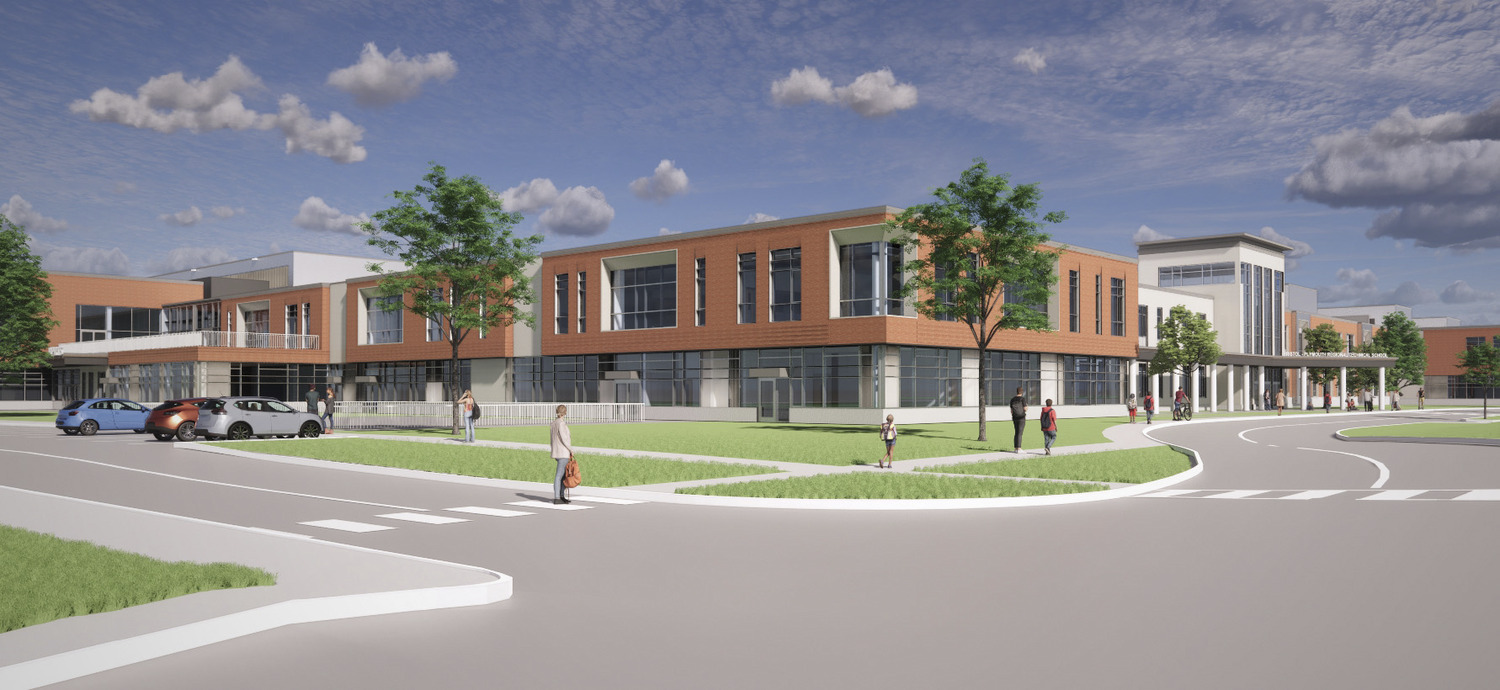
Bristol-Plymouth Regional Technical School / Renderings courtesy of HMFH Architects

by Tina Stanislaski

A pilot program by the Massachusetts School Building Authority (MSBA) was launched with the objective of reducing toxic chemicals found in common building materials and furnishings that have been linked to human health issues, including cancer. Bristol-Plymouth Regional Technical School, a $305 million, 410,000sf facility that will open to grades 9-12 in Taunton, Mass. in the fall of 2026, is the prototype for this ambitious program.

The rationale is clear: By graduation from the 12th grade, a typical student will have spent more than 15,000 hours in school buildings, second only to the time spent at home. The most concerning toxic chemicals are per- and polyfluoroalkyl substances (PFAS), phthalates, flame retardants, and antimicrobials.

PFAS chemicals, which do not break down in the environment, are used in a wide range of products as protective coatings. According to the Centers for Disease Control (CDC), animal studies have indicated that PFAS may affect growth, development, reproduction, thyroid and liver function, and the immune system. Since 1999, the CDC has found at least 12 PFAS in the blood serum of human study participants 12 years and older.

Phthalates are a group of chemicals used to make plastics more durable. They are in hundreds of products, including vinyl flooring, some paints, and even caulk. CDC findings indicate widespread phthalate exposure in the general population of the United States.
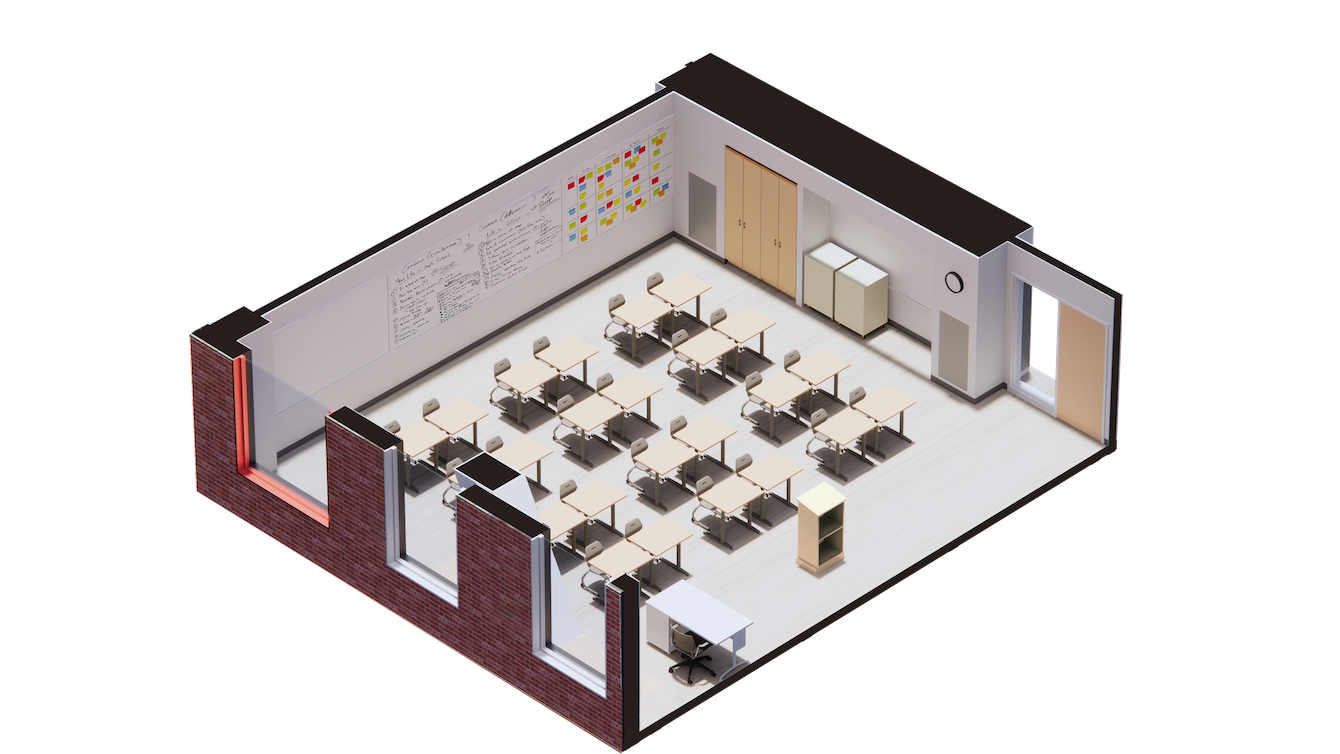
A typical Bristol-Plymouth Regional Technical School classroom showing high-touch surfaces

Flame retardant and antimicrobial treatments are commonly found in carpets, carpet padding, and fabrics. Recognizing the need to balance fire retardants with healthy building products, thoughtful architects specify materials that are not apt to burn and encourage building design that meets or exceeds code requirements for sprinkler and fire suppression systems.

The International Building Institute, through its Living Building Challenge (LBC), has identified “red listed” materials and chemicals used in the building industry that are known to pose serious risks to human health and the environment. The red list serves as a platform for manufacturers to voluntarily disclose product information on “Declare” labels, which the LBC describes as a “nutrition label for building products…designed to help specifiers quickly identify products that meet their project requirements.” All active Declare labels are accessible on a free database, searchable by product type, manufacturer, and green building certification requirement.

For the Bristol-Plymouth Regional Technical School, the MSBA charged HMFH Architects with reviewing lists of chemicals in thousands of products typically used in K-12 schools. With an emphasis on high-touch surfaces, items under scrutiny ranged from paint, window coverings, flooring, carpet, and furniture to markerboards, lockers, toilet room partitions, and gymnasium vinyl wall pads.

Three different manufacturers are required for any material specified on a public project in Massachusetts. This adds another layer of complexity to sourcing suitable options that do not contain chemicals that are harmful to animal life or the environment, are readily available, and have nominal budget impact. Proactive outreach to manufacturers and aggressive advocacy for healthy products during value engineering are increasingly important ways that designers can promote healthy building product options for the K-12 school market.

To date no public K-12 schools have been constructed with 100% healthy building products, but with major funders like MSBA in the vanguard of this initiative, healthy buildings may soon be the norm and not the exception.

Tina Stanislaski

Tina Stanislaski, AIA, LEED AP is a principal at HMFH Architects.

healthybuildings HPNews Sept'22
    FacebookXLinkedInEmail

You may also like

Education

Rowse Architects Completes Boyle...

January 21, 2025
Contributor

Ask the Electrician: What are the...

January 8, 2025
Contributor

What’s Next for Construction in...

December 30, 2024
Contributor

Strengthening the AEC Community: A...

December 27, 2024
Contributor

Boston’s Commercial Real...

December 26, 2024
Contributor

Choosing a B2B PR Agency: Why it...

December 19, 2024
Contributor

A/Z’s 2025 Strategic Growth...

December 18, 2024
Education

Erland Construction Completes Two...

December 17, 2024
  • Gray.png
  • Pedigree.png
  • PWC.png
  • INterstate.png

HIGH-PROFILE MONTHLY
615 School St.
Pembroke, MA  02359
Phone: 781 294 4530
Fax:  781 293 5821
info@high-profile.com

Quick Links

  • About Us
  • Contact Us
  • Subscribe
  • Advertise
  • My Account

Stay Informed

Sign up for Fast Facts Friday, our weekly e-newsletter, and stay up-to-date with the latest industry news!

Sign up
Subscribe to High-Profile Monthly to receive an email notice of each new article!
Loading

Copyright © 2026 High-Profile Monthly.

  • Twitter
  • Facebook
  • Instagram
  • Linkedin
  • YouTube
  • RSS
  • Sign In
  • My Account