by Ed St. Peter
When designing a lab, choosing between single-sided or double-sided benches is a key decision. Both options offer unique advantages depending on the lab’s specific needs. Double-sided benches, or island benches, provide workspace and storage accessible from both sides. They are popular in labs with multiple users, encouraging collaboration and efficient use of space. In contrast, single-sided benches offer workspace from one side only and are typically used along the perimeter of a room.
Lab Size and Utilities
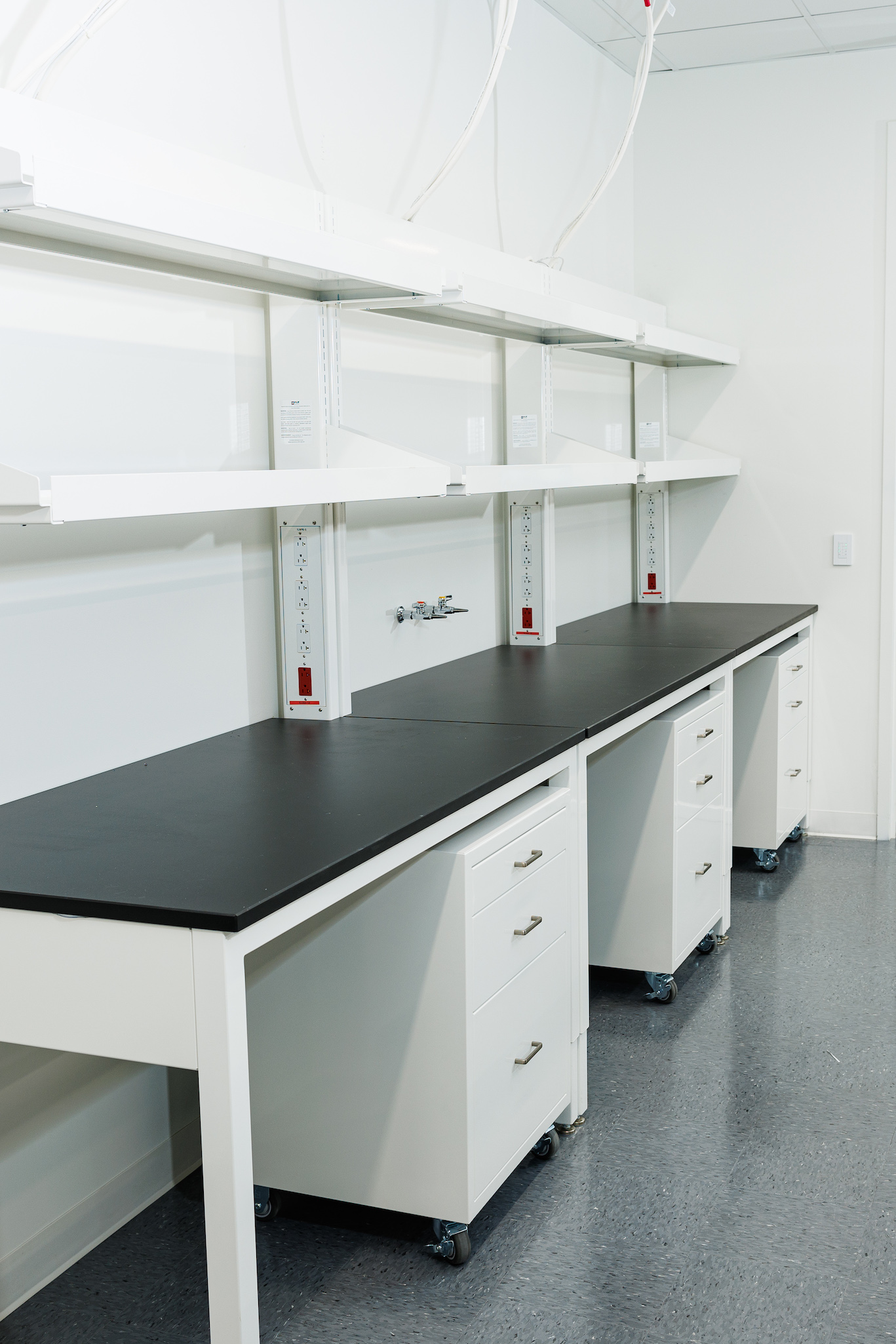
Single-sided bench
A major consideration in selecting a bench type is the lab’s size and utility needs, particularly electrical and plumbing requirements. Double-sided benches are ideal for larger labs with high personnel counts, as they can support more utility connections and minimize infrastructure costs by serving both sides of the bench from a single connection point. This makes them particularly well-suited for teaching labs or industrial settings where many users need access to utilities.
However, labs with limited floor space or flexible workflows may benefit from single-sided benches, which can be fixed to or moved against walls to maximize open floor space. This flexibility is advantageous in labs where personnel need room to move around freely.
Storage and Organization
The type of bench you choose also affects your storage options. Double-sided benches allow for shelving accessible from both sides, enabling workers to store materials separately without disrupting colleagues on the other side. This setup works well for labs where tasks are highly differentiated between workers.
On the other hand, single-sided benches often have shelving installed directly in front of users, typically against a wall. This allows for efficient use of space while maintaining easy access to storage. Single-sided benches are ideal for conserving floor space while still allowing for adjacent workstations.
Workflow Considerations

Double-sided bench
The way your lab operates will influence your bench choice. If tasks require close collaboration, double-sided benches are ideal since they allow multiple users to work on the same tasks simultaneously. Single-sided benches, however, are better suited for labs where individuals work independently or alongside each other without the need for constant interaction.
Both types of benches can be fixed or mobile, with mobile benches offering flexibility as workflow changes. Additionally, many bench designs are height-adjustable to accommodate users of varying heights or those with specific accessibility needs.
Safety, Cleaning, and Budget
Safety and cleanliness are essential factors in lab design. Regardless of the bench type, there must be enough room for safe movement within the lab, in compliance with institutional safety standards and regulations such as those from OSHA. Additionally, benches should be easy to clean and maintain, especially in labs that require sterilization.
Budget is another important consideration. Double-sided benches tend to be more expensive upfront, but they offer cost savings in labs with many personnel because they reduce the need for separate utility installations. Single-sided benches are more cost-effective for smaller labs or labs with fewer workers.
Conclusion
Ultimately, the choice between single-sided and double-sided benches depends on your lab’s size, workflow, storage needs, and budget. Single-sided benches are ideal for labs that need to maximize floor space and wall storage, while double-sided benches provide more utilities, storage, and collaborative workspace. By carefully considering these factors, you can choose the best bench configuration for your lab’s specific needs.

Ed St. Peter
Ed St. Peter is managing member of STEM Solutions, LLC.