• Twitter
  • Facebook
  • Instagram
  • Linkedin
  • YouTube
  • RSS
  • Sign In
  • My Account
High-Profile MonthlyThe Source for AEC Industry News
  • All News
      • Up Front
      • Groundbreaking
      • Topping Off
      • Ribbon Cutting
      • View All Up Front Stories
      • StMarysBank_NorthBranch_ToppingOffNorth Branch Construction Celebrates Topping Off for new St. Mary’s Bank Branch
      • Special Features
      • Contributor
      • Green
      • J.E.D.I.
      • Mechanical / Electrical / Plumbing (MEP)
      • Vision
      • Women In Construction
      • Regions
      • Connecticut
      • Northern New England
      • Popular Sectors
      • Cannabis
      • Corporate
      • Education
      • Healthcare
      • Interiors
      • Landscape/Civil
      • Life Science
      • Multi Residential
      • Restoration/Renovation
      • Retail/Hospitality
      • Senior/Assisted Living
      • Technology & Innovation
      • Other News
      • Awards
      • Community
      • COVID-19
      • Mixed-use
      • Municipal
      • National/International
      • Organizations and Events
      • People
      • Philanthropy
      • Products and Services
      • Real Estate
      • Training and Recruitment
  • Subscribe
  • Next Issue
  • Archive
  • Advertise
  • Podcast
  • A/E/C Associations
  • Calendar
High-Profile Monthly
  • All News
      • Up Front
      • Groundbreaking
      • Topping Off
      • Ribbon Cutting
      • View All Up Front Stories
      • StMarysBank_NorthBranch_ToppingOffNorth Branch Construction Celebrates Topping Off for new St. Mary’s Bank Branch
      • Special Features
      • Contributor
      • Green
      • J.E.D.I.
      • Mechanical / Electrical / Plumbing (MEP)
      • Vision
      • Women In Construction
      • Regions
      • Connecticut
      • Northern New England
      • Popular Sectors
      • Cannabis
      • Corporate
      • Education
      • Healthcare
      • Interiors
      • Landscape/Civil
      • Life Science
      • Multi Residential
      • Restoration/Renovation
      • Retail/Hospitality
      • Senior/Assisted Living
      • Technology & Innovation
      • Other News
      • Awards
      • Community
      • COVID-19
      • Mixed-use
      • Municipal
      • National/International
      • Organizations and Events
      • People
      • Philanthropy
      • Products and Services
      • Real Estate
      • Training and Recruitment
  • Subscribe
  • Next Issue
  • Archive
  • Advertise
  • Podcast
  • A/E/C Associations
  • Calendar
Contributor • Trends and Hot Topics

Pulling the Trigger on Modular Construction

January 9, 2015

by Colin Dutton

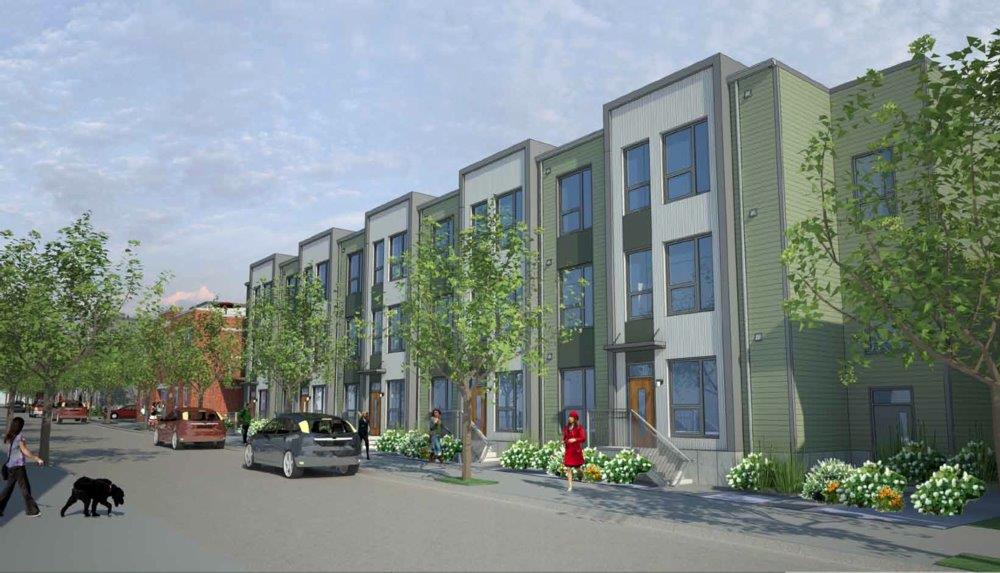
Example of residential modular construction at 44 Gerrish Road / Rendering by Traggorth Companies/

Modular construction is not a new concept by any means. In fact, it has been around in Europe for decades and is now on the rise in the United States, particularly in the case of custom modular.

Modular construction is a process in which a building is built off-site under controlled plant conditions. Using the same materials, and adhering to the same codes and standards as in conventional construction, modular buildings are then shipped to the site and assembled. This construction technique often proves to be cost-effective and time-efficient, and offers a safer and cleaner working environment.

Based on PM&C’s experience, we have come to see a few potential risks — as well as a few benefits — that you may want to consider before pulling the trigger on modular construction.

  • The obvious benefit in choosing modular is the potential impact to the schedule. The duration for a well-coordinated modular project can be cut in half, so if time is a major constraint, this form of delivery may be a great option.
  • Coordination, however, is a tricky endeavor and demands a greater level of commitment from the entire project team than might be expected. The designer will be required to delineate the trades in terms of what scope falls under what trade (modular vs. general contractor).
  • To prevent conflicts when the units come to the site, the designer should expect to spend some time at the manufacturing facility during the early stages of unit construction to help establish finishes and coordinate layout. This could take a few days to more than a month, depending on the size and scope of the project.
  • Costs should be allotted for a full-time “clerk of the works” or engineer to work with the manufacturer to maintain quality control during the manufacturing process. A controlled environment does not always equate to high quality.
  • For some projects, hiring a CM can help with the coordination and pricing, as they have the ability to bring in manufacturers early on in the design process. On public projects, however, current statutes prohibit procurement using a CM-at-risk.
  • Contract negotiation is critical; specifically, the payment schedule. Many manufacturers will require upfront payments for as much as 30% before they start manufacturing. This payment structure should be discussed openly at the beginning of the project, ensuring the owner and lending institutions are prepared, and not blindsided, by these upfront costs.
  • Costs for a third-party inspection agency should also be considered. The state of Massachusetts allows modular construction with the understanding that a third-party inspection agency will confirm that construction meets Massachusetts code. However, this does not alleviate the need for local inspection.
  • On city of Boston public projects, all fire sprinklers must be installed on-site. Therefore, ceilings cannot be installed in the manufacturing plants, leaving the lights, fire alarms, diffusers, and other ceiling-related work items to be installed on-site at the prevailing wage rate. What is allowed to be installed off-site will vary from jurisdiction to jurisdiction, so it should be confirmed early in the project what is allowable.
  • For a successful modular project, site coordination is critical. Typically, the modular company would own the unit utilities and finishes, while the GC would be responsible for MEP/FP feeds and connections, as well as finishes to common areas. Without maintaining proper coordination at the onset, there can be major conflicts between the manufacturer and the site subcontractors.

Overall, modular construction can be an effective tool for speeding up project delivery. However, in our experience, it will not necessarily cost less than traditional site-built projects, and may cost more if the appropriate level of coordination does not occur.

Colin Dutton is senior cost estimator/project manager at PM&C.
Colin Dutton Modular construction P315 PM&C
    FacebookXLinkedInEmail

You may also like

Trends and Hot Topics

Report Highlights Design-Build’s...

January 9, 2025
Contributor

Ask the Electrician: What are the...

January 8, 2025
Contributor

What’s Next for Construction in...

December 30, 2024
Contributor

Strengthening the AEC Community: A...

December 27, 2024
Contributor

Boston’s Commercial Real...

December 26, 2024
Contributor

Choosing a B2B PR Agency: Why it...

December 19, 2024
Contributor

A/Z’s 2025 Strategic Growth...

December 18, 2024
Contributor • Green

BERDO: From Boston to your Backyard

December 2, 2024
  • Gray.png
  • Pedigree.png
  • PWC.png
  • INterstate.png

HIGH-PROFILE MONTHLY
615 School St.
Pembroke, MA  02359
Phone: 781 294 4530
Fax:  781 293 5821
info@high-profile.com

Quick Links

  • About Us
  • Contact Us
  • Subscribe
  • Advertise
  • My Account

Stay Informed

Sign up for Fast Facts Friday, our weekly e-newsletter, and stay up-to-date with the latest industry news!

Sign up
Subscribe to High-Profile Monthly to receive an email notice of each new article!
Loading

Copyright © 2026 High-Profile Monthly.

  • Twitter
  • Facebook
  • Instagram
  • Linkedin
  • YouTube
  • RSS
  • Sign In
  • My Account