Toward Resource Self-sufficiency – One Region at a Time
by Philip Norton Loheed
As president of Earthos Institute, I have helped to create Bioregional Urbanism, a process to encourage changes back to “One Planet Living.” This is the fourth of ten installments describing Bioregional Design principles.
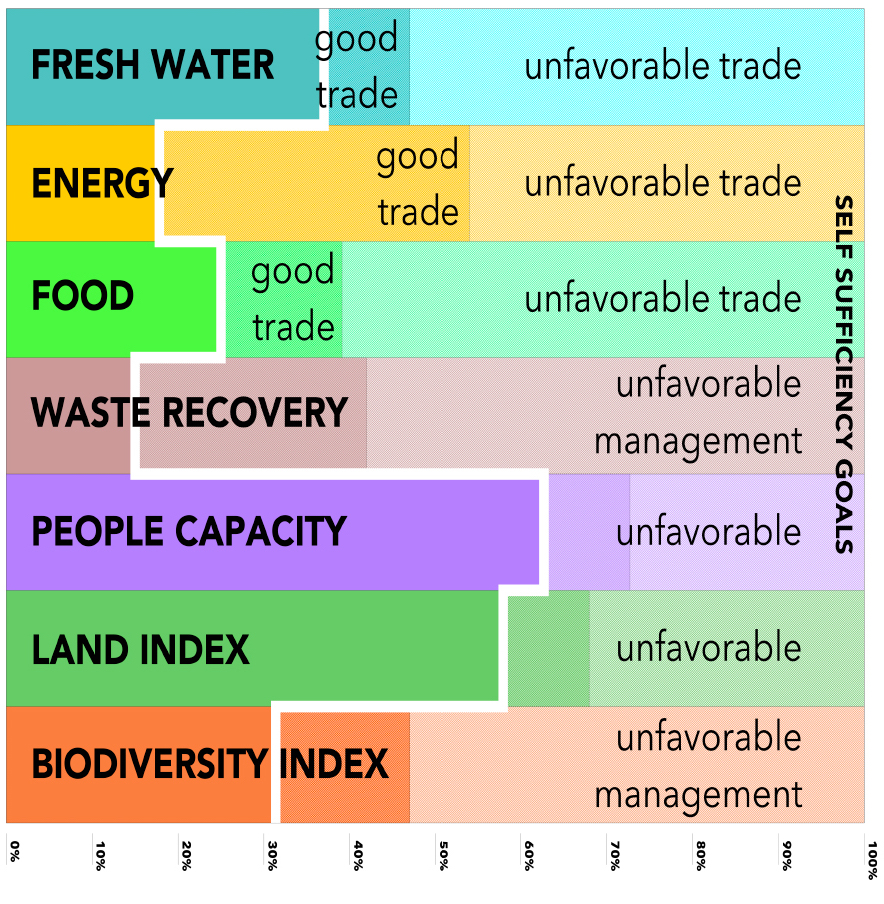 Re-inhabiting: Imagine that our designs to restore the [sustainable] balance between Earth’s capacity and our needs is achieved in the next several decades… It would mean that the unsustainable period of human abuse is a brief, but intensely creative period in our evolution.
Among designers and community leadership, new settlement patterns must be generated and pioneered…
“Perhaps if we are to learn from the past, the time is ripe for a paradigm shift in which citizens strive to engage in reciprocal, responsible relationships with the land we inhabit and the beings and communities with which we are interdependently intertwined. Moving beyond the rhetoric of individual rights, it is essential to consider the responsibilities we all hold toward the places we rely on for our sustenance, to the rivers and relations that we exploit for energy, and to the First Nations who hold mutual, if not primary, rights and relationships to those resources.”
– Our Beloved Kin, [Brooks 2010].
Key Resources: Water, Energy, Food, Biodiversity, Human Wellness, Land Management, and Waste Management. Tracking the status of these seven components of living systems can create the “snapshot” for self-reliance of our region, and provide guidance, especially for communities forced to relocate due to climate change and rising sea levels.
Let’s imagine we have been engaged by a coastal town about to experience chronic flooding and loss of land to rising sea levels. What are the priorities for design of such a settlements’ retreat?
1. Protect the equity of the people of the community – up front.
2. Evaluate levels of investment risks and hazards from sea level to available highlands (if any).
3. Evaluate the existing and potential resource base, including new marine environments.
4. Design new water systems for supply, food production and flood control. Determine advantageous trade relationships for the community.
5. Design for habitat regeneration and biodiversity potential including migration patterns.
6. Design energy systems to support the new settlement pattern.
7. Mitigate pollution and contamination in concert with waste as resource systems.
8. Design for social equity and creative potential for all citizens.
The intent of this short list is to demonstrate the array of skills needed within the community for this pioneering effort.
Why pioneering? To be successful the relocation design will need the best of scientific fact-finding, traditional knowledge of the region, artistic creativity and cooperative respect in its leadership.
The eight step interactive process diagrammed below summarizes the framework of Bioregional Urbanism. It is not necessarily a sequential array of steps, but rather a sort of check list to a series of evaluations of trial solutions to the various systems needed to enable a “Complete Community.”
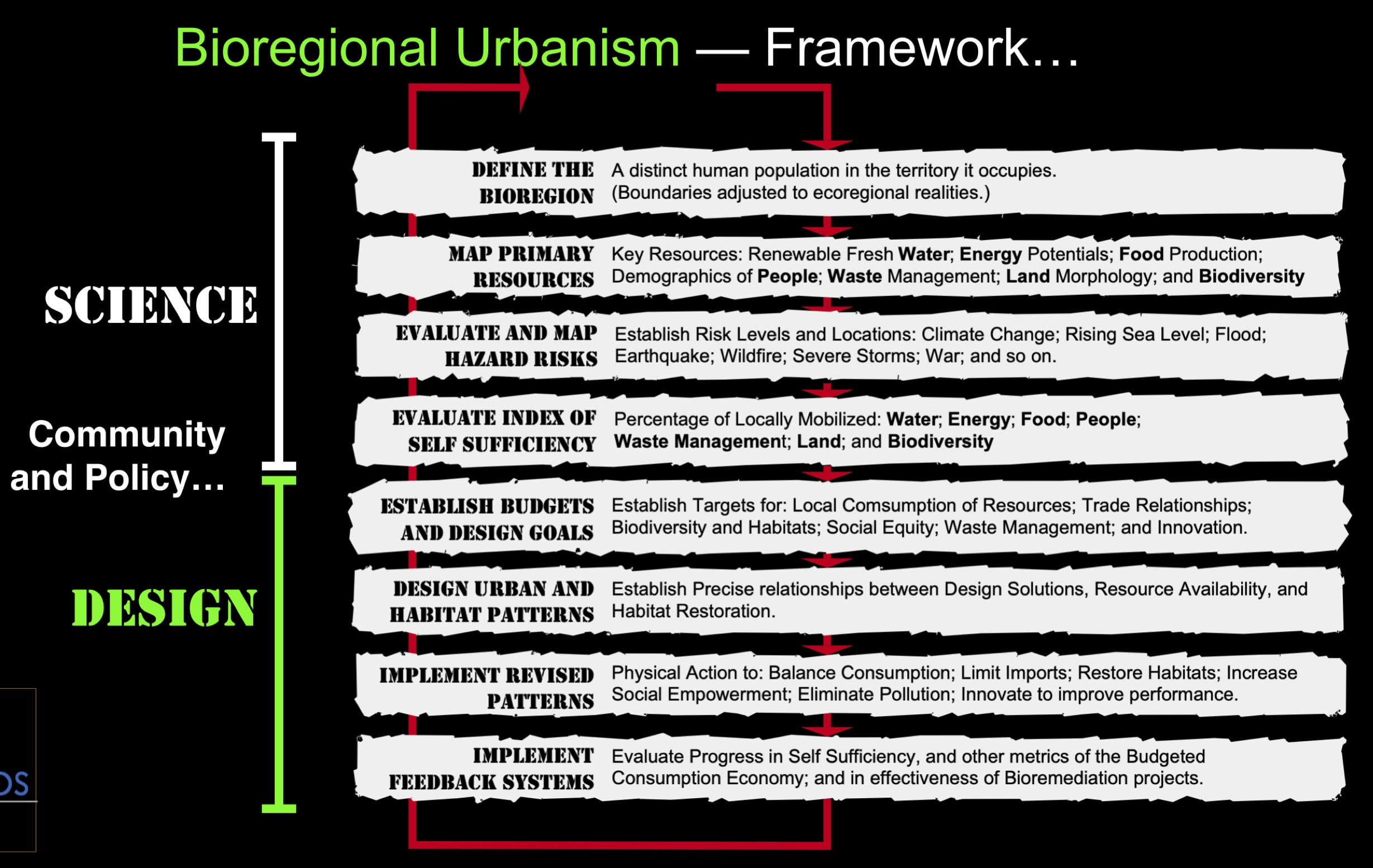
The timeline for such a town reconfiguration will need to reflect the rate of sea level rise with immediate adaptation, with longer term morphology and intelligent planning for life cycle costs as the levels of risk evolve.
A study of such a re-inhabitation process within the Boston Bioregion has begun.
Please tune in next month.

Philip Norton Loheed
Phillip Norton Loheed is a principal at Design Partnership Plus.