Toward Resource Self-sufficiency – One Region at a Time
by Philip Norton Loheed
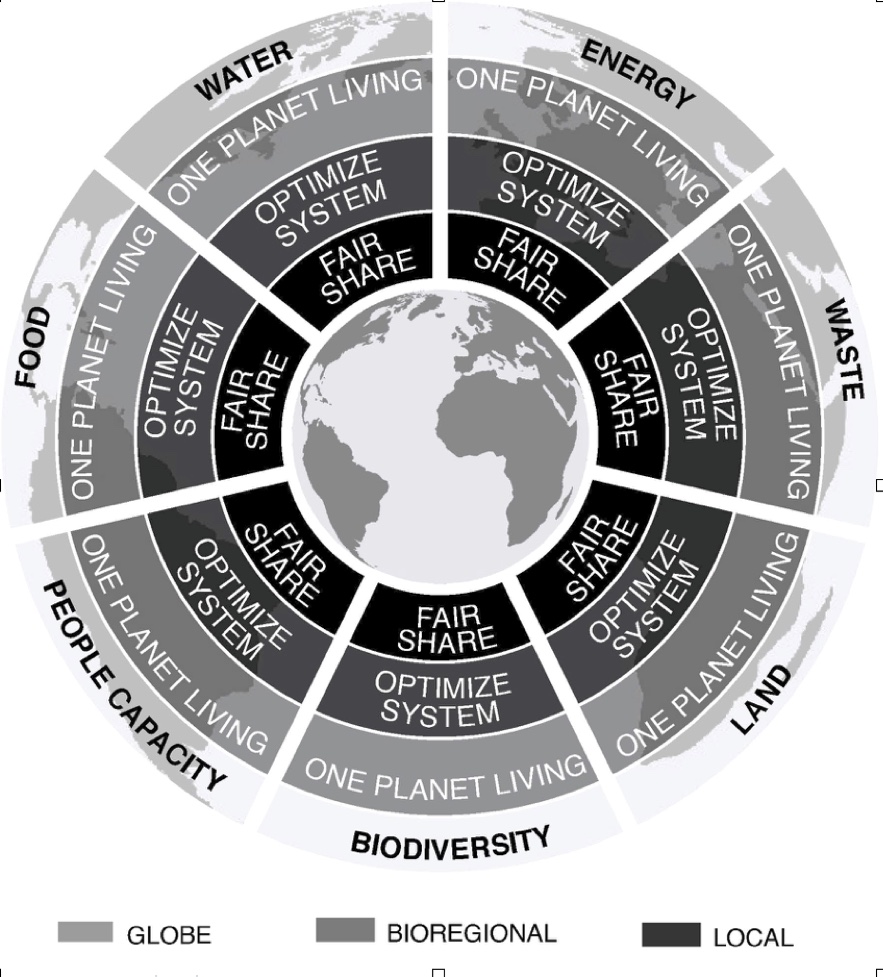
As president of Earthos Institute, I have helped to create Bioregional Urbanism, a process to encourage changes back to “One Planet Living.” This is the final installment describing Bioregional Design principles.
Let’s revisit briefly basic principles of creating as a “bioregional urbanism team”:
As creators on a bioregional team we work to identify projects that benefit the Bioregional Systems, then look at how our own disciplines and skills can contribute. If we only see projects through our disciplinary lens, we can easily succumb to the old adage, “If all you have is a hammer, everything looks like a nail.”
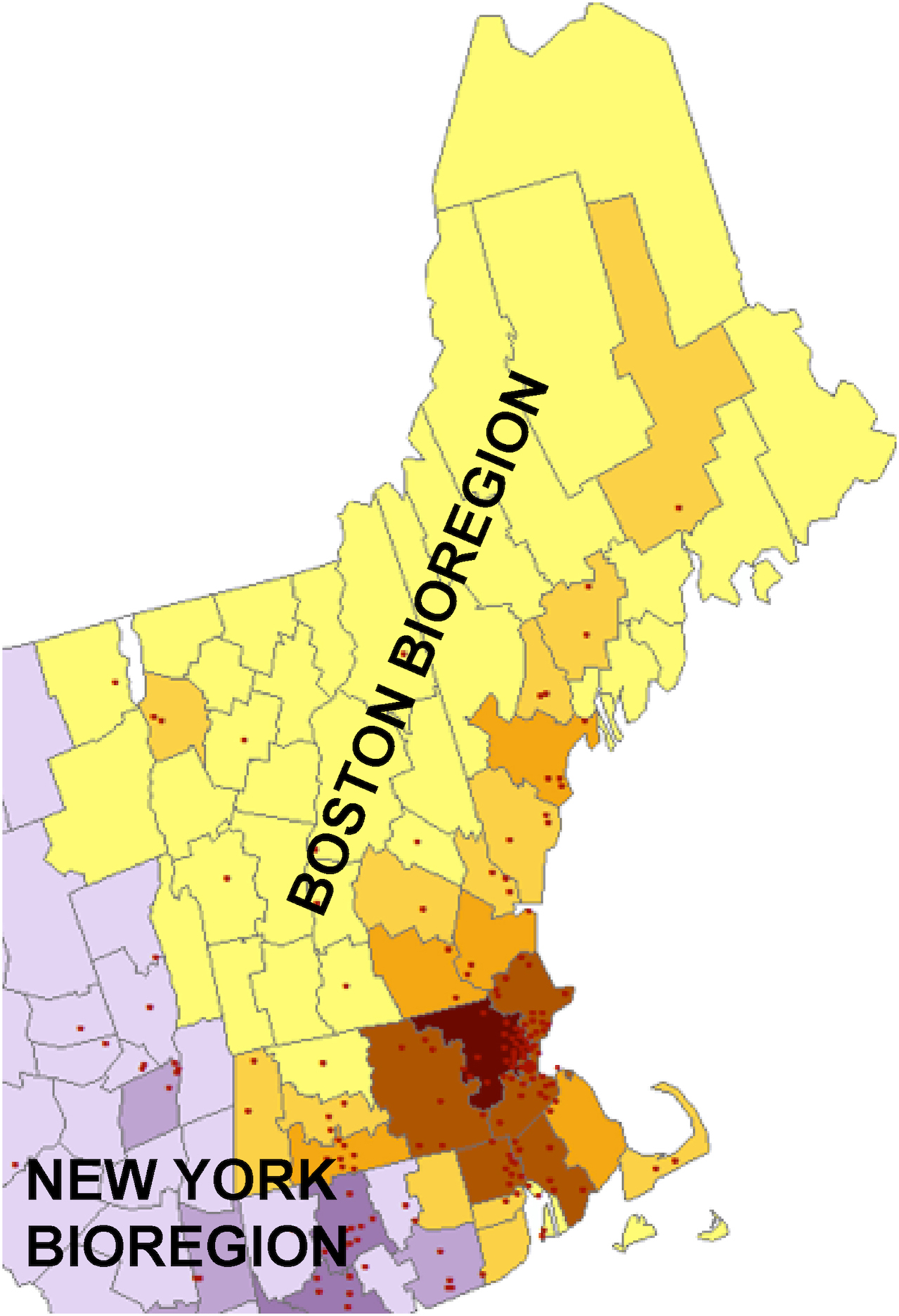 Humans have been consuming Earth’s resources faster than the annual cycles can be renewed since about 1975 (presently about 1.6 times faster). Over the 20th century, we have also experienced two major eras of human greed, bracketing the altruism and economic balance of the “great generation”:
A. the so called “golden era” of greed following the civil war brought on the great depression;
B. the mobilization of the great generation’s unity and balanced economic success through the war years and well into the 1960s; and
C. the second great era of greed that has evolved since. This “I-WE-I” history is chronicled in The Upswing, by Robert D. Putnam which provides much data documenting “How America came together a century ago and how we can do it again…”
As we work to address our global problems, dramatized by the pandemic, climate change, social justice and so on, we are actually working to create a new era of “WE” – very much like a war footing but based upon cooperation, empathy, and just action systems. Bioregional Urbanism, a component of Hawkins’ “blessed unrest” is Earthos’ contribution to our shared imperatives and goals.
We can work together like an ecosystem. When creating as part of a bioregional team, we need multiple disciplinary perspectives in order to effectively implement projects to address the holistic needs of the local community and bioregion. We actively understand how each discipline can and needs to contribute leadership to the project, not just as input.
A landscape architect provides leadership in helping the team to conceptualize landscapes that help stakeholders explore bioregional knowledge and economies. While outdoor and environmental educators provide leadership in helping the team conceptualize education about bioregional resources, economic development, and processes; entrepreneurs and economic innovators provide leadership in conceptualizing ways to develop industry and economy based on bioregional resources.
It is important to note that no one actor or discipline drives a bioregional project. Rather, each contributor has a role in informing and co-creating the larger project, integrating with other disciplines, and helping others to understand and integrate what they know, while also understanding the limits of their own knowledge and respecting the knowledge arenas of other team members and bioregional collaborators.
Bioregional Urbanist projects are systems based, which means that they are often multi-pronged in approach. As we design and implement, we need to immerse ourselves in the systems that we are a part of to improve their functioning, and to address overconsumption and degraded socio-ecological systems while improving biodiversity. We are simultaneously connecting to living systems as members, and scientifically assessing our impact on the whole bioregional system.
Thank you for following this multi-part exploration of Bioregional Urbanism! We hope you have found it stimulating and useful.
Philip Norton Loheed
Philip Norton Loheed is a principal at Design Partnership Plus.