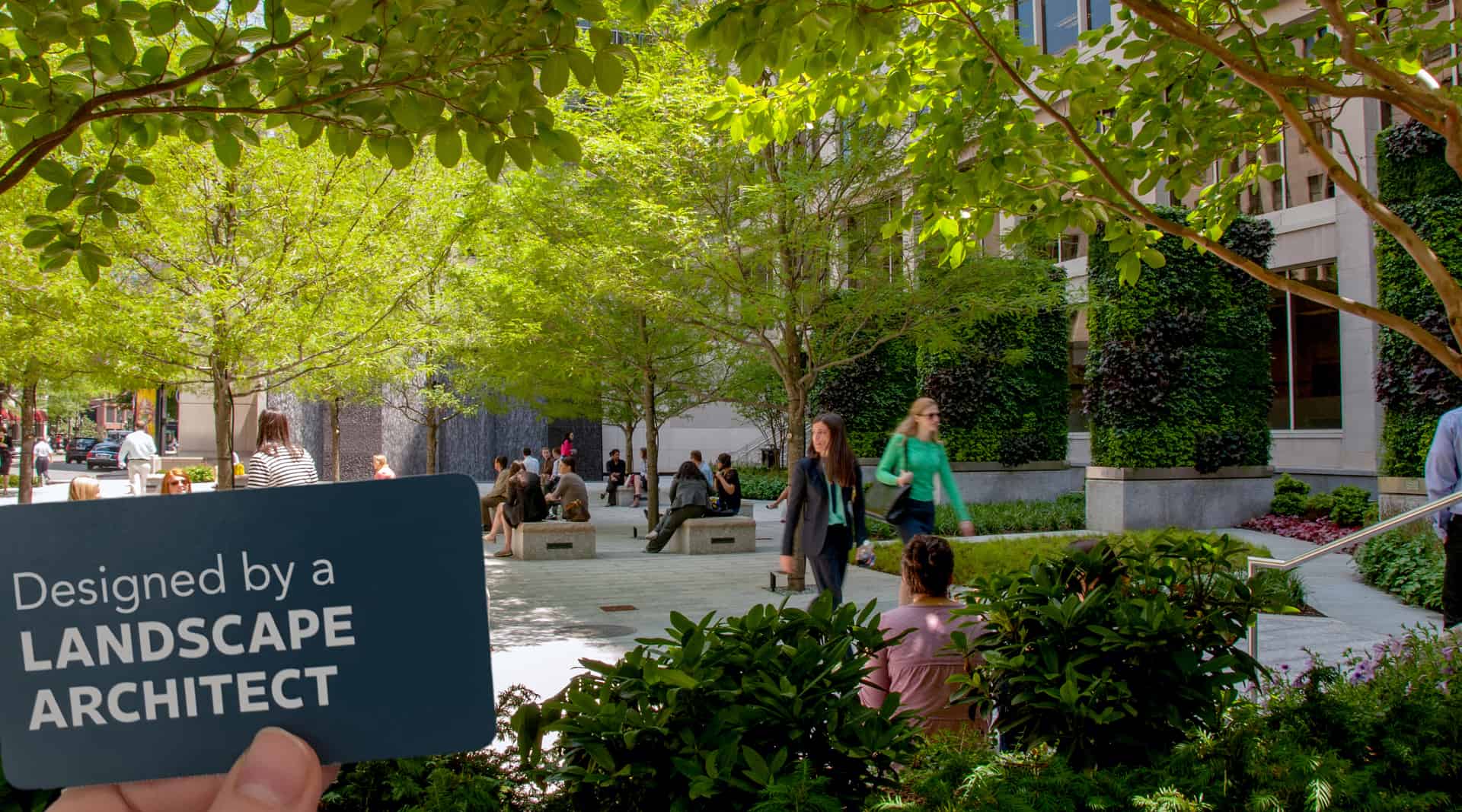
Liberty Mutual
by Becky Rupel and Christine Wilson
In April, landscape architects around the globe celebrated Landscape Architecture Month, and social media feeds of those in adjacent industries were flooded with images of beautiful outdoor spaces. With still photos and renderings, it is easy to forget that whether urban or rural, highly groomed or totally wild, these green places are more than just curb appeal: They are part of complex ecosystems, benefiting humankind in countless ways that are often invisible to the untrained eye.
“Ecosystem services” is a term assigned to the characteristics and processes of the natural environment that are inherently valuable. Carbon sequestration, stormwater mitigation, crop pollination, and wildlife habitat are all examples of ecosystem services that are incredibly important to human health, safety, and welfare. But because their value rarely translates to an actual dollar amount, they have traditionally not been prioritized within the context of an individual construction project, especially without regulation by local, state, and/or federal governments.
As professionals rooted at the intersection of urban design and ecological complexity, landscape architects are poised to take a leadership role as champions of ecosystem services. By approaching design with sustainability at the forefront, landscape architects are capable of developing solutions that balance project costs with environmental, economic, and social benefits for neighbors and those downstream. Through the implementation of green infrastructure or nature-based solutions, a site can be designed to direct stormwater into spaces that capture, cleanse, infiltrate, and/or reuse water in a way that greatly reduces the need for costly gray infrastructure (pipes, tanks, pumps) that have relatively short lifespans.
It is a common misconception that green infrastructure designs come with a high price tag. The materials involved (primarily soil and plants) are inherently less expensive than traditional concrete-and-steel approaches. These projects are often easier to permit, especially as governing agencies become more sustainability-savvy. A green approach also tends to drastically reduce maintenance and replace costs over the lifespan of a project.
To help bridge the gap that persists between sustainability thought leadership and practice, the American Society of Landscape Architects, the Lady Bird Johnson Wildflower Center, and the US Botanic Garden teamed up to develop the Sustainable Sites Initiative (SITES). Owned and operated by the USGBC, SITES is a rating system similar to LEED: a codification of best practices in sustainable design, though instead of building design and construction, SITES looks at everything from project site selection, to preservation of natural resources, to planting design. The rating system is organized around the concept of ecosystem services.
Besides setting ambitious goals at an individual project scale, SITES seeks to move the future of landscape architecture and the allied professions forward in a holistic way. This is done by providing a marketing incentive for the protection and restoration of ecosystem services, such as planting designs that provide carbon storage and biofiltration to enhance air and water quality, positively affecting the greater community beyond the site. It also seeks to increase demand for the research and development of eco-friendly goods and services; for example, better alternatives to threatened timber species and more thorough life-cycle assessments for manufactured products.
For landscape architects, this means that there are now more resources to support win-win solutions that both serve our clients and perform ecologically. If given a seat at the table early in the site design process, a landscape architect can identify opportunities to capitalize on ecosystem services and implement green infrastructure into their insta-worthy design.

Becky Rupel

Christine Wilson
Becky Rupel, ASLA, PLA, SITES AP and Christine Wilson, ASLA, PLA, SITES AP are both landscape architects at Copley Wolff Design Group