
• Twitter
  • Facebook
  • Instagram
  • Linkedin
  • YouTube
  • RSS
  • Sign In
  • My Account
High-Profile MonthlyThe Source for AEC Industry News
  • All News
      • Up Front
      • Groundbreaking
      • Topping Off
      • Ribbon Cutting
      • View All Up Front Stories
      • StMarysBank_NorthBranch_ToppingOffNorth Branch Construction Celebrates Topping Off for new St. Mary’s Bank Branch
      • Special Features
      • Contributor
      • Green
      • J.E.D.I.
      • Mechanical / Electrical / Plumbing (MEP)
      • Vision
      • Women In Construction
      • Regions
      • Connecticut
      • Northern New England
      • Popular Sectors
      • Cannabis
      • Corporate
      • Education
      • Healthcare
      • Interiors
      • Landscape/Civil
      • Life Science
      • Multi Residential
      • Restoration/Renovation
      • Retail/Hospitality
      • Senior/Assisted Living
      • Technology & Innovation
      • Other News
      • Awards
      • Community
      • COVID-19
      • Mixed-use
      • Municipal
      • National/International
      • Organizations and Events
      • People
      • Philanthropy
      • Products and Services
      • Real Estate
      • Training and Recruitment
  • Subscribe
  • Next Issue
  • Archive
  • Advertise
  • Podcast
  • A/E/C Associations
  • Calendar
High-Profile Monthly
  • All News
      • Up Front
      • Groundbreaking
      • Topping Off
      • Ribbon Cutting
      • View All Up Front Stories
      • StMarysBank_NorthBranch_ToppingOffNorth Branch Construction Celebrates Topping Off for new St. Mary’s Bank Branch
      • Special Features
      • Contributor
      • Green
      • J.E.D.I.
      • Mechanical / Electrical / Plumbing (MEP)
      • Vision
      • Women In Construction
      • Regions
      • Connecticut
      • Northern New England
      • Popular Sectors
      • Cannabis
      • Corporate
      • Education
      • Healthcare
      • Interiors
      • Landscape/Civil
      • Life Science
      • Multi Residential
      • Restoration/Renovation
      • Retail/Hospitality
      • Senior/Assisted Living
      • Technology & Innovation
      • Other News
      • Awards
      • Community
      • COVID-19
      • Mixed-use
      • Municipal
      • National/International
      • Organizations and Events
      • People
      • Philanthropy
      • Products and Services
      • Real Estate
      • Training and Recruitment
  • Subscribe
  • Next Issue
  • Archive
  • Advertise
  • Podcast
  • A/E/C Associations
  • Calendar
Contributor • Trends and Hot Topics

High-Performance Building: Evaluating Low-Cost Alternatives for Building Materials

April 26, 2016

by Aniruddha Nene

Nene_Ari

Aniruddha Nene

Locally sourced alternatives to traditional building materials are popular in building construction, and for good reason. The lower amount of energy required to process natural, locally available materials presents an environmentally favorable life-cycle impact. These days, the distance required to move a material from its source to the building site is a common metric employed by rating systems such as LEED to perform life-cycle assessments of different material options.

However, turning to one’s backyard is not a novel approach for sourcing building materials. For millennia, humans have used locally available natural resources to construct everything from homes to entire cities. The most universally recognized of these building materials is adobe, consisting of clay, water, and a dispersion such as straw, which is then molded and baked into bricks. Although adobe aggregates have been replaced in modern construction by commercially produced concrete composites, their use is still widespread in developing communities all over the world where modern building materials are cost-prohibitive.
Chart

Chart

The impoverished Maori population of New Zealand is one such community. For decades these indigenous people have used aggregates of native Kaolin clay mixed with naturally occurring volcanic pumice as a lightweight building material to construct low-cost dwellings. In 2008, as a graduate student at Tufts University, I investigated the viability of using Kaolin-pumice bricks as load-bearing insulation, by studying the thermomechanical behavior of a similar, laboratory-produced composite clay.

A mixture of commercial Kaolin clay and polystyrene foam beads was evaluated. To produce the clay, water was added to the clay to produce mixtures with varying initial water content by weight. Polystyrene beads were then dispersed uniformly throughout the clay-water mixtures in varying volumetric ratios of clay to dispersion, and then poured into cubical molds. The molds were finally dried in a convection oven to produce bricks. An emphasis was placed on using simple, inexpensive brick fabrication procedures to replicate actual methods used by the Maori.

The yield strength of the bricks was measured to understand how it varied with percentage volume of polystyrene dispersion. A compression machine was used to load the bricks to simulate a barrel slowly filling with water, which might be used instead in the field. The thermal conductivity of the bricks as a function of volume of polystyrene dispersion was also examined, by using thermocouples to measure temperature gradient through the bricks when subjected to a uniform heat source in the form of a hot plate. Once again, the simplicity of testing was intentional to allow for techniques that could be easily replicated outside of a lab.

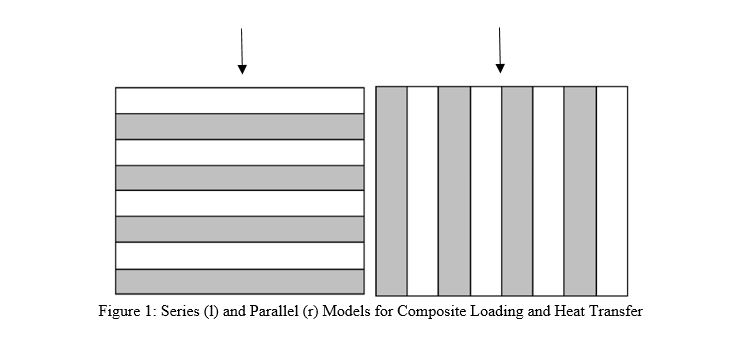
The results were analyzed using series and parallel models, in which the component materials of a composite brick were represented as alternating horizontal or vertical layers, relative to the direction of loading. Known mechanical properties of the clay and polystyrene dispersion were inputted into these models to compare the composite’s predicted behavior to the actual results. The compressive strength of the composite clay correlated well to the parallel model for strength, while the thermal conductivity showed no correlation to either model as the properties of the clay governed thermal behavior.

Aniruddha Nene, PE, LEED AP BD+C, is a mechanical engineer of the Green Integration Group at Vanderweil Engineers in Boston.

p516 topics
    FacebookXLinkedInEmail

You may also like

Trends and Hot Topics

Report Highlights Design-Build’s...

January 9, 2025
Contributor

Ask the Electrician: What are the...

January 8, 2025
Contributor

What’s Next for Construction in...

December 30, 2024
Contributor

Strengthening the AEC Community: A...

December 27, 2024
Contributor

Boston’s Commercial Real...

December 26, 2024
Contributor

Choosing a B2B PR Agency: Why it...

December 19, 2024
Contributor

A/Z’s 2025 Strategic Growth...

December 18, 2024
Contributor • Green

BERDO: From Boston to your Backyard

December 2, 2024
  • Gray.png
  • Pedigree.png
  • PWC.png
  • INterstate.png

HIGH-PROFILE MONTHLY
615 School St.
Pembroke, MA  02359
Phone: 781 294 4530
Fax:  781 293 5821
info@high-profile.com

Quick Links

  • About Us
  • Contact Us
  • Subscribe
  • Advertise
  • My Account

Stay Informed

Sign up for Fast Facts Friday, our weekly e-newsletter, and stay up-to-date with the latest industry news!

Sign up
Subscribe to High-Profile Monthly to receive an email notice of each new article!
Loading

Copyright © 2026 High-Profile Monthly.

  • Twitter
  • Facebook
  • Instagram
  • Linkedin
  • YouTube
  • RSS
  • Sign In
  • My Account