by Andrew Winget
We are often asked why we choose to build healthcare and life science research facilities instead of other commercial spaces, which are typically easier and more profitable. Our answer is simple: It’s a calling. We are driven to create spaces where people go when they are most vulnerable and to support the health of our community.
We dedicate ourselves to understanding every aspect of construction, not just what we are building, but also how our methods impact the final product and the facility as a whole. In healthcare, our Pre-Construction Risk Assessment (PCRA) focuses on Patient Care Risk Assessment, while in life sciences research facilities, it becomes a Process of Construction Risk Assessment. This approach ensures that both the patient and the facility are central to all our planning and actions throughout the construction process.
We encountered a situation where the design required new mechanical, electrical, and plumbing systems (MEPs) to be routed through the floor above. However, the design did not account for the impact this would have on the hospital’s pharmacy, which operates 24/7 and could not afford any interruptions. To address this, we devised a plan to reroute the new MEPs through a future physical therapy (PT) gym space. Although this solution affected clean bed storage, it was a manageable impact. Collaborating closely with the facility, we scheduled the work in a series of short shifts. Additionally, we had to create a containment area in a space that could not be permanently occupied and had an irregular shape. Through innovative thinking, we custom built a containment room that was easy to assemble and disassemble, used fire-rated materials, was lightweight, and included an anteroom and negative air hookups. This was achieved using heavy mil reinforced plastic, CPVC piping, duct seal tape, flex duct, and zip-wall zippers. The work was successfully completed over several shifts without compromising patient safety.

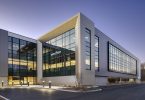
The lobby of a lab research facility in Ridgefield, Conn., where the warm wood accent walls and ceiling are designed to create an inviting atmosphere
Another challenge we face is the age of the facilities we are renovating. Many were built in the early 1900s through the 1970s. They were state-of-the-art in their time and built to last but have now more than exceeded their life span. Renovating an aging building with an aging infrastructure, upgrading it for today’s technology and to meet today’s standards while maintaining ongoing operations of the facility, which must continue to use those original systems, presents its own set of challenges. The team we build as the construction manager, with our trade partners and the facilities personnel, becomes paramount.
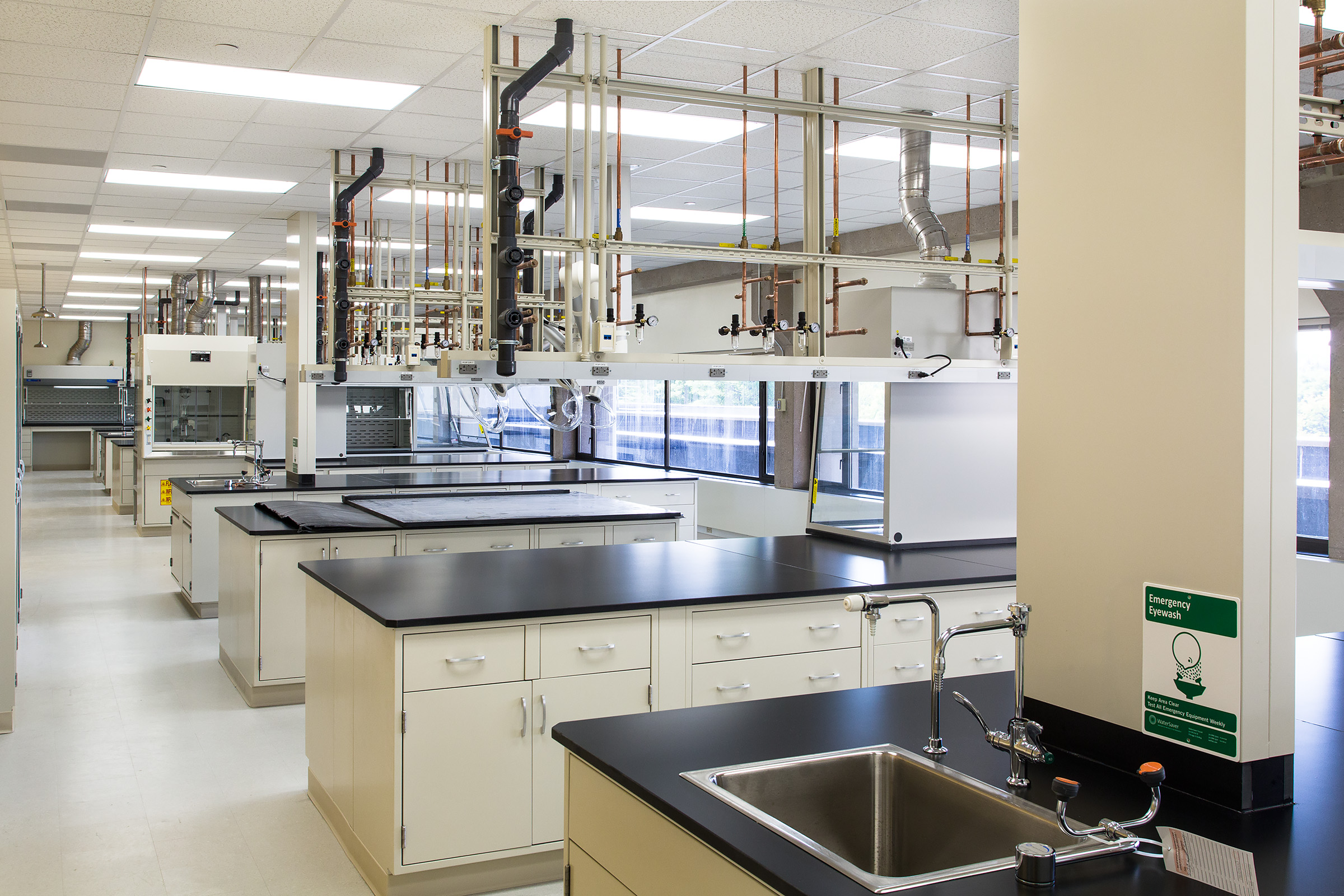
We are currently working on a project upgrading the environmental infrastructure for a new lab suite. The planning, timing, and coordination required to even begin to consider disconnecting the unit took the entire team working together as one to separate the unit controls, which had become intertwined with other equipment we weren’t touching. It had been reconfigured to serve more spaces than it was designed for originally, with temperature and humidity sensors installed as redundant sensors because that was the only way both the unit to remain and the unit to be removed would function properly. Decrypting these existing conditions takes patience and expertise from the entire team, led by the calm head of our management team.
By embracing the unique challenges and responsibilities of healthcare and life sciences construction, we not only enhance our technical skills but also contribute to the well-being of our community. A commitment to meticulous planning, innovative problem-solving, and collaborative teamwork ensures the delivery of high-quality, safe, and functional spaces. This dedication transforms the work from a mere profession into a meaningful vocation, driven by the desire to make a positive impact on people’s lives. Adopting this mindset brings additional benefits, such as improved jobsite safety, higher quality workmanship, increased client satisfaction, and a positive work environment for everyone involved.
Andrew Winget
Andrew Winget is senior HC and life sciences project manager at The Associated Construction Company.