by Scott Turner
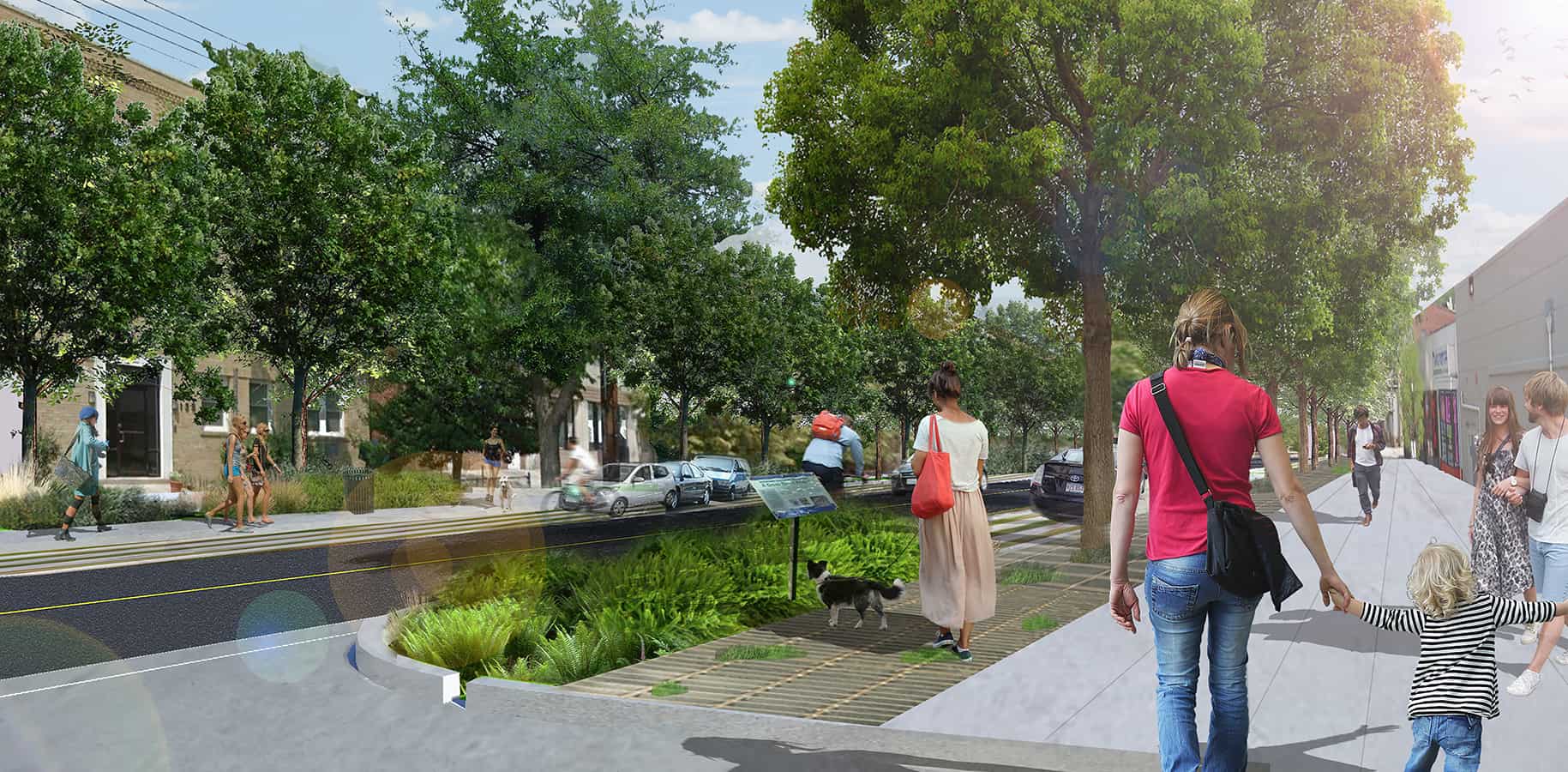
Nitsch led a multi-disciplinary team to design a high-performance, urban, residential, stormwater streetscape retrofit on Kennedy Street in Washington, D.C. This project was the pilot for future GI projects in the District and serves as a model to help address their combined sewer overflow. The project includes the design of 33 GI best management practices in one city block, which are under construction now.
Green infrastructure (GI) is growing! With climate change reshaping our communities, and extreme weather events occurring more frequently, GI solutions have become a stronger component of any resilience plan. We have seen the frequency and amount of GI projects grow exponentially in older American cities on the East Coast, including Boston, New York, Philadelphia, and Washington, D.C.
The reasons to implement GI solutions are as varied as the projects on which they are applied. In many cases, the proliferation of GI is in response to a regulatory requirement or consent decree that requires cleaner or smaller urban stormwater discharges to surrounding water bodies. In some cases, especially in older cities, GI is used to reduce the amount of combined sewer overflows to water bodies. In other cases, a project owner may want to proactively address sustainability and resilience concerns and act as an environmental steward to improve the community in which they live.
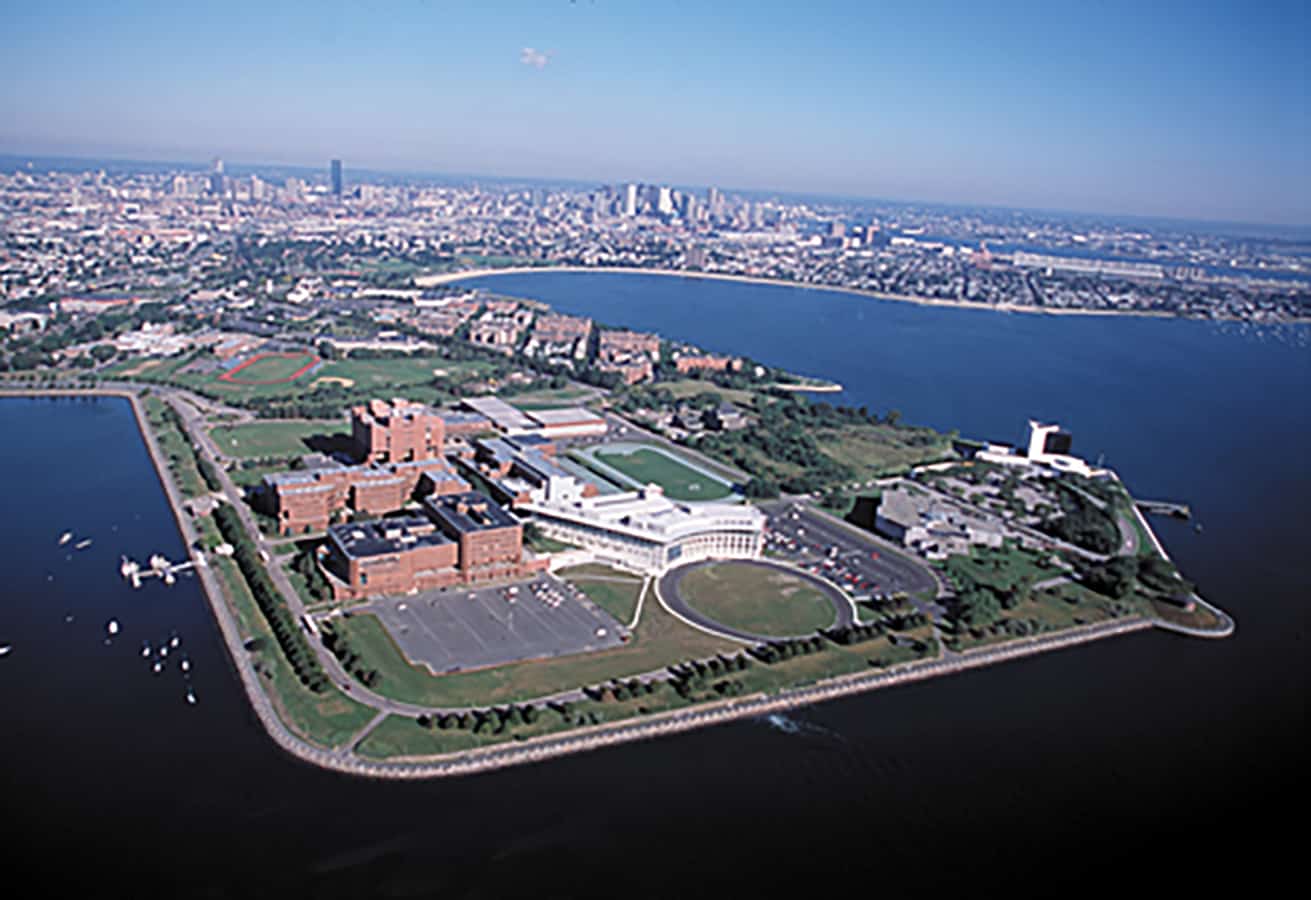
UMass Boston 25-acre campus:, located on a peninsula in the Massachusetts Bay, Nitsch Engineering developed a comprehensive stormwater master plan to help address stormwater mitigation and resilience concerns. The GI improvements are currently under construction.
Engineers, planners, landscape architects, and other stormwater professionals endorse GI because of the combination of benefits they provide.
Historically, traditional stormwater management systems would collect and convey stormwater away from its source using “grey infrastructure” such as catch basins, drain manholes, underground piping, and downstream detention basins. By moving stormwater away from the source, this had the unintended consequence of creating downstream impacts such as flooding and erosion.
GI, on the other hand, collects stormwater close to the source of its generation and infiltrates it into the ground using best management practices such as bioretention basins, porous pavement, and other infiltration facilities. These practices are typically sized for the smaller storm events (1-1.5 inch rainfall) that are experienced approximately 90% of the time, effectively infiltrating the majority of rainfall, reducing the strain on existing grey infrastructure, and buffering the impacts of damaging weather.
The nature of GI facilities, which typically integrates trees, shrubs, and other vegetation, has positive social, environmental, and economic impacts as well. The park-like nature of many GI facilities helps to promote relaxation and positive well-being. More plantings help to mitigate urban heat island impacts. Depending on the design of each facility, GI facilities can also provide recreational benefits. In addition, GI projects have been shown to encourage economic development in communities and neighborhoods.
With all of these benefits, GI has become more commonplace and is now used by a wider range of property owners, on both the public and private side. As these techniques and strategies become more commonplace, there is a growing comfort with the operations and maintenance aspects. In fact, a National Green Infrastructure Certification Program has been developed by the Water Environment Federation and DC Water to certify green infrastructure construction, inspection, and maintenance. This program is currently being incorporated into DC Water’s first large-scale GI implementation.
As public, private, and institutional owners continue to work with engineers and planners to successfully design, build, and maintain GI facilities, we expect that GI programs will continue to expand through the United States.

Scott Turner
Scott Turner, PE, AICP, LEED AP ND, is director of planning, Nitsch Engineering.