Dan Perruzzi
by Dan Perruzzi
As companies streamline operations and improve how they work, collaborative workspaces and conference centers are changing, too. The old model featured conference rooms sprinkled throughout the office, creating a logistical nightmare for food service and audiovisual staff as well as foot traffic and noise through areas where people are trying to work. Today, conference rooms are making way for corporate conference centers: dedicated areas with a variety of full-service conference rooms offering dining/catering, audiovisual, and videoconferencing capabilities.
The advantages are clear:
- Dining/catering, housekeeping, and audiovisual staff operate in a concentrated area, creating operational efficiencies and a more polished service approach.
- A unified meeting space accommodates large groups of people yet enhances company security by not requiring visitors to enter private office areas to attend meetings.
- A well-placed conference center projects a polished and accommodating image to visitors and clients meeting in the office.
- Consolidating staff to fewer floors and unifying the company’s conference rooms to one floor can potentially save the company significant money by requiring less leased space.
To promote user flexibility, convenience, and comfort, conference center designers need to be mindful of room sizing and programming, lighting and shading, acoustics, audiovisual and technology integration, and “future-proofing” infrastructure. Designing multipurpose conference rooms that serve several corporate functions is also key. The solution is to create a conference center overflowing with flexibility to accommodate many different corporate and public functions to maximize use and return on investment.
Two project examples illustrate how it’s done.
Case Study: Worldwide Financial Services Firm
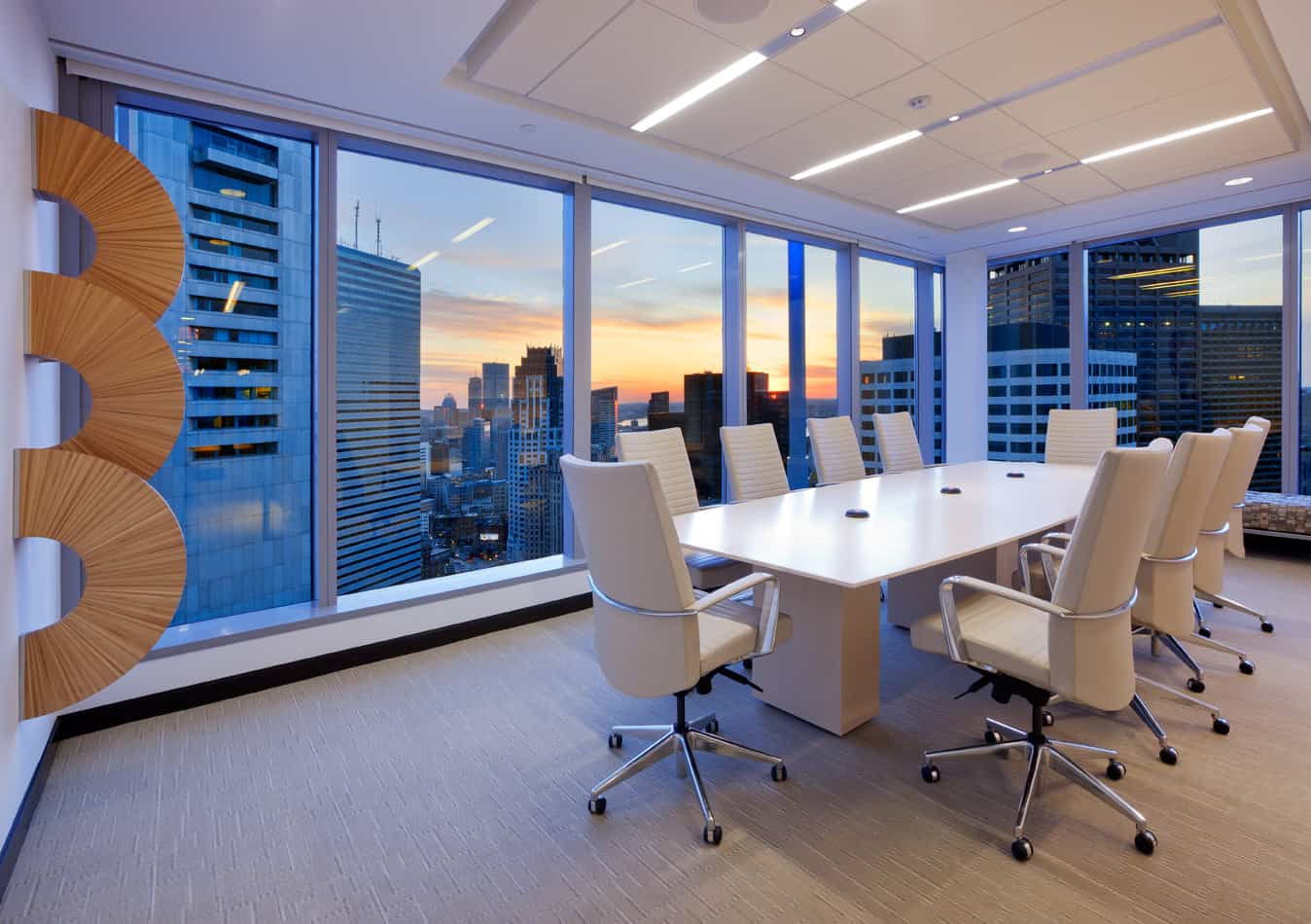
A worldwide financial services firm’s conference center offers visitors and clients sweeping views of the city and Boston Harbor. / Warren Patterson Photography
A worldwide financial services firm relocated and consolidated its headquarters from two existing locations to a new tower in Boston totaling over 400,000sf on 15 floors. One of the stated project goals was a better visitor experience for the many potential investors who visit the headquarters. The design solution created a conference center on the top floor of the headquarters building and consolidated the main reception area with all of the client-facing meeting spaces. Locating both the reception area and conference spaces on a single floor allows for critical services to be more readily provided. The conference center features an array of meeting room sizes, and visitors wait in a spacious reception area with views of Boston Harbor. Integrated audiovisual systems in the individual meeting rooms allow for communication with other offices around the world, with special production rooms supporting these operations. A catering kitchen at the heart of the floor provides everything from beverages and snacks to full meals and special celebrations. The conference center has provided the polished client experience the firm sought and has resulted in a 60% increase, on average, in the number of meetings, from January 2011 to January 2015, when compared with the previous year.
Case Study: Robinson+Cole
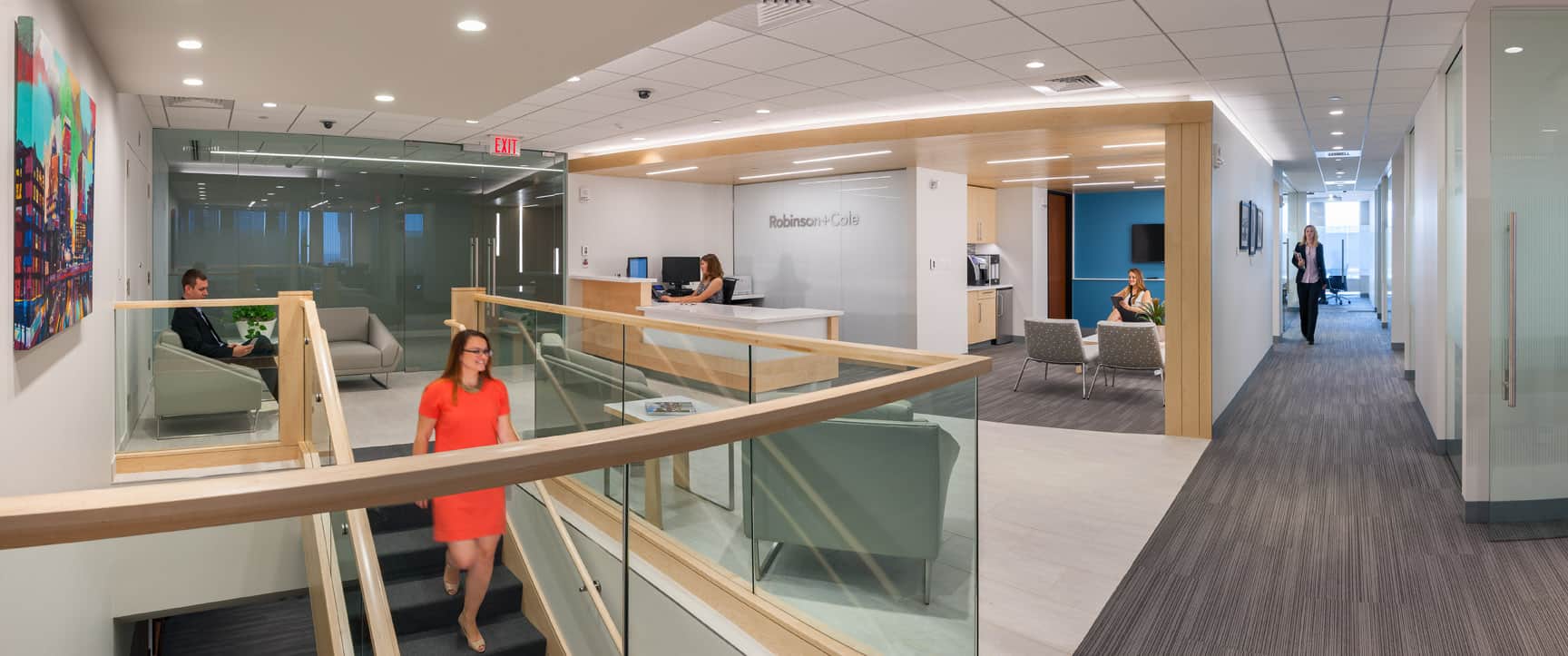
Robinson+Cole’s new conference center with reception area is the showcase of the office. / Warren Patterson Photography
Robinson+Cole, a national law firm with nine offices in the Northeast, Florida, and California, recently completed the redesign of its Boston office at One Boston Place. A new conference center with reception area is the showcase of the Robinson+Cole office, providing a welcoming, comfortable, and flexible space with the technology necessary to accommodate client needs. With an emphasis on natural light and warm neutral colors, the design of the new reception area announces a more modern office and ushers visitors into the adjacent 4,200sf conference center. Featuring a suite of conference rooms and a large breakout pantry area, the new conference center allows the firm to better serve its clients as well as accommodate public groups of various sizes. The largest conference room provides easy-to-use audiovisual technology, lighting, and mechanical shades for daylight control, and all of the rooms offer plenty of natural light and views of the city. The conference center was designed as the updated “front door” to Robinson+Cole’s office.
The latest design trends in conference centers promote collaborative work, technology integration, and efficient use of space, providing an enhanced user experience. Companies endeavoring to begin such a project would be prudent to employ an integrated process to think through the design, logistical, and technological issues of conference centers.
Dan Perruzzi, AIA, LEED AP, is a principal at Margulies Perruzzi Architects.