by John Day

John Day
There are very few real estate professionals who would deny that Boston’s multi-unit housing market is booming. This growth in the downtown market is being driven by shifting demographics — an urban/suburban housing swap motivated by downsizing baby boomers and younger, workforce-aged millennials looking for city conveniences.
Accelerating demand creates competition; developers, owners, and property managers savvy enough to recognize and incorporate the features and amenities that residents desire will put them ahead of the curve. Whether new buildings or renovations, our clients are all facing the same challenge — maximizing the cost vs. impact equation to capture market demand.
Common spaces, as opposed to individual units, are where this dynamic is most apparent. Incorporating a property’s brand, the public-facing lobby and private amenity areas drive reputation and marketability.
Gone are the days of meeting the basics; a lobby, mail room, and storage. Today’s residents are looking for group entertaining areas, roof decks, gyms
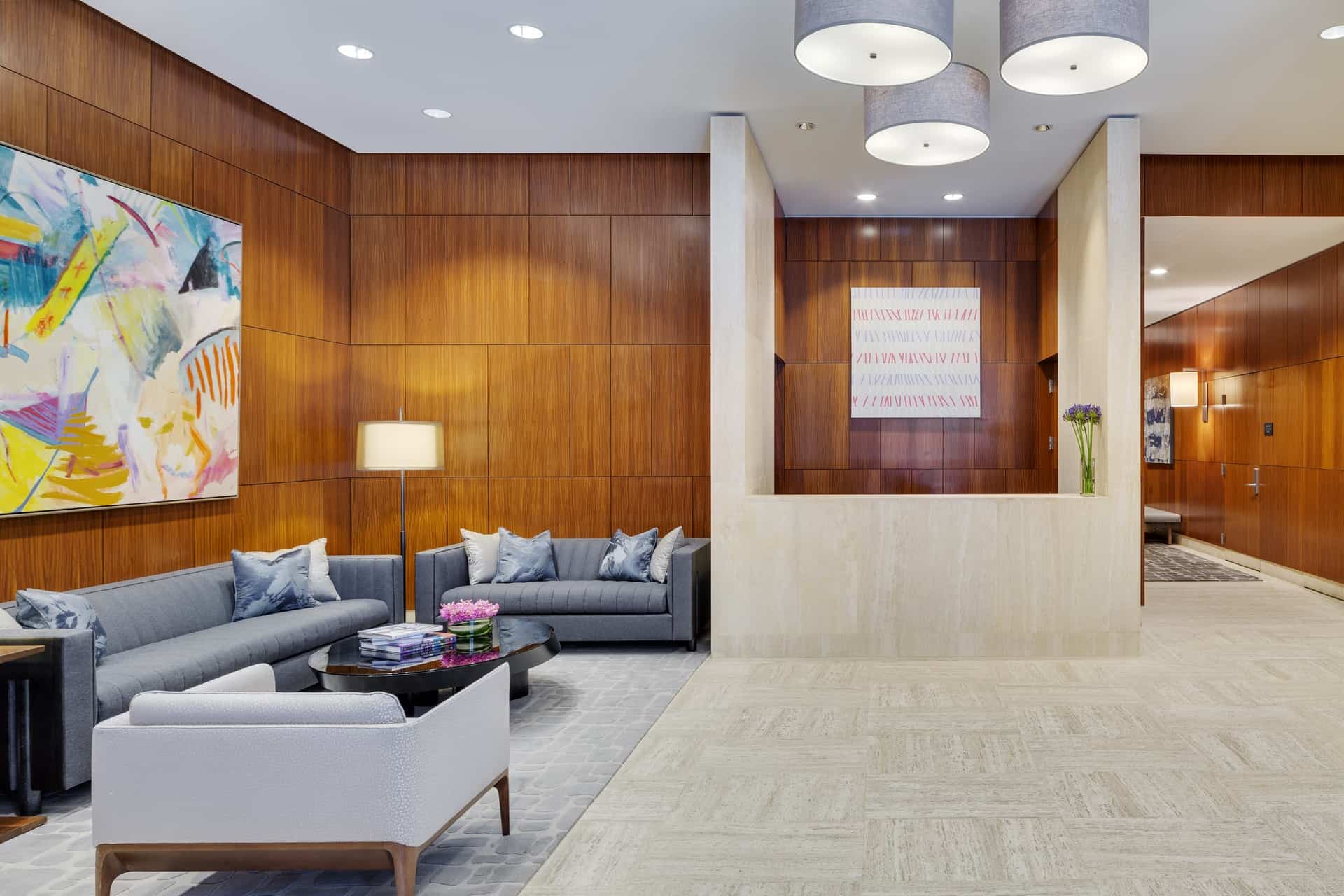
Lobby of Atelier 505
and yoga studios, work spaces, cafés, pools, club rooms, bicycle storage, and car-sharing parking. These spaces attract new residents, increase resident morale, improve property values, and can cement ties to the community depending on the amount of public access. Upfront expenditures or investing in refreshing these spaces adds significant value and can be done with an eye towards cost savings and improving building efficiency.
Not only do residents demand amenities, they are looking for spaces that make a visual statement. My strategy for designing common space interiors in new construction projects begins with furniture, fixture, and finish schemes that incorporate timeless, classic styles with selective high-impact moments that avoid being too hotel-like or overly trendy. No matter the style, these elements are chosen to lengthen the period between renovation cycles and are selected for their durability and time-honored looks, resulting in a cost-savings over the life of the building.

Lobby of The Boulevard / LDa Architecture & Interiors
Also paramount is the residents’ sense of home; these buildings are, in fact, vertical neighborhoods and need to incorporate both individual and group needs.
When refreshing common areas in an existing multi-unit building, most of the considerations are the same as with new construction, save for a thorough assessment of existing conditions to determine any reuse opportunities.
Atelier 505 is a great example of high return on a well-planned and cost-effective investment. As a touchstone for design and luxury living in Boston’s South End, the condo board recognized the need to update the common areas. LDa was engaged to refresh, enliven, and usher in the next phase of design in the building’s main lobby, residence halls, and gym. Timeless materials such as bronze, silver travertine, leather, and wood, as well as new European and custom light fixtures, contemporary art, and high-style furniture was selected to ensure that the new decor would be distinctively South End. Blending contemporary elements with the rich architectural backdrop of the building,
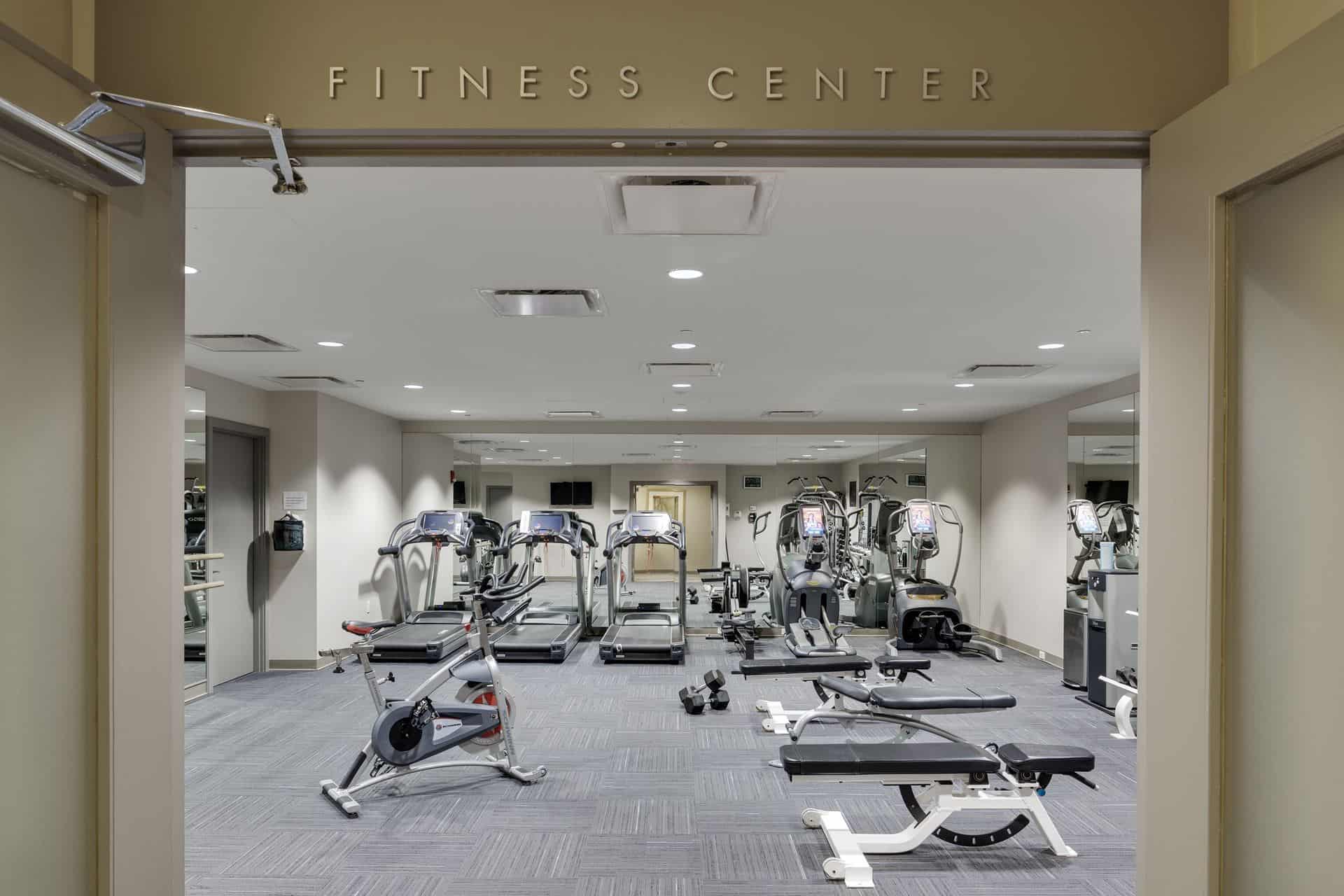
Fitness Room of Atelier 505
LDa has created a singular space for the residents woven into the existing architecture that will last for years to come.
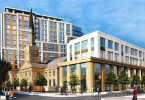
New Boston Ventures is currently developing The Boulevard, a new residential condominium development at 110 Broad Street along Downtown Boston’s Greenway. Collaborating with Finegold Alexander Architects and Campion and Company, LDa is designing the interiors for the common spaces and individual units. Recognizing the sophisticated tastes of its potential residents, common areas and amenity spaces include a grand lobby entrance, concierge desk, fitness center, shared mezzanine entertaining space with a catering kitchen, and a ground floor café with indoor and outdoor seating.
The interior design strikes a balance between the more “old Boston” Bulfinch warehouse entry and the contemporary nods of the new 12-story tower. Our design scheme incorporates clean, sophisticated city aesthetics that are neither traditional “Beacon Hill” nor abstract, modern “New York.” Old-world materials, rich in tone and grain, will be applied in a more youthful, simplified, and approachable manner that will endure past the trends.