• Twitter
  • Facebook
  • Instagram
  • Linkedin
  • YouTube
  • RSS
  • Sign In
  • My Account
High-Profile MonthlyThe Source for AEC Industry News
  • All News
      • Up Front
      • Groundbreaking
      • Topping Off
      • Ribbon Cutting
      • View All Up Front Stories
      • StMarysBank_NorthBranch_ToppingOffNorth Branch Construction Celebrates Topping Off for new St. Mary’s Bank Branch
      • Special Features
      • Contributor
      • Green
      • J.E.D.I.
      • Mechanical / Electrical / Plumbing (MEP)
      • Vision
      • Women In Construction
      • Regions
      • Connecticut
      • Northern New England
      • Popular Sectors
      • Cannabis
      • Corporate
      • Education
      • Healthcare
      • Interiors
      • Landscape/Civil
      • Life Science
      • Multi Residential
      • Restoration/Renovation
      • Retail/Hospitality
      • Senior/Assisted Living
      • Technology & Innovation
      • Other News
      • Awards
      • Community
      • COVID-19
      • Mixed-use
      • Municipal
      • National/International
      • Organizations and Events
      • People
      • Philanthropy
      • Products and Services
      • Real Estate
      • Training and Recruitment
  • Subscribe
  • Next Issue
  • Archive
  • Advertise
  • Podcast
  • A/E/C Associations
  • Calendar
High-Profile Monthly
  • All News
      • Up Front
      • Groundbreaking
      • Topping Off
      • Ribbon Cutting
      • View All Up Front Stories
      • StMarysBank_NorthBranch_ToppingOffNorth Branch Construction Celebrates Topping Off for new St. Mary’s Bank Branch
      • Special Features
      • Contributor
      • Green
      • J.E.D.I.
      • Mechanical / Electrical / Plumbing (MEP)
      • Vision
      • Women In Construction
      • Regions
      • Connecticut
      • Northern New England
      • Popular Sectors
      • Cannabis
      • Corporate
      • Education
      • Healthcare
      • Interiors
      • Landscape/Civil
      • Life Science
      • Multi Residential
      • Restoration/Renovation
      • Retail/Hospitality
      • Senior/Assisted Living
      • Technology & Innovation
      • Other News
      • Awards
      • Community
      • COVID-19
      • Mixed-use
      • Municipal
      • National/International
      • Organizations and Events
      • People
      • Philanthropy
      • Products and Services
      • Real Estate
      • Training and Recruitment
  • Subscribe
  • Next Issue
  • Archive
  • Advertise
  • Podcast
  • A/E/C Associations
  • Calendar
Contributor • Trends and Hot Topics

A Closer Look At Rigid Inclusions

April 13, 2017

by Derek Simpson and Ben Cote

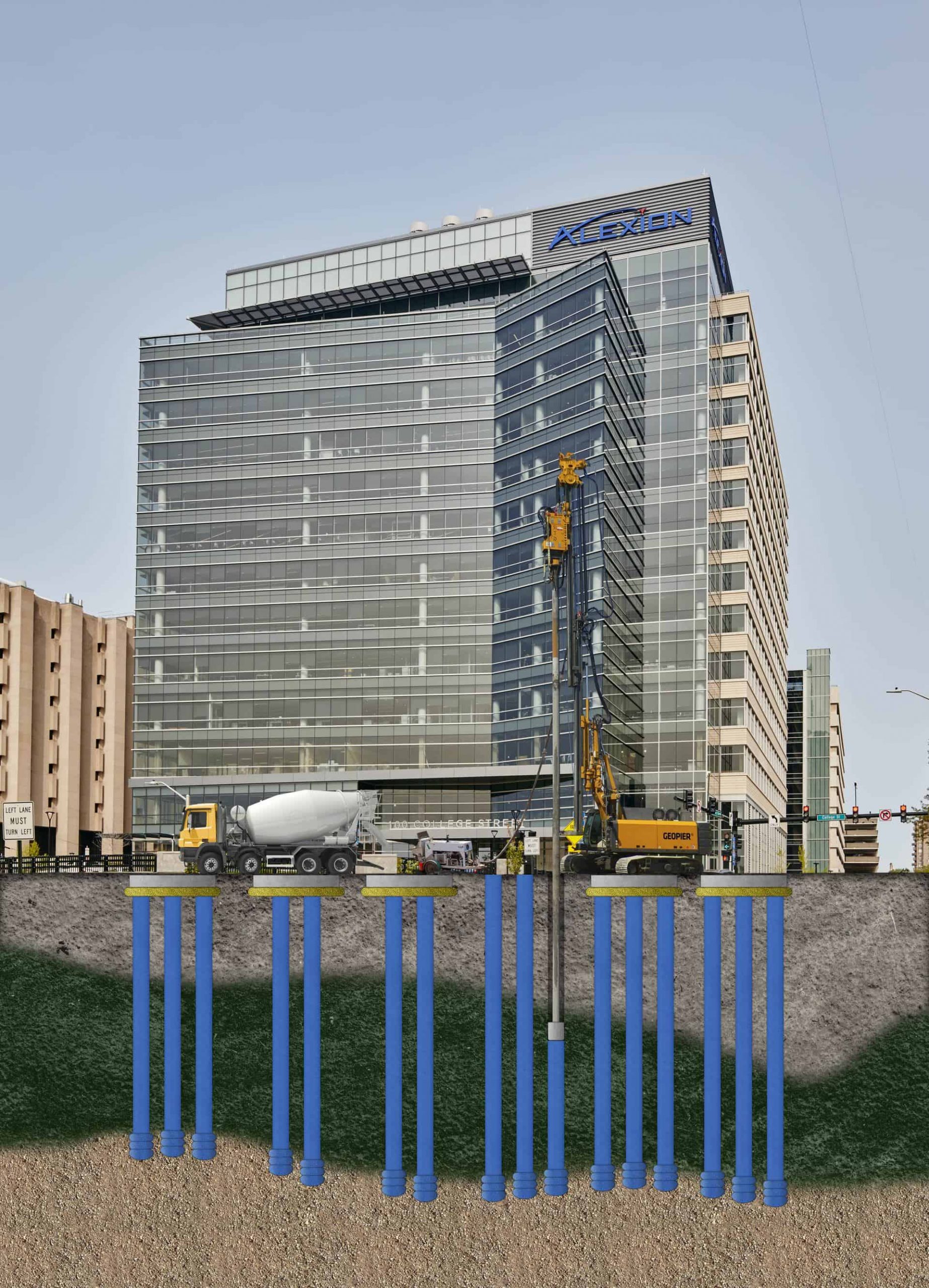
Geopier rigid inclusion ground improvement systems, such as Grouted Rammed Aggregate Pier elements (GAPs) or GeoConcrete Columns (GCCs), can be an ideal solution for supporting heavy structures that are underlain by thick, soft, and compressible soil deposits such as organics or clay. Rigid inclusions can also be used in combination with ungrouted/uncemented Rammed Aggregate Pier (RAP) ground improvement to optimize overall structural performance and decrease construction costs by creating a stable subgrade for conventional shallow footing and slab-on-grade construction.
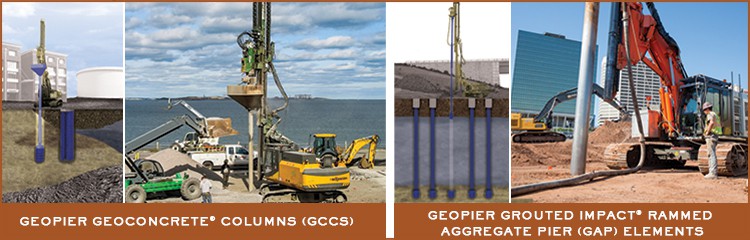
Rigid Inclusion

What are Geopier rigid inclusions?

Geopier rigid inclusions (RIs) are stiff ground improvement elements comprised of an aggregate/grout mixture, cement-treated aggregate, or plain concrete. Rigid inclusions, combined with an engineered granular “footing pad” (or load transfer platform), transfer some of the foundation (or embankment) loads through soft soils to denser stratum and some of the load to the surrounding matrix soils. The RIs and matrix soils share the load based on their relative stiffness and load-carrying capacity.

Rigid inclusions can be used in conjunction with ungrouted/uncemented RAP ground improvement systems to optimize performance and costs on a single project. These ground improvement systems provide an improved subgrade for conventional foundation support without the need for piles, structural grade beams, or structural slabs.
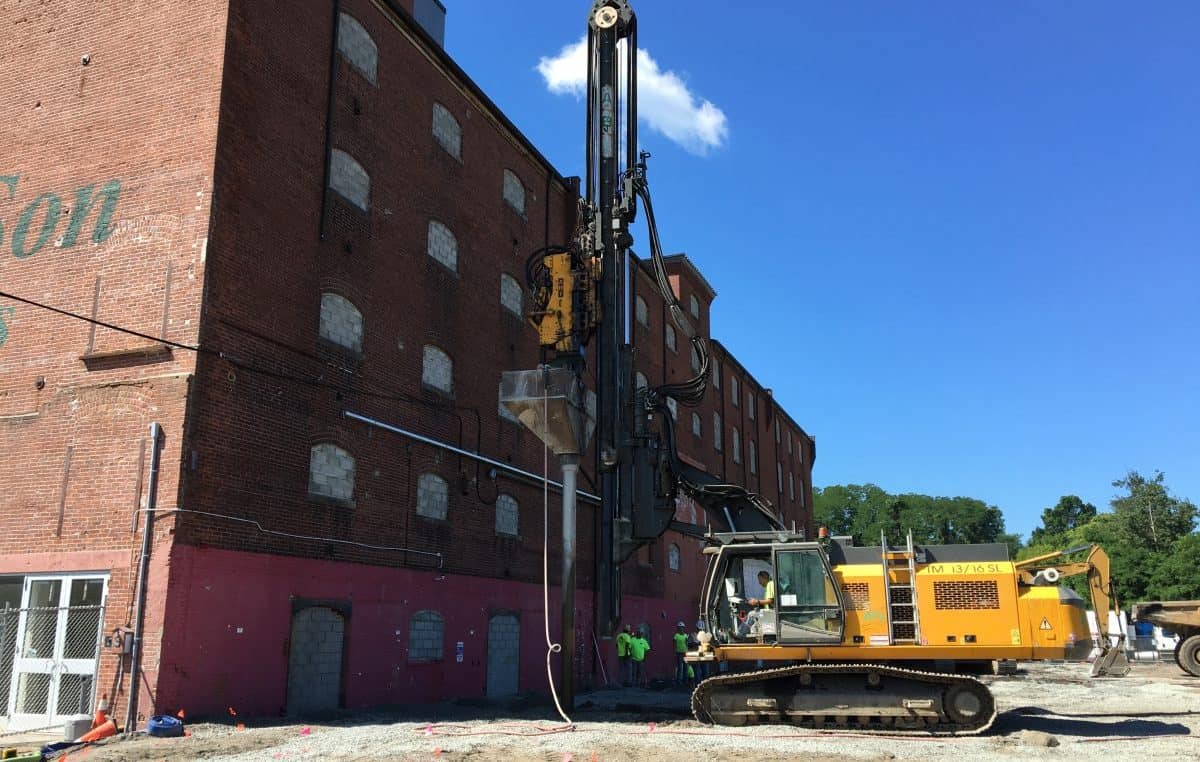
Warehouse Addition

Helical Drilling offers different rigid inclusion systems, including Geopier Grouted Impact Rammed Aggregate Pier Elements and Geopier GeoConcrete Columns.


When should Geopier rigid inclusions be considered for a project?

Rigid inclusions are best used when:

  1. Aggregate pier ground improvement cannot adequately control settlement in soft soil profiles (such as peat or organics, soft silt, or clay layers).
  • Rigid inclusions (RIs) are typically at least four times stiffer than aggregate piers.
  • RIs help efficiently transfer much of the load through soft soil layers into denser stratum due to their high stiffness.
  • RIs are not susceptible to lateral bulging in peat or organic strata.

2. Deep foundations (such as driven or drilled piles) have been specified for the project.

  • RIs provide improved soil response rather than direct load support through the use of an engineered granular “footing pad” (or load transfer platform) installed between the rigid inclusions and footing or slab. As such, conventional shallow footing and slab-on-grade construction can be used rather than heavily reinforced (and more expensive) pile caps, grade beams, and structural slabs.
  • High production rates and relatively low costs make RIs a viable alternative to deep foundations.
  • RIs and conventional substructure construction can help get the project “out of the ground” in about half the time of deep foundations and structural slabs.
  • 100 College Street

3. Massive excavation/replacement has been specified for the project.

  • RI installation does not require dewatering.
  • Excavation/replacement may require other premium site measures such as expensive excavation support systems and/or underpinning of adjacent structures.

4. On-site soils are impacted or contaminated.

  • RI installation can usually be accomplished with a displacement installation method that generates little to no spoil, thus reducing premiums associated with off-site soil disposal.
  • Grouted aggregate or concrete in the RIs is essentially nonpermeable, eliminating any potential cross-contamination of groundwater aquifers, and does not provide a preferred flow path for contaminants.

 

Derek Simpson / © Bryce Vickmark.

Ben Cote


Derek Simpson, P.E., is the project and business development manager at Helical Drilling in Braintree, Mass.

Ben Cote is Region Engineer at Geopier.

 

A civil contributor p517
    FacebookXLinkedInEmail

You may also like

Trends and Hot Topics

Report Highlights Design-Build’s...

January 9, 2025
Contributor

Ask the Electrician: What are the...

January 8, 2025
Contributor

What’s Next for Construction in...

December 30, 2024
Contributor

Strengthening the AEC Community: A...

December 27, 2024
Contributor

Boston’s Commercial Real...

December 26, 2024
Contributor

Choosing a B2B PR Agency: Why it...

December 19, 2024
Contributor

A/Z’s 2025 Strategic Growth...

December 18, 2024
Contributor • Green

BERDO: From Boston to your Backyard

December 2, 2024
  • Gray.png
  • Pedigree.png
  • PWC.png
  • INterstate.png

HIGH-PROFILE MONTHLY
615 School St.
Pembroke, MA  02359
Phone: 781 294 4530
Fax:  781 293 5821
info@high-profile.com

Quick Links

  • About Us
  • Contact Us
  • Subscribe
  • Advertise
  • My Account

Stay Informed

Sign up for Fast Facts Friday, our weekly e-newsletter, and stay up-to-date with the latest industry news!

Sign up
Subscribe to High-Profile Monthly to receive an email notice of each new article!
Loading

Copyright © 2026 High-Profile Monthly.

  • Twitter
  • Facebook
  • Instagram
  • Linkedin
  • YouTube
  • RSS
  • Sign In
  • My Account