by Stacey Bevins
As The Putney School embarked on a student and faculty housing initiative – two nearly identical 2-story buildings totaling 34,000sf – the commitment to sustainability was not just a goal but a guiding principle. The project was envisioned as a net-zero energy endeavor from its inception, reflecting the school’s deep commitment to environmental stewardship.
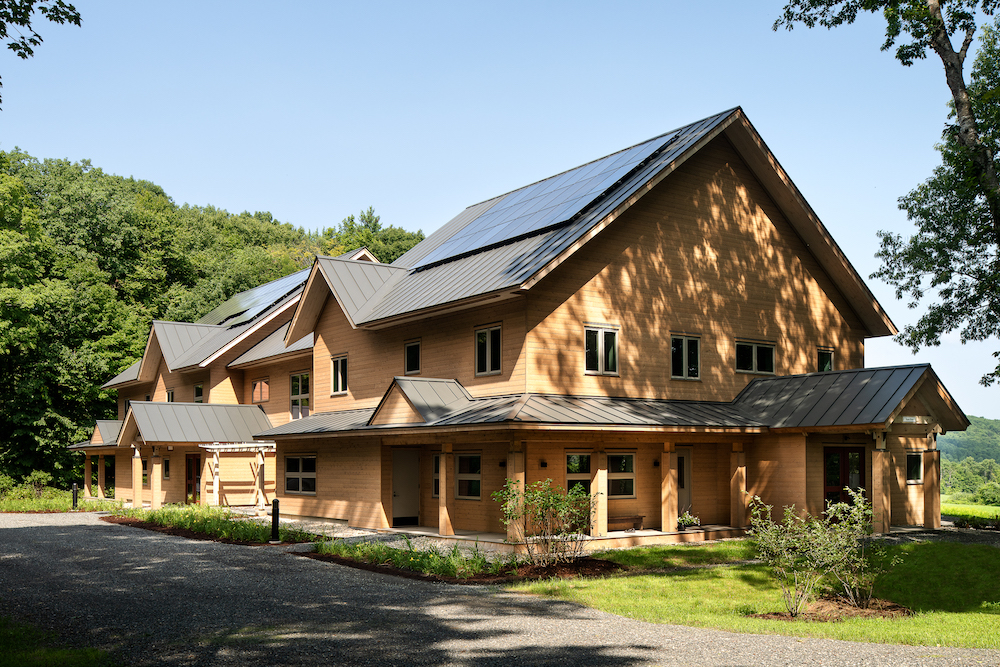
Houghton Brook Dorm
In pursuit of this goal, a collaborative partnership was formed among Maclay Architects, Energy Balance, and ReArch Company. Together with The Putney School, the design and construction team prioritized the reduction of the buildings’ carbon footprint while also enhancing the indoor environmental quality for its occupants. This partnership went beyond traditional design and construction practices, embracing innovative strategies that would ensure the project met its ambitious carbon-reduction targets. The success of this initiative required careful planning, analysis, and care by the entire team, including by numerous trade partners.
“Getting trade partners on board with the sustainability goals was crucial to the success of this project. We worked closely with each team to ensure they understood the importance of our carbon-reduction targets and provided the support they needed to adapt to these standards. Their commitment and willingness to embrace innovative approaches were key in turning our ambitious vision into reality,” said Calvin Russell, senior project manager with ReArch Company.
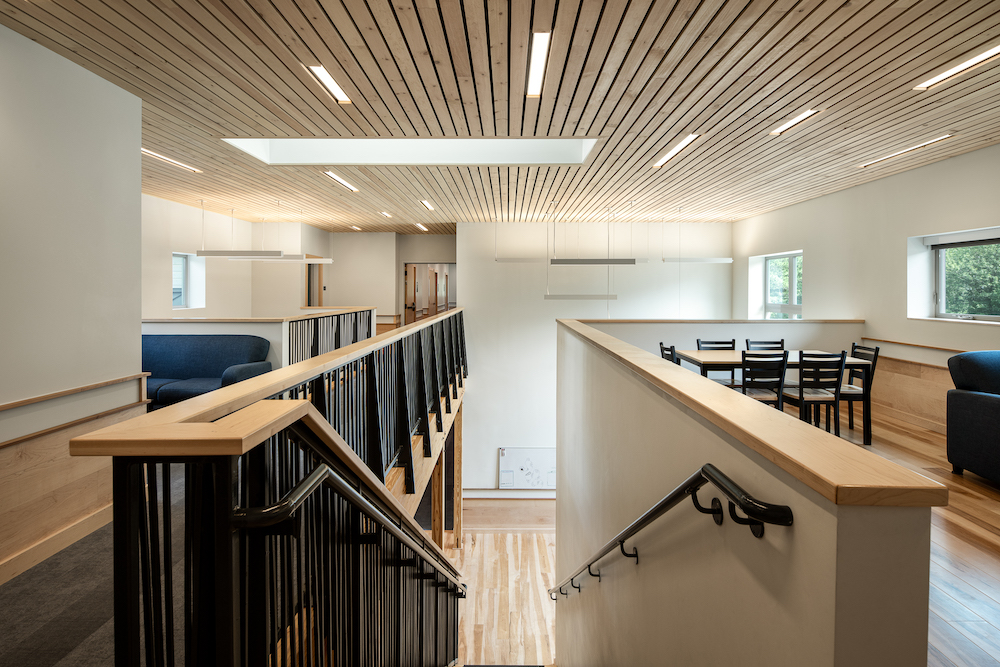
Greenhouse student common area
The project’s design features several energy-efficient components that contribute significantly to its net-zero energy status. Environmentally informed components include:
- Rooftop Solar Arrays: A 21.9kW roof-mounted solar array on each building offsets the school’s electrical usage by 65%.
- Solar Hot Water Systems: Each of the dormitories is equipped with a rooftop solar hot water system. With six solar collectors, these systems reduce reliance on non-renewable energy sources.
- Drain Water Heat Reclaim Units: These units capture heat from water flowing down shower drains, reducing the energy required to heat the water to the desired temperature.
- High-Performance Insulation: The dormitories boast an R-52 exterior wall assembly and R-80 attic insulation, ensuring maximum thermal efficiency.
- Foam Glass Aggregate Subslab Insulation: This innovative material delivers an 87% reduction in carbon emissions compared to traditional options.
- Fly Ash Concrete: The use of fly ash in the concrete mix further reduces the embodied carbon of the building.
- Electric Vehicle Charging Stations: These stations support the school’s broader sustainability goals by promoting the use of electric vehicles.
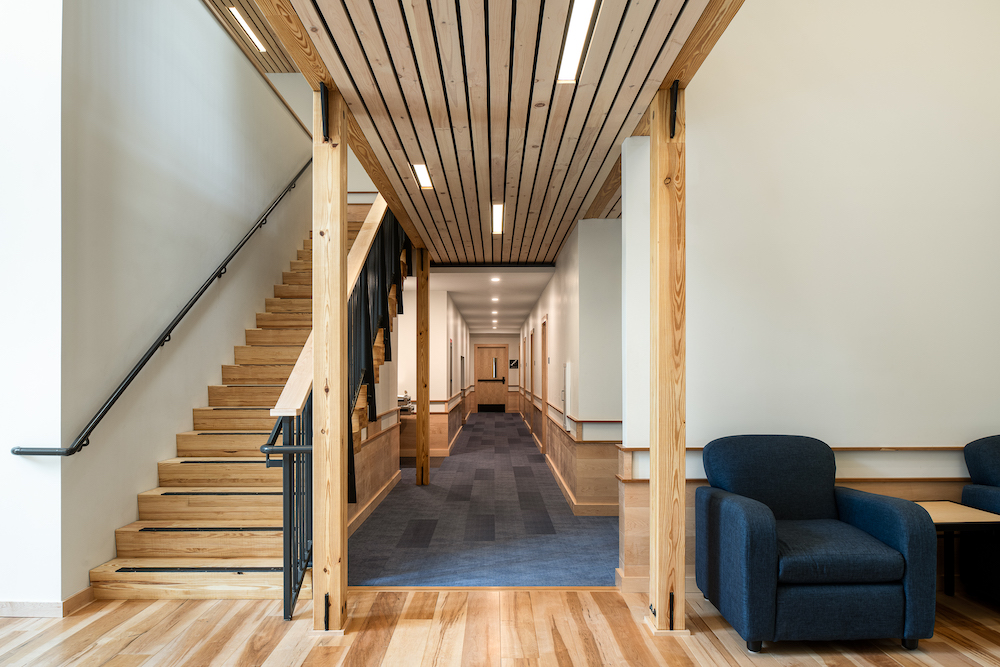
Greenhouse student corridor
Additionally, the project achieved remarkable results in its whole-building air leakage tests, with outcomes averaging 36% below the target of 1,400 cfm50, indicating an exceptionally tight building envelope.
The completion of The Putney School’s Student and Faculty Housing project in August stands as a testament to the school’s, and the entire team’s commitment to creating spaces that support the well-being of their community while honoring a collective responsibility to the planet. This project not only provides a model for sustainable design but also demonstrates the power of collaboration in achieving ambitious environmental goals.

Stacey Bevins
Stacey Bevins is director of marketing & communications at ReArch Company.