• Twitter
  • Facebook
  • Instagram
  • Linkedin
  • YouTube
  • RSS
  • Sign In
  • My Account
High-Profile MonthlyThe Source for AEC Industry News
  • All News
      • Up Front
      • Groundbreaking
      • Topping Off
      • Ribbon Cutting
      • View All Up Front Stories
      • StMarysBank_NorthBranch_ToppingOffNorth Branch Construction Celebrates Topping Off for new St. Mary’s Bank Branch
      • Special Features
      • Contributor
      • Green
      • J.E.D.I.
      • Mechanical / Electrical / Plumbing (MEP)
      • Vision
      • Women In Construction
      • Regions
      • Connecticut
      • Northern New England
      • Popular Sectors
      • Cannabis
      • Corporate
      • Education
      • Healthcare
      • Interiors
      • Landscape/Civil
      • Life Science
      • Multi Residential
      • Restoration/Renovation
      • Retail/Hospitality
      • Senior/Assisted Living
      • Technology & Innovation
      • Other News
      • Awards
      • Community
      • COVID-19
      • Mixed-use
      • Municipal
      • National/International
      • Organizations and Events
      • People
      • Philanthropy
      • Products and Services
      • Real Estate
      • Training and Recruitment
  • Subscribe
  • Next Issue
  • Archive
  • Advertise
  • Podcast
  • A/E/C Associations
  • Calendar
High-Profile Monthly
  • All News
      • Up Front
      • Groundbreaking
      • Topping Off
      • Ribbon Cutting
      • View All Up Front Stories
      • StMarysBank_NorthBranch_ToppingOffNorth Branch Construction Celebrates Topping Off for new St. Mary’s Bank Branch
      • Special Features
      • Contributor
      • Green
      • J.E.D.I.
      • Mechanical / Electrical / Plumbing (MEP)
      • Vision
      • Women In Construction
      • Regions
      • Connecticut
      • Northern New England
      • Popular Sectors
      • Cannabis
      • Corporate
      • Education
      • Healthcare
      • Interiors
      • Landscape/Civil
      • Life Science
      • Multi Residential
      • Restoration/Renovation
      • Retail/Hospitality
      • Senior/Assisted Living
      • Technology & Innovation
      • Other News
      • Awards
      • Community
      • COVID-19
      • Mixed-use
      • Municipal
      • National/International
      • Organizations and Events
      • People
      • Philanthropy
      • Products and Services
      • Real Estate
      • Training and Recruitment
  • Subscribe
  • Next Issue
  • Archive
  • Advertise
  • Podcast
  • A/E/C Associations
  • Calendar
Contributor • Green

Part 6: Bioregional Urbanist Design Principles

July 27, 2020

Toward Resource Self-sufficiency – One Region at a Time

by Phillip Norton Loheed

As president of Earthos Institute, I have helped to create Bioregional Urbanism, a process to encourage changes back to “One Planet Living.” This is the sixth of ten installments describing Bioregional Design principles.

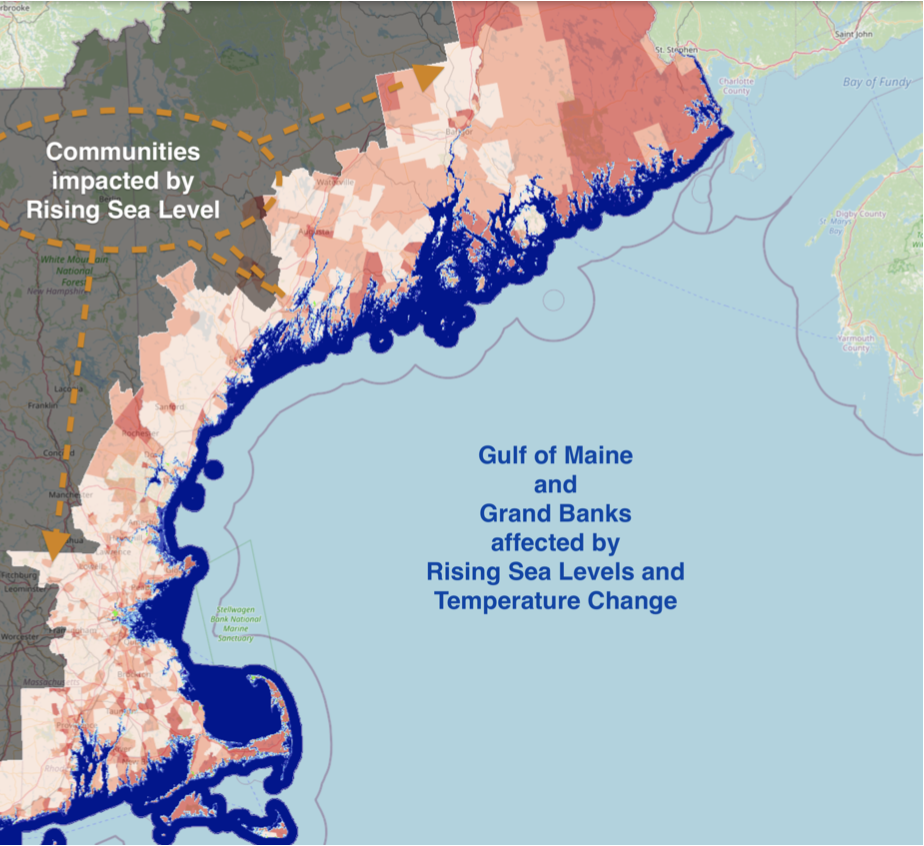
The timeline for our hypothetical town reconfiguration will need to reflect the rate of sea level rise with immediate adaptation, with longer term morphology and intelligent planning for life cycle costs as the levels of risk evolve.

Some concerns and opportunities are being felt simultaneously by all sea-related communities [see map by NOAA]; and for the Boston Bioregion the entire Gulf of Maine “transect” is being studied by an international group of stakeholders and scientists. The transect under study includes the Canadian maritime provinces related to the Bay of Fundy.

Numerous changes in the living systems of both the land and ocean are occurring with increasing urgency requiring husbandry and management to mitigate, adapt, and, at times, retreat in a continuous fashion over this century.

Clearly, as water, food, and energy needs; equity for the people; Biodiversity restoration; land constraints; and waste as resource systems are studied in terms of immediate local, long term regional and global impacts – to set goals and inform action plans – a bioregional perspective is critical.

The most obvious infrastructure needs for the region include transportation system planning, communication and resource monitoring systems, resource consumption budgets, food chain continuity, and several others. How can the timeline for actions work when the rate of sea level rise is generally increasing, but with several unknowns in play? Our suggested approach relates the creative timeline to the various levels of risk by contour elevations above current sea level:

0-10 meters, 90-100% risk of inundation inform short term actions such as:
• flood control works;
• buy-outs, tax credits, transferable development rights, etc. to mitigate equity losses of citizens;
• interim water, food, transportation and communication systems.

10-30 meters, 50-80% risk of future inundation and other systemic changes inform medium-term actions with acceptable life-cycle risks if inundation should occur:

  • Housing at secure sites during reasonable amortization periods;
  • Business development of modified resource base (land and ocean);
  • Medium term infrastructural systems.

30-60 meters, 20-60% risk of inundation and systemic changes can inform long-term actions for minimal future impact to critical resources and infrastructure:

  • Regional transportation connectors;
  • interconnected water, food, energy systems;
  • larger scale business enterprises;
  • renewable resource management.

60-70 meters, 0-10% risk of inundation. Most critical long term resources and infrastructure are very unlikely to be affected by ocean levels:

• Globally important medical facilities;
• regional rail, communications, other institutions.

The strategic categories outlined above show the potential benefits of “worst case” analysis, used to structure investments in the future self-sufficiency and resilience of a bioregion based upon perceived risk levels.

A core question:
What investments, profitable now, will benefit resilience and self-sufficiency of our communities as negative feedback from natural systems occurs in the future?

Please tune in next month.

 

Philip Norton Loheed

Phillip Norton Loheed is a principal at Design Partnership Plus.

Aug'20 biodiversityrestoration bioregionaldesign EarthosInstitute equityforpeople featured HPNews risingsealevels transportationplanning
    FacebookXLinkedInEmail

You may also like

Contributor

Ask the Electrician: What are the...

January 8, 2025
Contributor

What’s Next for Construction in...

December 30, 2024
Contributor

Strengthening the AEC Community: A...

December 27, 2024
Contributor

Boston’s Commercial Real...

December 26, 2024
Contributor

Choosing a B2B PR Agency: Why it...

December 19, 2024
Contributor

A/Z’s 2025 Strategic Growth...

December 18, 2024
Green

Veolia North America Releases 2nd...

December 3, 2024
Contributor • Green

BERDO: From Boston to your Backyard

December 2, 2024
  • Gray.png
  • Pedigree.png
  • PWC.png
  • INterstate.png

HIGH-PROFILE MONTHLY
615 School St.
Pembroke, MA  02359
Phone: 781 294 4530
Fax:  781 293 5821
info@high-profile.com

Quick Links

  • About Us
  • Contact Us
  • Subscribe
  • Advertise
  • My Account

Stay Informed

Sign up for Fast Facts Friday, our weekly e-newsletter, and stay up-to-date with the latest industry news!

Sign up
Subscribe to High-Profile Monthly to receive an email notice of each new article!
Loading

Copyright © 2026 High-Profile Monthly.

  • Twitter
  • Facebook
  • Instagram
  • Linkedin
  • YouTube
  • RSS
  • Sign In
  • My Account