Advertorial
When challenging and complex projects are just part of a seasoned design and construction team’s everyday life, it’s always refreshing to hear them say, “Wow, this was very interesting project to tackle.” Then you know you have a story…
The new Connecticut Hall residences and dining facility on the University of Connecticut’s South Campus is just that kind of story.
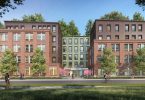
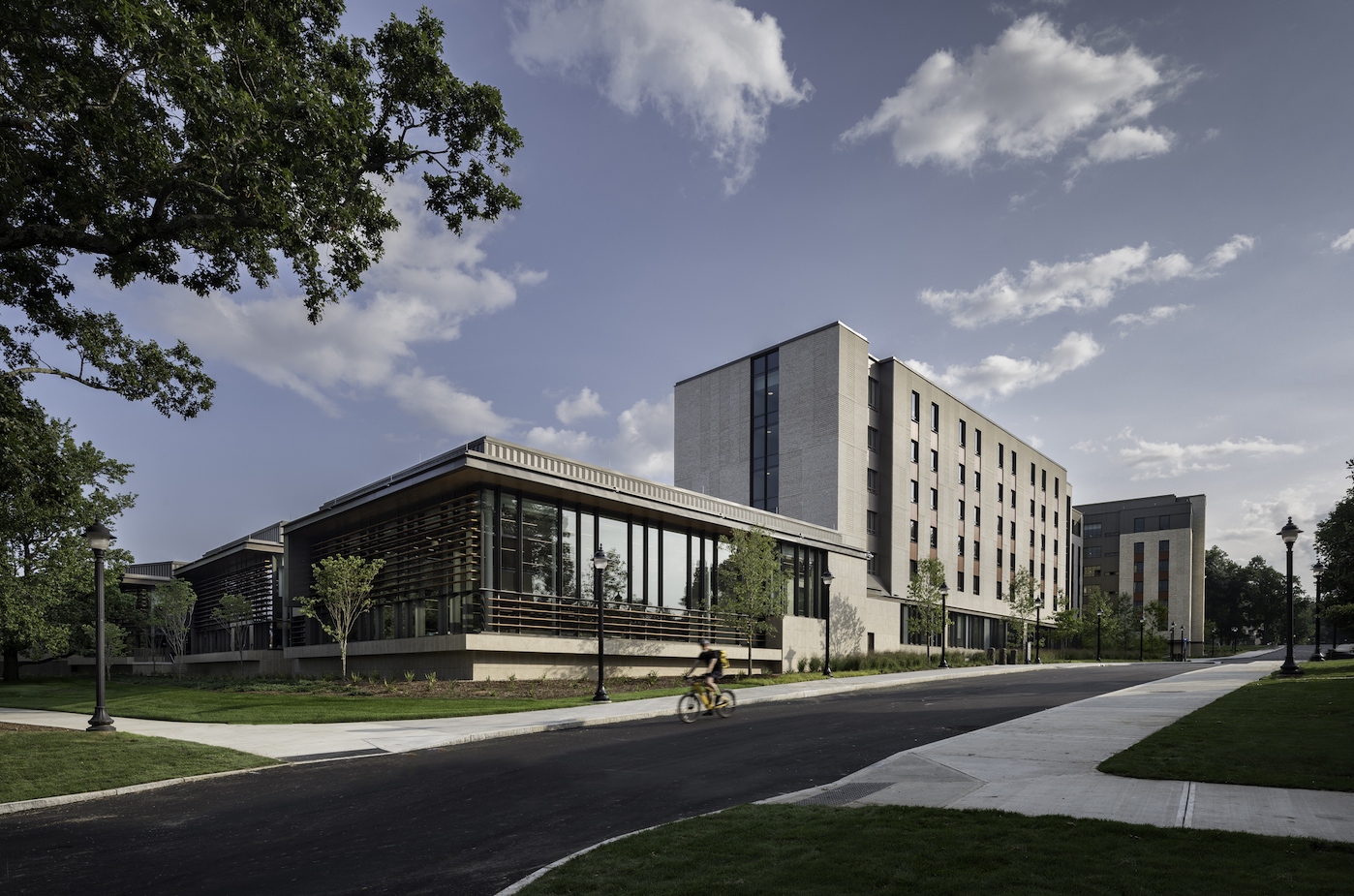
The 280,000sf, multi-story structure was completed in late July, with the official ribbon-cutting on September 13. A striking addition to the campus architecture, the facility offers 657 student beds in the 7-story residence tower, a 500-seat dining hall with multiple dining options, and a 14,000sf commercial kitchen with ten serving stations. Outdoor spaces are nicely integrated into the setting, which includes a bountiful array of mature plantings.
Bringing all this to fruition was a journey that engaged the University’s campus planning staff, the bridging architect (Sasaki), and the design-build team of KBE Building Corporation (design-builder and constructor) and Newman Architects (architect of record). Other design-build team members included DiBlasi Associates (structural), van Zelm Engineers (MEP/FP), and Langan (civil).
The game plan:
• Take the schematic-level bridging documents to construction document level.
• Coordinate the construction around three other concurrent projects being managed by other construction firms, including two enabling projects essential to bringing the new residence hall online.
• Complete the project on time to meet UCONN’s occupancy schedule – or face daily liquidated damages.
Build it Backwards
How did the team meet the schedule?
“We built it backwards – the schedule, that is,” explains KBE principal Jim Culkin. “You look at your absolute finish date – which for any university building student housing is the date you need to get students moved in. From there, you start evaluating the design packages on how to meet both the start and the finish date.”
Which is the point where the project became very interesting to the seasoned team.
Redesigning the Structural System
As the team began digging into the drawings and mapping out the schedule, they quickly realized that the structural system needed to be fully re-designed to meet the project schedule.
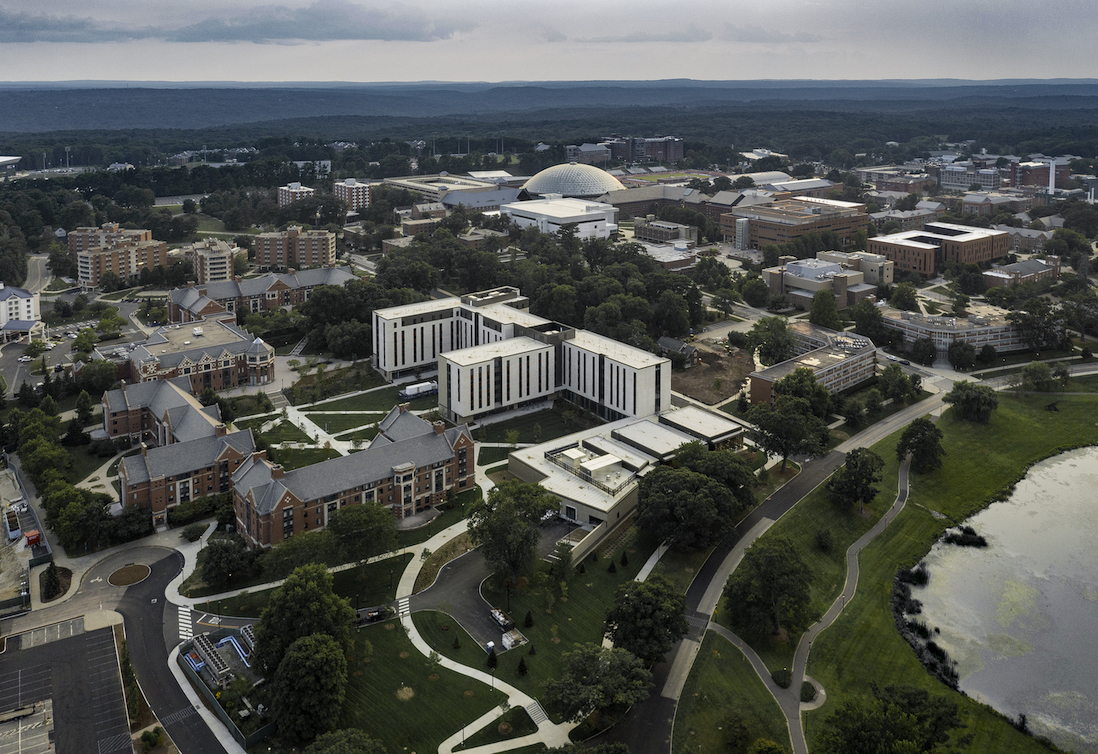
The new 280,000sf Connecticut Hall provides 657 bed and numerous amenities.
“As originally designed, the steel structure had a series of shoring requirements that would have limited our ability to erect steel in the most time-efficient manner possible,” explains KBE principal Jim Culkin. “We had to change it – or miss the end date, which wasn’t among our options.”
“We reconfigured the structural steel floor framing to eliminate all temporary shoring requirements for both the decking and the steel framing,” explains Tom DiBlasi, PE, principal of DiBlasi Associates, who led the structural design team.
“This also meant the structure could be erected continuously, allowing concrete and steel construction to occur at the same time,” adds Ron Rinaldi, KBE’s project manager who oversaw the project throughout.
Compounding the redesign effort was the fact that the new framing system needed to integrate with the lateral ductwork feeding the bedrooms within the living suites, in which the bridging documents called for 9’-8” ceilings.
DiBlasi elaborates: “To overcome this challenge, we designed more than 500 beam penetrations to accommodate the mechanical systems while still retaining the required 9’-8” ceiling height.”
The most remarkable aspect of this design decision was the implementation. All but a handful of the 500+ penetrations were shop fabricated – and fit perfectly. Less than a dozen had to be cut in the field – an admirable result.
Keeping the Work Moving Forward
The Design-Build team began addressing the schedule challenges during the proposal submission phase. “We were hashing out different scenarios as we prepared our proposal,” says KBE’s Culkin. “As a team, we were looking at every angle and every design discipline to see how to achieve the greatest work efficiencies and coordination with other trades.”
Once fully refined and approved by the owner, the team’s phasing plan allowed for the progressive installation of foundations and structure while framing and MEP work were taking place on the other side of the building.
“That approach meant we could have multiple trades on site, efficiently coordinating their work with others and finishing work sequentially, instead of stacking trades,” adds Ron Rinaldi, KBE project manager.
“We designated three separate building zones and coordinated tradework within each,” says Rinaldi. “We typically had more than 35 trades and upwards of 500 trade workers on site at any given time, particularly at the height of construction.”
While the schedule was constantly top-of-mind for the whole team, “We never thought to ask for an extension,” says KBE superintendent Sal Emanuele. “We had a date, and we were going to make it.”
What Made it all Work?
“All of the work had to be figured out very quickly, as we had to get the foundations in by winter, and we had a thousand different challenges coming at us,” adds Jeff Pleshek, project architect with Newman Architects. “Stressful, yes, but also made the job remarkably interesting. You learn to trust your instincts.”
Architect Jose Hernandez, principal at Newman Architects, sums it up: “It is all about relationships. KBE and Newman, along with DiBlasi Associates and the other design engineers, have worked together on more than a half-dozen design-build projects over the years. Those relationships, the expectation of real time collaboration and the need to think lean, are what make schedules like this achievable.”
Meeting Housing Expectations for Today’s Students
- 280,000sf, seven story residence hall offering 657 student beds, with the majority in four-bed suites with shared bath.
- The attached 500-seat dining facility offers an array of dining options, supported by a 14,000 sf commercial kitchen with 10+ serving stations, including pizza ovens, BBQ, and more.
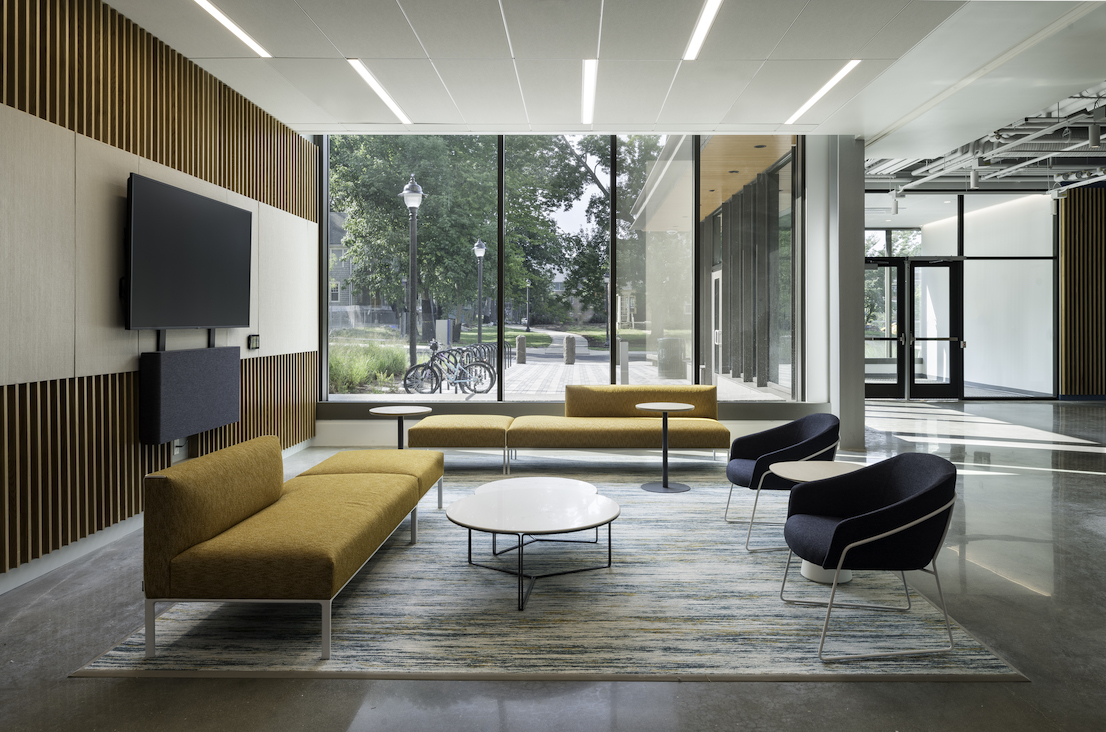
- Building design and siting incorporates expansive views of the outdoors and provides many outdoor amenities.
- Heating/cooling through geothermal wells, which will come online in 2025.
- Designed to meet LEED Gold certification, in keeping with the University’s commitment to sustainability.