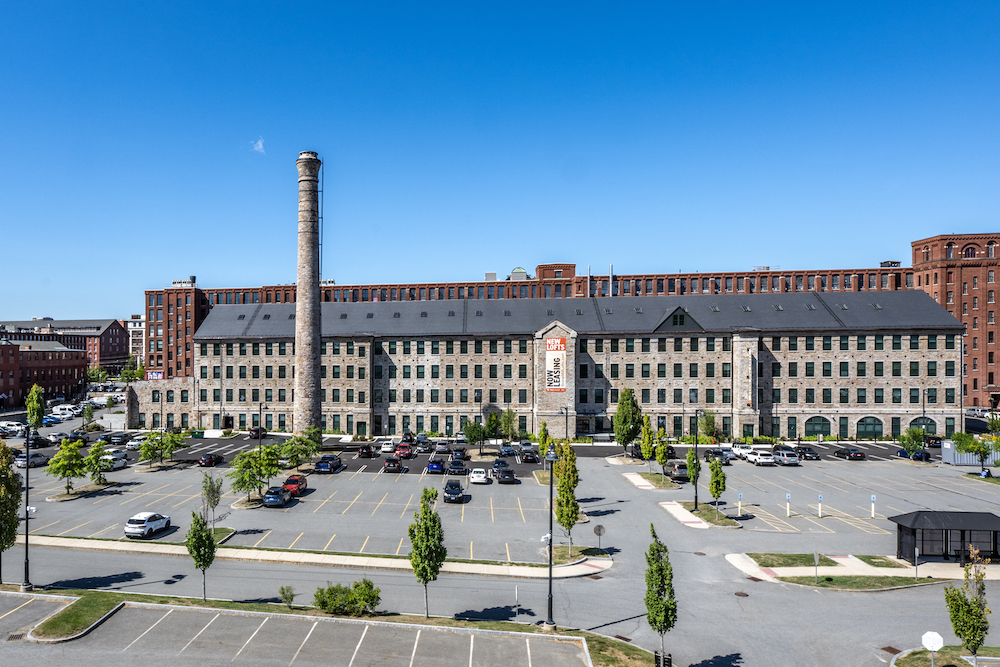
Lawrence, MA – WinnCompanies recently joined with federal, state and local officials to open one of the first all-electric mixed-income multifamily properties in Massachusetts, cutting the ribbon on a $39.2 million adaptive reuse development that transformed the oldest mill in Lawrence into 86 units of rental housing.
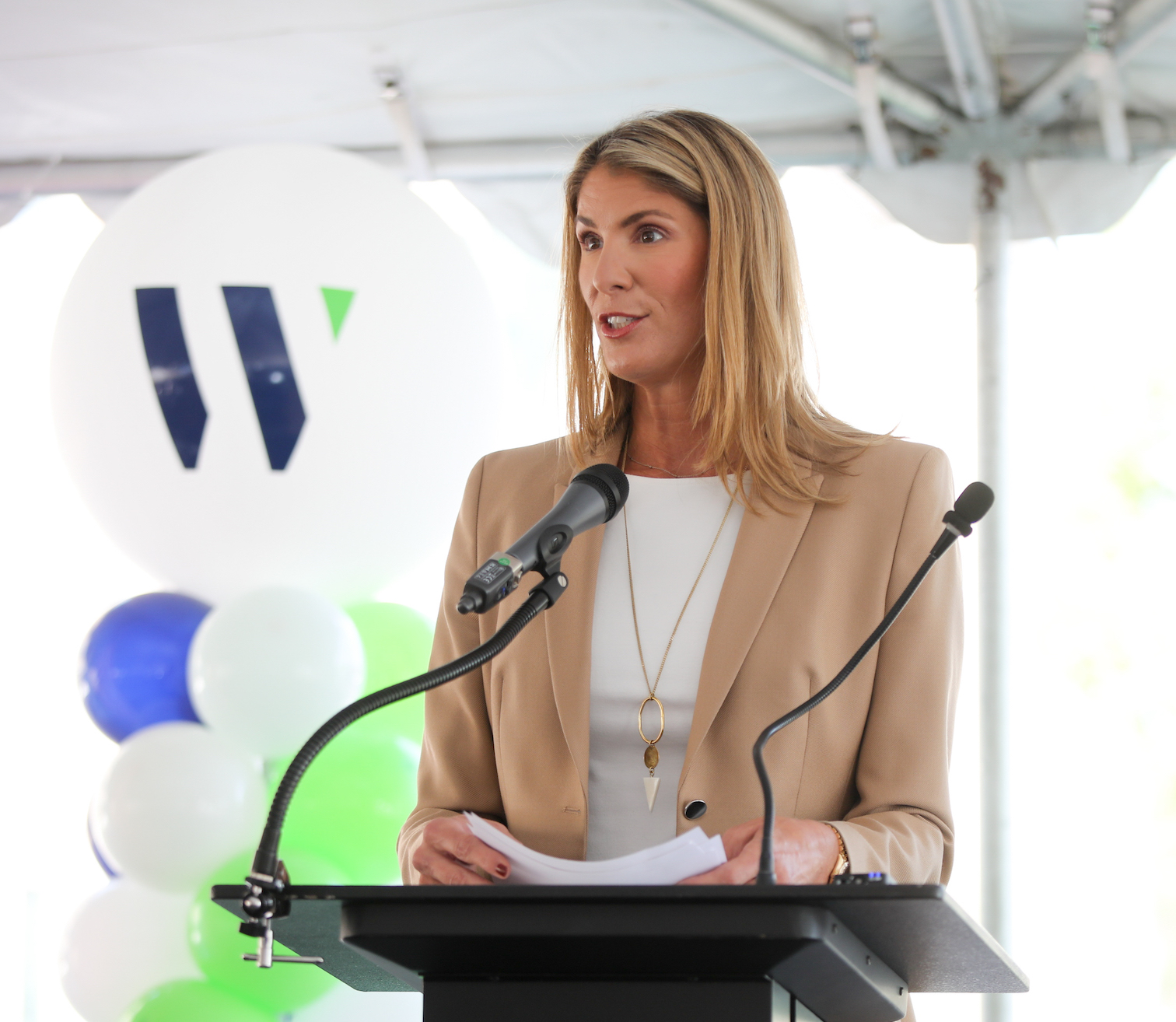
Massachusetts Congresswoman Lori Trahan, Massachusetts Housing Secretary Ed Augustus, U.S. Department of Housing and Urban Development Regional Administrator Juana B. Matias, and Lawrence Mayor Brian DePena were among those who celebrated Stone Mill Lofts, offering 58 apartments for households earning up to 60% of Area Median Income (AMI), 11 apartments for those earning up to 30% AMI and 17 market rate units inside the 179-year-old Stone Mill building.

Stone Mill Lofts
“The origin story of the City of Lawrence comes full circle today as we unveil a beautifully restored 19th century manufacturing landmark that is now fully equipped with 21st century energy-efficient building systems,” said WinnDevelopment president and managing partner, Larry Curtis. “Thanks to our partners, this two-year construction effort has delivered much-needed mixed-income housing for households who will help write the next chapter in the Lawrence success story.”
The development’s fossil fuel-free design is projected to use 46% less energy and emit 33% fewer greenhouse gases than a typical gas-fired multifamily structure. The energy efficient design, including heat pumps and energy recovery systems, is expected to save 177 metric tons of avoided greenhouse gas emissions each year.
WinnDevelopment senior project director, Angela Gile, worked with The Architectural Team (TAT), historical consultant the Public Archaeology Laboratory, Inc., and sustainability consultant New Ecology, Inc. to implement plans that preserved the building’s unique historic characteristics while installing four inches of insulation and high-performance, triple-pane historic replica windows, creating an airtight and durable building envelope and making high-efficiency electric building mechanical systems electrification feasible.
“We believe Stone Mill Lofts is one of the most significant projects to result from our longstanding partnership with WinnDevelopment because it sets a new standard for how historic preservation and adaptive reuse can address the affordable housing crisis and climate change at the same time,” said TAT project manager, Scott Maenpaa. “This is the future of historic adaptive reuse, and we’re honored to be a part of this story.”
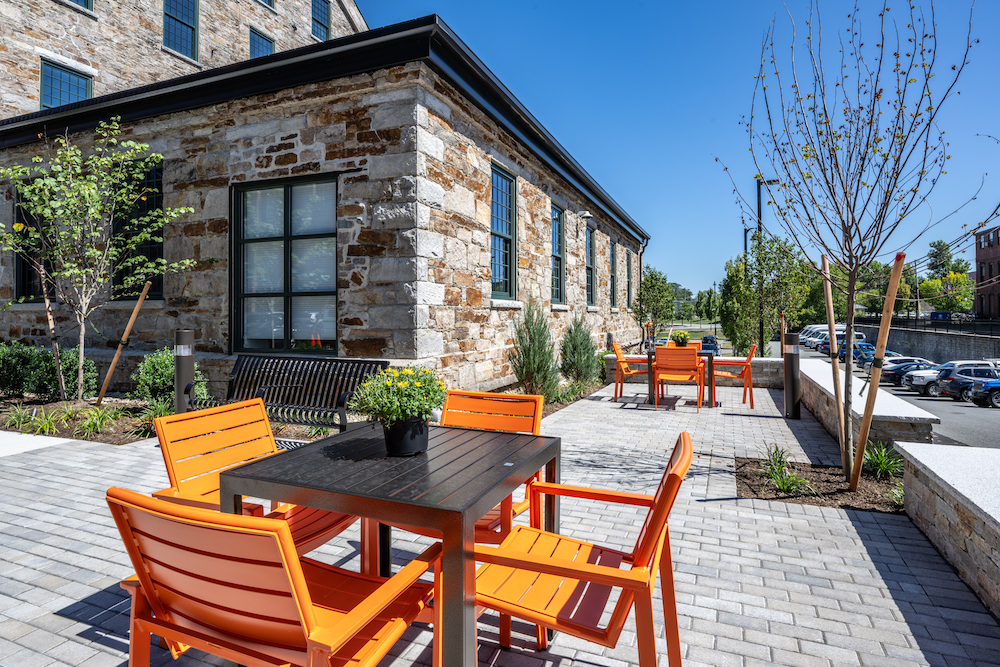
Stone Mill Lofts
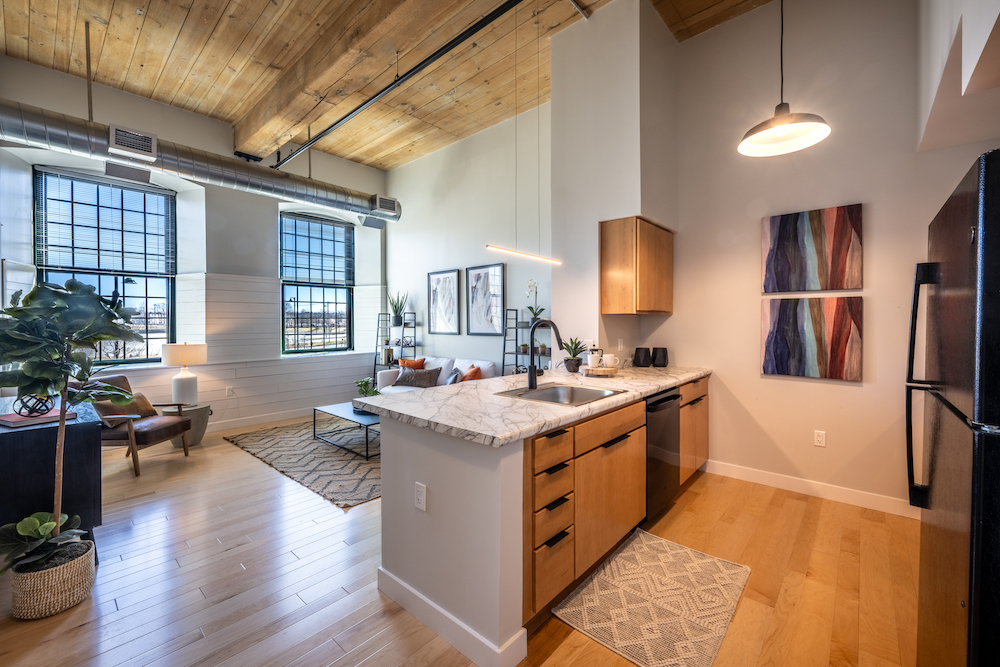
Managed by WinnResidential, Stone Mill Lofts blends one-bedroom units with family-sized apartments, offering 50 one-bedroom apartments, 28 two-bedroom two-bath units and eight three-bedroom two-bath units. Each of the 86 apartment units include large window openings and the integration of existing historic elements such as exposed, original wood beam ceilings. On-site amenities include a resident lounge and kitchen, billiards room, a fitness center with interactive equipment and a yoga nook, a children’s playroom, indoor bicycle parking, resident storage lockers, work from home pods, a secure package room, a historic mill exhibit room, landscaped outdoor areas, and a patio.
Keith Construction, Inc. served as the general contractor for the project. The development team also included R.W. Sullivan Engineering; VHB; Odeh Engineers; McPhail Associates, LLC; Loureiro Engineering Associates, Inc.; and Axiom Partners, Inc. Robinson + Cole LLP served as legal counsel. WinnDevelopment purchased the site in August 2021.
—
To help make Stone Mill Lofts possible, the Massachusetts Executive Office of Housing & Livable Communities delivered $3.1 million from the Affordable Housing Trust and Housing Stabilization Funds. The project also benefited from more than $38 million in Federal and State Low Income Housing Tax Credit equity and Federal and State Historic Tax Credit equity. MassHousing provided $25.8 million in financing, including a $20.4 million bridge loan, a $4.6 million tax-exempt permanent mortgage and $900,000 in Capital Magnet Fund support.
The City of Lawrence used HOME funds to support the project. “The transformation of this historical site into a beacon of sustainable living, supported by the City of Lawrence with an $850,000 investment in HOME funds, not only underscores the project’s groundbreaking environmental impact but also highlights our collective dedication,” said DePeña. “I extend my heartfelt thanks to all partners involved for making this vision a reality in Lawrence.”
To support the project’s environmental goals, the Massachusetts Department of Energy Resources awarded more than $2.8 million in funding from the Merrimack Valley Renewal Fund. LISC Massachusetts and the Massachusetts Clean Energy Center also supported early decarbonization feasibility work for the project. Bank of America provided a construction loan and tax credit equity for the project, while Blue Hub Capital assisted with state tax credits.